Lee Jun-seok quits — and South Korea's third-party dream fades
Lee Jun-seok's resignation as leader of the Reform New Party exposes the fragility of South Korea's attempt to break the two-party system. With only one local council seat and a self-staged assault scandal staining the party, his departure signals trouble ahead for 2028.
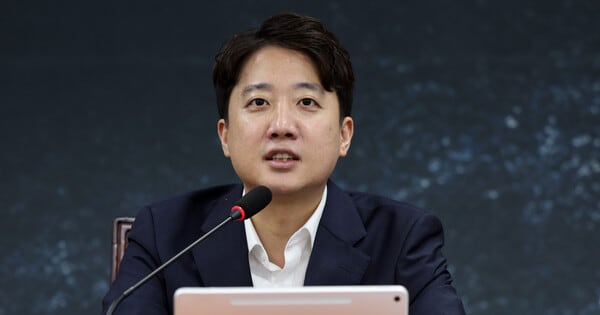
The third-party experiment hits a wall
Lee Jun-seok is stepping down as leader of the Reform New Party, and the timing tells the whole story. Two days after a local election that produced a single council seat — not a mayoral win, not a provincial governor, just one member of a basic council — he is taking responsibility for a collapse that was, by any reasonable measure, total.
The announcement came through a core party source on the 26th. Lee plans to hold a press conference at the National Assembly. The cited reasons are the June 3 local election rout and the self-staged assault scandal surrounding Jeong Ui-han, the party’s Busan mayoral candidate, who has been arrested and prosecuted.
But the deeper reason, according to insiders, is simpler and more damning: Lee concluded the party cannot survive as-is heading into the April 2028 general election. And the people around him are not interested in fixing it.
One seat and a scandal
The Reform New Party entered the local election campaign with a clear pitch — low-cost politics for newcomers, a direct challenge to the entrenched two-party machine. The result: one basic councilor seat. Nothing more. In a country where local elections have historically served as brutal referendum on the ruling party, this was not even a respectable showing for a protest vote. It was an absence.
Then came Jeong Ui-han. The Busan candidate faced allegations of orchestrating his own assault — a stunt designed to generate sympathy and media coverage. Instead, it landed him in custody and painted the entire party as performers in their own farce. For a movement built on anti-establishment credibility, the damage was irreversible.
The party’s crisis is not merely electoral. It is existential.
The reformer vs. the room
What makes Lee’s departure notable is not that he lost — it is that he tried to rebuild and found no one willing to help. Sources say he spent considerable effort trying to reorganize, including a plan to station key party figures in the southern Gyeonggi belt, a region seen as critical for any future national breakthrough. The response from those approached was lukewarm at best.
Worse, when local election results and the Jeong Ui-han scandal broke, the party’s own leadership reacted with a puzzling deflection. According to insiders, core officials essentially asked whether these failures were their responsibility — as if the question were unclear.
“At some point, the original conviction — that reform and freshness could crack the big two-party system — faded,” a party source said. “Even core officials reacted as if the local election defeat or the Jeong Ui-han incident were not their problem. Lee was deeply disheartened.”
The implication is stark: the party has no shared purpose beyond existing. Without that, there is nothing to save.
The integration drift
Perhaps the most telling detail emerged from a separate source: a growing current within the party that the Reform New Party will ultimately merge back into the People Power Party. The logic is pragmatic — survival in Korea’s winner-take-all electoral system requires scale. Staying independent appears suicide.
This has created an atmosphere of what insiders called “each for themselves.” Many members are waiting to see which way the wind blows before committing to anything. The question is whether a party that has already concluded it will likely disappear can muster the energy to fight another election cycle.
The cancelled meeting
The fragility of Lee’s position was on full display before the resignation even became public. On the 24th, Kim Min-seok, leader of the ruling Democratic Party, had scheduled a meeting with Lee — a routine courtesy for opposition leaders, but one that carried symbolic weight given the Reform New Party’s claim to be the genuine alternative.
The Reform New Party canceled the meeting just two hours before it was set to begin. According to sources, Lee’s rationale was blunt: with the party in this condition, what was the point of meeting the ruling party leader?
It was a moment of rare honesty in Korean politics. Lee effectively admitted that his party had no standing left to negotiate, no credibility to project, no agenda worth discussing.
Who wins, who loses
Lee Jun-seok leaves as the figurehead of a project that failed. That is not an indictment of his personal politics — he built a party from scratch and ran a campaign, however inadequate the result. It is an indictment of the structural headwinds facing non-traditional parties in South Korea, where electoral rules, media access, and voter habits all favor the two established blocs.
For the Democratic Party, Lee’s departure is a gift. The only credible third-party threat evaporates overnight, consolidating the ruling party’s path toward any future election.
For the People Power Party, it is complicated. The Reform New Party was always a potential absorbee — a pool of anti-establishment energy that could either compete with or feed into the conservative camp. Its collapse removes that variable but also eliminates a source of conservative votes that might otherwise have stayed home.
For Lee himself, the calculus is less clear. He was the youngest party leader in Korean history and a formidable media performer. His political brand was built on being the outsider who could disrupt. That brand now belongs to a party with one council seat and a prosecuted candidate.
What happens next
The immediate question is whether the Reform New Party dissolves, merges, or limps toward 2028 as a ghost. If it merges with the People Power Party, Lee’s departure becomes a precursor to a broader consolidation of the conservative opposition — a move that would reshape the entire landscape ahead of the presidential election.
If it survives in some diminished form, it will be without Lee’s name and energy, which makes longevity unlikely.
Either way, South Korea’s brief experiment with a viable third force is over. The two-party system is not just intact — it is reinforced. And the voters who hoped for an alternative will have to choose between the same two faces again.