Level-5's AI Apology Is a Warning Shot to the Whole Industry
Level-5's CEO admitted using generative AI in a promotional livestream and apologized — but his real ambition is to halve game development cycles. The backlash reveals what happens when a beloved Japanese studio steps into uncharted creative territory.
The Apology That Wasn’t Really an Apology
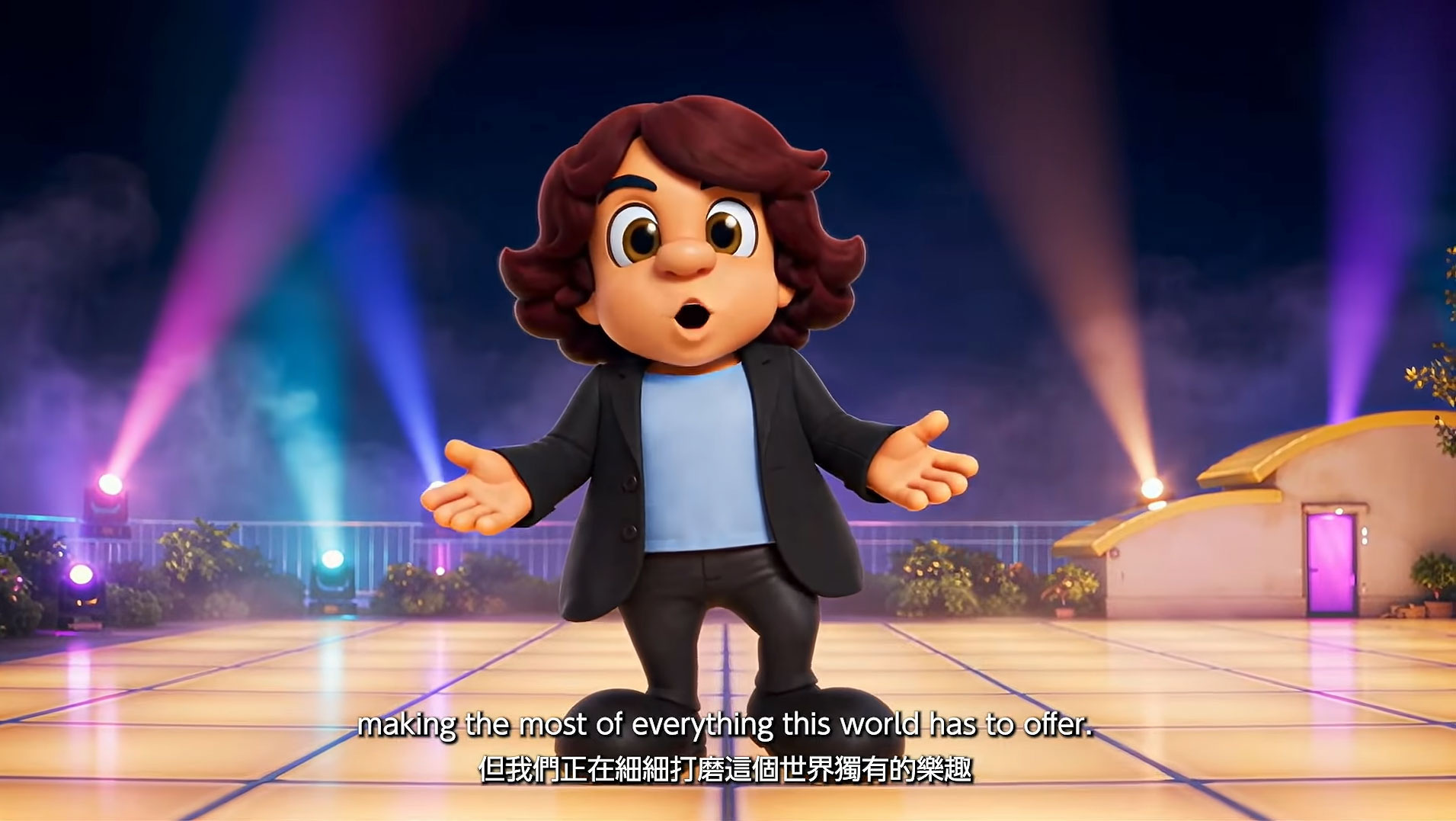
Akihiro Hino, founder and president of Level-5, admitted something his company would rather not have confessed publicly: generative AI was used in the promotional visuals for LEVEL5 VISION 2026 II, a livestream event broadcast September 10 across the company’s official YouTube channel. He then apologized — but not for using the technology. He apologized because some people were upset.
The distinction matters more than it might seem. Hino did not retract his use of AI. He did not promise it would disappear from future marketing. He said, in effect: we crossed a line you didn’t expect us to cross, and we’re sorry you feel that way.
What followed was a careful recalibration of blame and reassurance. AI, he explained, is being used internally for efficiency — digitizing hand-drawn assets, speeding up routine workflows. It is not, he insisted, going into any finished game. Players can rest assured.
Rest assured. Five words that carry the weight of an industry watching closely.
Who Hino Actually Is
To understand why this story matters outside Japan, you need to understand who Hino is. He is not a corporate technocrat installing AI as a cost-cutting measure. He is the creator. He founded Level-5 in 1998, and he is the face of three of Japan’s most commercially successful children’s franchises: the Inazuma Eleven soccer series, the Yo-kai Watch phenomenon that swept the country in the mid-2010s, and the Professor Layton puzzle adventure games. His name appears on box art. He appeared on camera himself during the September 10 event. This is not a boardroom decision. This is a creator’s decision.
That makes the fallout different. When a Western publisher uses AI in a trailer, critics call it laziness. When Hino does it, fans feel betrayed — because they bought into the idea that Level-5’s games are built by hand, by people who care, in a tradition that stretches back to the company’s early days on the PlayStation.
The Real Bet: Five Years Down to Two
Here is what the apology obscures. Hino is not experimenting with AI for fun. He is building toward something specific and enormous. In December 2025, he posted on X that AI had already delivered “不可轻视の時間短縮” — time savings that cannot be underestimated. He went further: he said AI has the potential to overturn the fundamental常识 — common sense — of game development. His stated goal is to compress the development cycle of his flagship titles from five years to two.
Two years. That is the number everyone in the industry is listening for. If Level-5 — a mid-sized Japanese studio with no history of AAA blockbuster ambition — can reliably ship a major title every two years without sacrificing quality, the entire structure of Japanese game development shifts. Five-year cycles are already a liability in an era of live-service competition, patch-driven expectations, and shrinking attention spans. A reliable two-year turnaround would be revolutionary.
Hino knows this. That is why he is taking the heat now, while the products don’t exist yet. The apology is the price of admission.
The Line That Hasn’t Been Drawn Yet
The most dangerous part of this story is not what Hino admitted. It is what he did not admit.
He said AI is used for “efficiency” and “digitizing hand-made work.” Those are vague terms. They could mean anything from using AI to clean up scan lines on hand-drawn sprites to using AI to generate environment textures, background characters, or placeholder animations that never get replaced. Level-5 has not defined the boundary. Fans have not seen the boundary. And the first game built under this new philosophy will arrive sometime in the next few years — long after the controversy has faded from social media.
This is the pattern that plays out everywhere AI enters creative industries. The initial backlash forces a statement. The statement promises restraint. The technology keeps working in the background. By the time anyone notices the output, the new normal has already settled in.
Why This Could Be a Flashpoint
Level-5 occupies a peculiar space in Japanese gaming. It is not Nintendo. It does not enjoy the same institutional trust or the same protective mythology around its creative process. It is not Square Enix or Capcom, whose AI adoption (or refusal) has been tracked obsessively by English-language press. Level-5 is smaller, more personality-driven, and more vulnerable to fan sentiment. That is exactly why this story will echo.
If Level-5 — a studio whose brand is built on charm, imagination, and a palpable sense of handmade creativity — delivers a game made faster through AI and it still feels as good as Yo-kai Watch at its peak, the industry learns one thing. If the game feels flat, rushed, or sterile, the industry learns another. Either outcome sends shockwaves through every mid-tier Japanese studio watching nervously from the sidelines.
Western publishers have already normalized AI in their pipelines. Ubisoft admitted to using AI for background assets in Watch Dogs: Legion. EA has experimented with voice synthesis. The conversation in those markets is largely about cost and control. In Japan, the conversation is about trust — and trust is a far more fragile currency.
What Comes Next
The immediate aftermath of this apology will be predictable. Hino will continue developing. Level-5 will release its announced titles — the new Inazuma Eleven game, the Yo-kai Watch remake, the Professor Layton remake, the new RPG Holy Horror Mansion, the puzzle RPG Decapoli. Some will use AI. Some won’t. The line is unclear by design.
The real test comes when a completed game ships and fans have to decide whether they can tell the difference. If they cannot, the controversy dies and AI quietly becomes standard practice across the industry. If they can, and the response is negative, Hino’s two-year vision becomes a cautionary tale instead of a blueprint.
Either way, Level-5 has already changed the terms of the conversation in Japanese gaming. The question is no longer whether AI will enter these studios. It is whether the people who built them will be allowed to explain how — after the damage is done.