LG's LMR Battery Breakthrough Could Reshape EV Costs — Starting Now
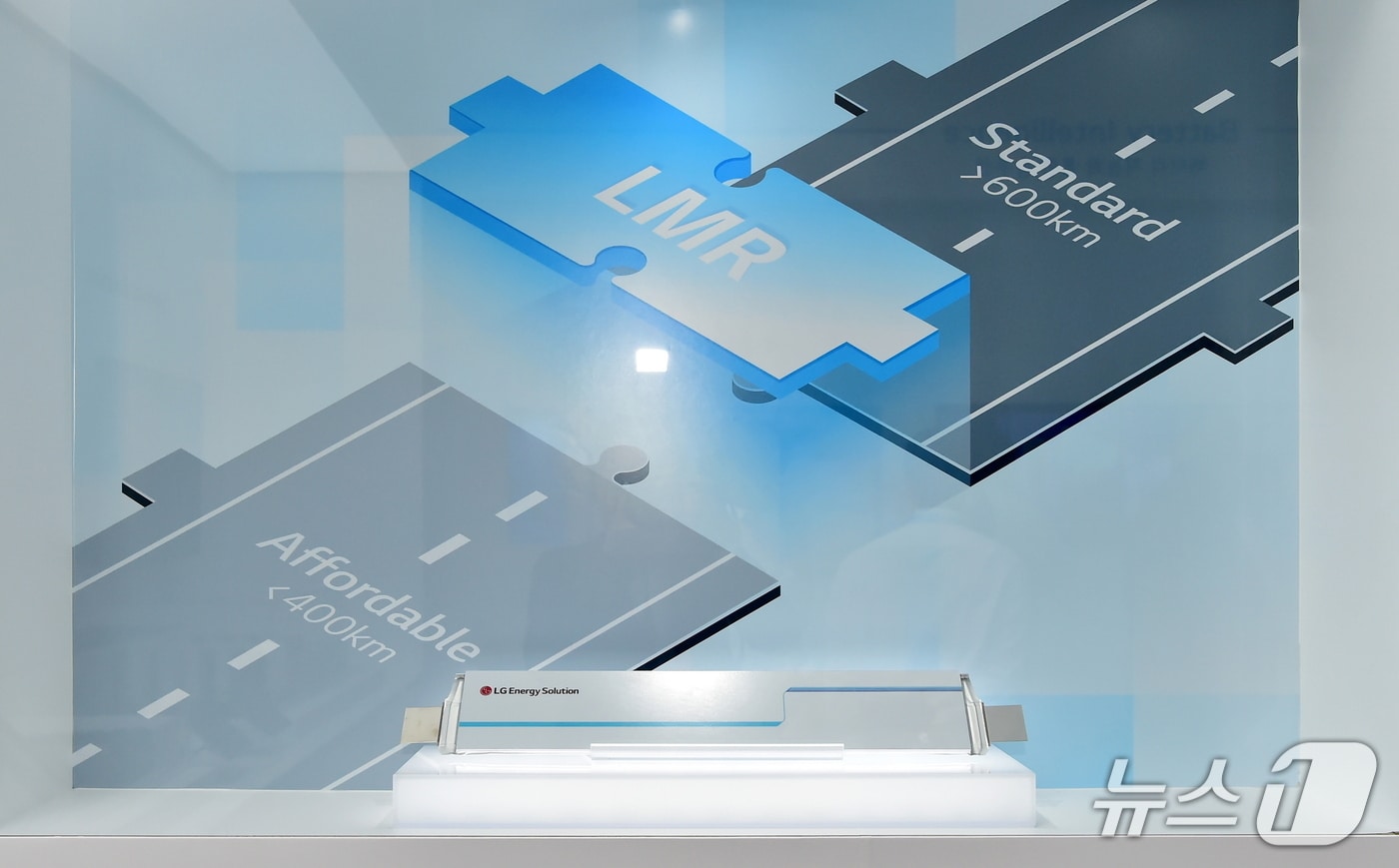
LG Energy Solution has solved one of LMR batteries' biggest commercialization barriers: gas generation in large-format cells. The company says a 40Ah cell retained 92.2% of its initial capacity after 883 cycles, clearing the path for cobalt-free cathodes to enter production. That changes the math for global EV supply chains.
The Real Breakthrough Isn’t the Chemistry — It’s the Protocol
LG Energy Solution and Seoul National University have published a paper in Nature Communications that sounds like a materials science victory. The headline finding — controlling oxygen reversibility in lithium-manganese-rich (LMR) cathodes — is genuinely important. But the thing most observers will miss is what the paper actually proves: you can stabilize a next-generation battery chemistry without changing the formula. The fix was in how you run the cell.
That distinction matters because it redefines who can compete in the next generation of EV batteries.
For years, LMR cathodes have been the industry’s favorite near-term candidate for replacing cobalt-heavy nickel-manganese-cobalt (NMC) chemistry. The material uses abundant, cheap manganese instead of scarce cobalt and stores energy not just in transition metals but also in the oxygen atoms themselves. Theoretically, that means higher energy density at significantly lower cost. In practice, every major battery maker hit the same wall: during charge, some of that oxygen oxidizes and doesn’t fully recover during discharge. The unrecovered oxygen creates gas. In a small lab cell, you can vent it. In a 40Ah pouch or prism cell destined for an EV, gas raises internal pressure, degrades performance, and kills cycle life.
LG’s collaboration with Prof. Im Jong-woo’s research group at SNU mapped the exact failure mode and found a way around it by adjusting the electrochemical protocol — specifically, the voltage windows.
Lowering the upper charge limit from 4.6V to 4.3V boosted the oxygen recovery rate from 86% to 97%. Going further, they discovered that discharging down to 2.0V instead of the conventional 3.0V allowed almost complete restoration of the oxygen state. They also lowered the temperature during the formation (activation) stage, a process tweak that proved especially effective at suppressing gas generation in large cells where internal clearance is tightest.
The result: a 40Ah LMR cell that retained 92.2% of its initial capacity after 883 charge-discharge cycles. That’s not a prototype number. That’s a commercial viability threshold.
Who Wins, Who Loses
Chinese battery makers face a timing problem. CATL and BYD have both invested in LMR development, but LG is the first to publish peer-reviewed evidence that a large-format LMR cell can meet automotive-grade longevity targets. The gap may narrow — Chinese R&D is aggressive and well-funded — but first-mover advantage in production scale is real. LG is already spinning up samples at its Ochang pilot line and working with customers on joint development.
Cobalt suppliers lose leverage. LMR’s defining feature is the elimination of cobalt. If LG’s protocol proves reproducible across production batches — and the Nature Communications paper gives reason to be cautiously optimistic — then demand growth for cobalt could flatten earlier than most analysts project. The Democratic Republic of Congo, which supplies roughly 70% of global cobalt, faces a structural demand risk that has nothing to do with EV adoption rates and everything to do with chemistry substitution.
Western OEMs gain an alternative supplier. LG’s LMR breakthrough strengthens its position as a co-investment partner for Ford, GM, and other Western automakers building domestic supply chains. If LMR cells deliver comparable energy density to NMC at lower cost, the business case for Korean contract manufacturing in North America becomes even stronger — and the case for relying on Chinese battery supply diminishes further.
Toyota and Honda face a new variable. Both Japanese automakers have historically favored nickel-metal hydride and lithium-titanate options, and their battery strategies have lagged Korean peers. LG’s LMR advancement — particularly if it shifts toward prismatic or pouch form factors compatible with existing manufacturing lines — could create new procurement pressure on Japanese OEMs that have been slow to commit to lithium-ion scale production.
Why This Matters Beyond Korea
The conventional framing of this story is “LG beats China to LMR commercialization.” That’s incomplete. The deeper story is about the economics of battery chemistry itself.
Cobalt costs have oscillated wildly in recent years — spiking above $100,000 per metric ton in 2022 before softening. But cobalt’s price volatility has always been a supply-side problem, not a demand-side one. Demand has grown alongside EV production. LMR offers a path to cut that exposure permanently.
The math on cost reduction isn’t specified in the Nature Communications paper — LG hasn’t disclosed the per-kWh savings of its LMR chemistry versus NMC — but the direction is clear. Manganese is abundant and cheap. Removing cobalt removes a major cost variable and a major geopolitical risk. If LG can produce LMR cells at competitive yield on a pilot line, the next question is whether the same protocol generalizes across cell formats and capacities.
The 40Ah cell tested here sits in the middle of the automotive range — too small for long-range sedans, potentially too large for compact EVs. LG’s Ochang line is currently producing samples, and the company has said it’s developing with customers jointly. That suggests pre-production engagement, not prototype-stage discussion. The timeline from pilot to volume production is typically 18 to 24 months for cell chemistry changes of this magnitude, placing LMR commercialization potentially in the 2027–2028 window.
The Caveats
Several things remain uncertain.
The 883-cycle test is an excellent data point, but automotive warranties typically specify 8 to 10 years or 160,000 kilometers. A full commercial qualification requires demonstrating that the voltage-window optimization holds across temperature extremes, partial-state-of-charge cycling, and calendar aging — none of which are detailed in the published paper. LG’s statement emphasizes that the formation-process temperature adjustment was “especially effective” for large cells, but that specificity also implies the effect may not generalize uniformly across all cell sizes.
There is also the question of energy density trade-offs. Lowering the charge cutoff from 4.6V to 4.3V reduces the voltage window. While the oxygen recovery improvement is substantial, the total usable capacity of the optimized cell versus a higher-voltage LMR cell hasn’t been disclosed. The market will want to know whether LG’s stable LMR delivers enough energy density to remain competitive with NMC 811 in real-world vehicle packaging.
Finally, the patent landscape around LMR voltage-window optimization is not publicly mapped. Seoul National University and LG filed the research jointly, but independent claims from other LMR developers could constrain LG’s freedom to operate at scale.
What Happens Next
LG Energy Solution’s LMR breakthrough is the most concrete signal yet that cobalt-free EV batteries are approaching commercial reality. The Nature Communications publication provides the scientific credibility. The Ochang pilot line provides the manufacturing credibility. The real test will come when LG announces a customer contract — a major automaker committing to LMR cells for a production model.
Until then, the story is one of a company that solved a materials science problem with an engineering solution. No new cathode chemistry. No novel additive. Just a better understanding of oxygen reversibility and the discipline to run the cell differently. That may be the most useful kind of breakthrough in battery development: the kind that proves the hardest problems aren’t always solved by discovering something new, but by understanding something old more precisely.