Little Red Dots Are Breaking Cosmology's Earliest Timeline
Webb's tiny red dots challenge everything we thought we knew about early supermassive black holes. The question isn't just what they are—it's whether our models of cosmic structure need a complete rewrite.
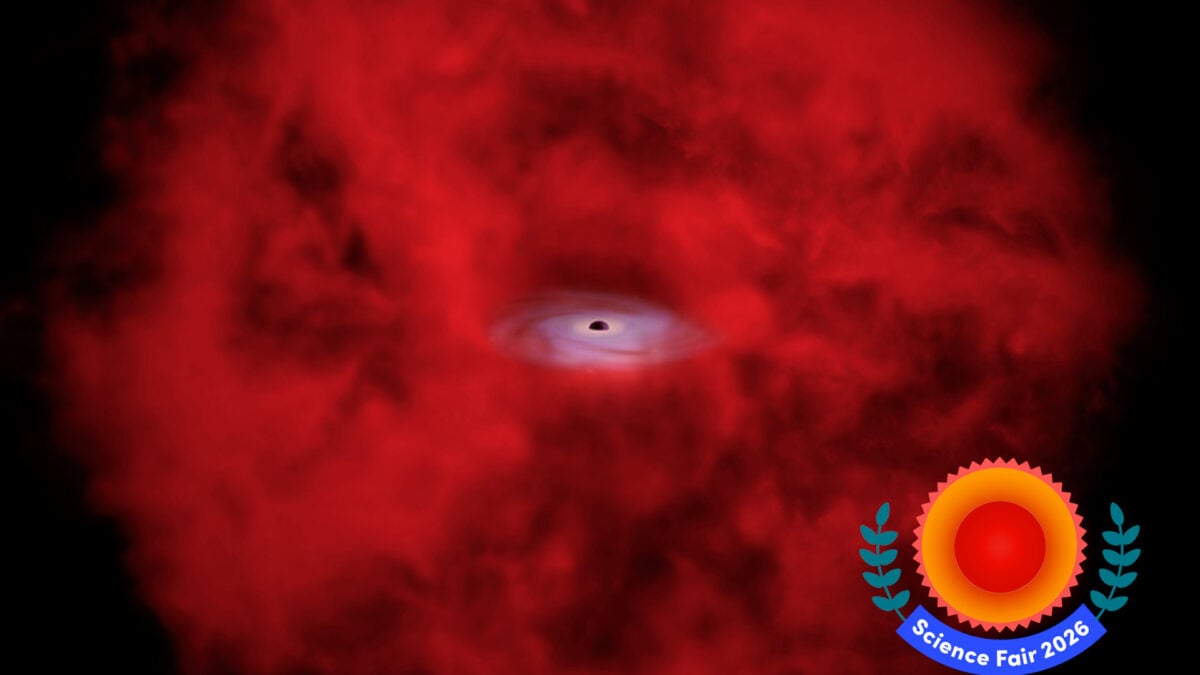
The Puzzle Webb Didn’t Come Looking For
When the James Webb Space Telescope first turned its eyes toward the deep field, the little red dots appeared everywhere. Not in simulations. Not in predictions. Just there, glowing faintly red in almost every image, silently accumulating evidence that something was wrong with the textbook timeline of cosmic history.
The dots don’t behave like galaxies. They don’t behave like normal stars. They don’t even behave like typical accreting black holes. They are, as Anna de Graaff of the Max Planck Institute for Astronomy put it, something that “nothing quite fits.” Her characterization captures the mood across the field: a mix of exhilaration and quiet anxiety.
This is the kind of discovery that doesn’t merely add a footnote to astronomy. It forces a reckoning.
What We Know So Far
The breakthrough came from studying a single object—GLIMPSE-17775—that happened to be magnified by gravitational lensing, a natural cosmic telescope produced when a galaxy cluster warps the light passing through it. Thirty hours of Webb observations on that one dot yielded data equivalent to nearly eighty hours without the lensing boost. The resulting spectrum was, in Vasily Kokorev’s words, “enormously complex”—every feature unique, every emission line pointing toward something unprecedented.
The object glows a million times more brightly than any known star, yet its spectrum shows features characteristic of both stars and superheated gas around an active black hole. Jorryt Matthee, who helped coin the term “black hole star” to describe this class of object, framed the contradiction plainly: “They show a lot of properties similar to stars, except that they cannot be normal stars because they’re way too luminous.”
The name “little red dots” was deliberately chosen as interpretation-free. “Black hole star” carries meaning—and meaning invites resistance. The community is divided, and Matthee acknowledges that openly. That tension is healthy. It means people are paying attention.
The Real Problem: Time
Here is what the data is actually saying, stripped of terminology debates. Between 500 million and 1.5 billion years after the Big Bang, black holes were forming and growing at rates that standard models cannot accommodate without significant revision. They appear embedded in dense gas environments, either born massive or consuming matter far faster than theory allows.
This is not a minor adjustment. The standard picture of supermassive black hole formation relies on a sequence of events—stellar-mass black hole remnants from the first stars, gradual accretion, mergers—that simply does not have enough time to produce the objects Webb is observing. The universe was not old enough. The gas densities required would need to be extreme. Something about the early cosmic environment was different from what the models assumed.
Rohan Naidu and his collaborators at the University of Hawaiʻi have been working on exactly this problem. Their simulations predicted a universe that looked like Webb’s images in almost every detail—except for the red dots. When those dots showed up, the simulations broke. Not partially. Completely.
That is the moment where cosmology gets interesting.
Who Wins When the Model Breaks
The immediate winners are the researchers who built their careers on being ready for the unexpected. Kokorev, Matthee, de Graaff, Alberto Torralba, Chris Ashall, Luc Dessart, John Chisholm—none of them predicted these objects. Several explicitly said the dots were absent from their simulations. What they share is the willingness to sit with uncertainty rather than force the data into an existing framework.
De Graaff captured the sentiment most directly: “It was built, of course, with a lot of science cases in mind, but secretly you hope to find something truly new, right? And so the fact that it delivered this puzzle has been really, really nice. It is extremely rare to come across a new type of object.”
The second-order consequence is that every model of early galaxy formation now has a loose thread. The relationships between black hole mass, galaxy mass, and gas content in the first billion years are all being re-examined simultaneously. Papers are appearing weekly. Hundreds have already been published since the initial discoveries, and the rate is accelerating.
What Comes Next
The next phase of work has two tracks. The first is deep, detailed study of individual objects like GLIMPSE-17775—understanding the physics of a small number of sources well enough to know what mechanisms are actually at work. The second is population-level analysis: how many of these dots exist, how their properties vary, and whether they represent a distinct evolutionary pathway or a transitional phase in standard black hole growth.
Matthee noted that this approach is fundamentally different from the experimental model taught in textbooks. Astronomers cannot run controlled experiments on the early universe. They can only observe and infer. That limitation makes the little red dots particularly valuable—each one is a data point that cannot be replicated, making careful analysis essential.
Kokorev expects more concrete answers within the next couple of years. The field is moving quickly enough that a timeline of 2027–2028 for significant progress seems realistic, assuming Webb continues to return high-quality spectra of similarly magnified objects.
The Bigger Picture
The discovery of the little red dots matters because it proves that the early universe still contains surprises large enough to challenge foundational assumptions. Cosmology has spent decades refining models of structure formation, and those models worked remarkably well—until they didn’t. The dots are not an anomaly to be explained away. They are evidence that the processes governing black hole and galaxy formation in the first billion years operated under conditions we have not yet fully characterized.
The community’s instinct to collaborate across institutions and specialties rather than race to claim credit is, frankly, unusual and worth noting. Astronomy often attracts competitive personalities. This moment has drawn out the opposite tendency. It may not last. But for now, the priority is figuring out what the dots are, not who gets to say it first.
What they turn out to be will reshape how we understand the universe at its youngest. That is rare. That is why this matters.