Lula's Triumph Stalls Blue Tide — But Brazil's Market Punishment Is
Lula's fourth term checked Latin America's rightward swing, but the bruising market rout and a hostile Congress suggest his progressive project will pay a steep price before it delivers anything.
A narrow verdict with outsized consequences
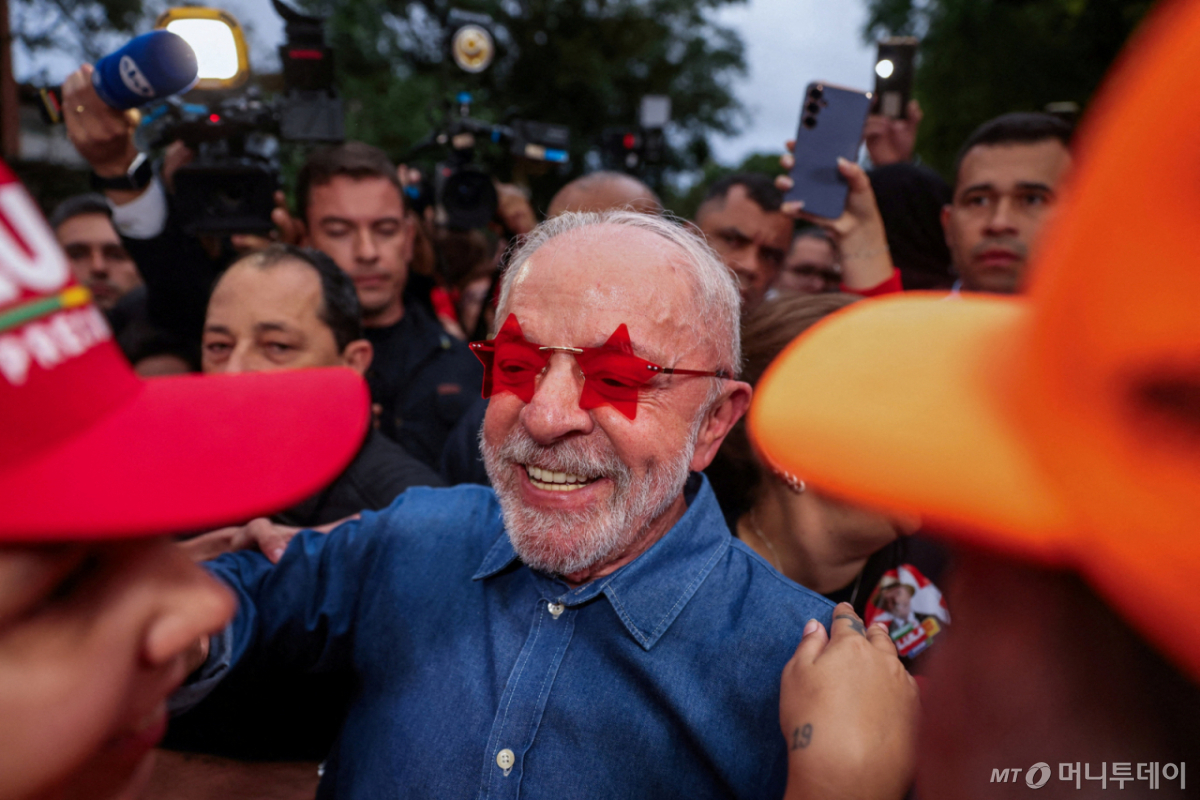
Luiz Inácio Lula da Silva survived. After trailing Flavio Bolsonaro by 220,000 votes in the first round, Lula flipped the contest in the runoff by nearly doubling that margin — winning 51.8 percent to 48.2 percent. It was the first time since Brazil’s democracy was restored in 1989 that the runner-up in round one carried the presidency. The achievement is real. But the moment it was confirmed, the market’s response told a different story.
In New York pre-market trading, the iShares MSCI Brazil ETF (EWZ) collapsed nearly 20 percent. In Tokyo, a tracker of Brazilian equities shed 12.75 percent. Investors who had loaded up on Brazil exposure betting on Bolsonaro-style fiscal austerity saw their thesis rejected overnight. That single data point — a double-digit plunge across two continents — captures the central paradox of Lula’s fourth term: he has won the political battle, but he may be losing the economic one before it begins.
How the blue tide lost its strongest engine
The broader significance of this result extends well beyond Brazil’s borders. Across Latin America, a wave of conservative victories — dubbed the “blue tide” — has swept through Honduras, Colombia, and Chile. Those governments have aligned closely with the Trump administration on security and migration. Brazil under Bolsonaro would have added the region’s largest economy and most populous nation to that bloc.
Instead, Lula remains. His foreign minister in a previous term, Celso Amorim, told Reuters that his president now serves as the region’s balancing weight. The geopolitical math shifts accordingly: Washington gains a quieter flank in South America, but loses a reliable ally on trade, environmental policy, and regional diplomacy. For Korea and Japan — both heavy buyers of Brazilian soybeans, iron ore, and fertilizers — the implication is equally concrete. Expect less friction on commodity trade, but more uncertainty on environmental regulations that govern sourcing.
Why the runners-up typically lose — and why Lula didn’t
The structural advantage of leading after round one should have held here. Bolsonaro finished first with 47 percent to Lula’s 45 percent. History favors the frontrunner converting that lead into a runoff victory. Yet Lula picked up roughly 440,000 additional voters in the second round — double the gap he faced initially.
The mechanism was geographic and demographic. Lula consolidated the northeast, his historical stronghold, where conditional cash transfers and anti-poverty programs have created durable loyalty. Rural and coastal voters who stayed home or tilted toward Bolsonaro in round one came back for Lula when the choice crystallized as progressivism versus populist nostalgia. The map matters because it also predicts governing difficulty: the northeast delivers votes, but the wealthy southeast and the agricultural heartland deliver seats in Congress.
The hostile legislature that greets him
Bolsonaro’s Liberal Party (PL) emerged as the single largest bloc in the Chamber of Deputies with 121 of 513 seats and the Senate with 28 of 81. Analysts at Getulio Vargas Foundation (FGV) in São Paulo described the coming Congress as the most conservative since the 1980s. Oliver Stuenkel, an international relations professor at FGV, warned that Lula faces a likely lame-duck dynamic from day one — weakened appointments authority, fragile party coalitions, and active impeachment threats.
This is not abstraction. Bolsonaro has already refused to accept the result, calling for election nullification. Even if the courts reject those claims, the rhetorical escalation adds governance risk on top of numerical opposition. A president whose approval rating bottomed out at 24 percent last February returns with a thin mandate and no legislative cushion.
Markets priced inflation before the swearing-in
The ETF selloff reflected a straightforward calculation. Bolsonaro campaigned on fiscal spending cuts. Lula promised to expand social welfare by 15 percent and ease household burdens. Markets interpret the difference as meaning higher deficits, higher inflation expectations, and higher bond yields — precisely the environment that makes Brazil’s existing debt pile harder to service.
The numbers already stacked against growth illustrate the constraint. Government projections forecast 2.3 percent GDP expansion next year. Public debt exceeds 82 percent of GDP, a post-pandemic high. Household debt is surging. Personal loan delinquency has reached its worst level in two decades. High interest rates and borrowing costs have already squeezed consumption. A fiscal expansion financed by domestic debt in that context risks crowding out private investment and reigniting the inflation that Brazil spent years taming.
What this means for commodity importers
For East Asian economies that import Brazilian inputs — Japan’s steelmakers, Korea’s agriculture and manufacturing sectors, China’s infrastructure pipeline — Lula’s victory carries mixed signals. On the upside, a cooperative Brasília reduces the risk of sudden export restrictions, environmental litigations against agribusiness, and trade-policy unpredictability. On the downside, a weaker real and looser fiscal stance could push commodity prices higher, raising input costs at exactly the moment importers are navigating tight margins.
If Lula’s government chooses stimulus without revenue measures, the peso-dollar trajectory tilts against Asian purchasers. If he negotiates with the PL-dominated Congress instead, expectations anchor closer to current levels. Which path he picks in the first hundred days will set the tone for bilateral trade and investment flows for the entire term.
The governing test ahead
Lula’s first term (2003–2010) delivered poverty reduction and record approval. His third term (2023 onward) achieved low unemployment and historic labor reform. Each phase rested on favorable commodity cycles and sufficient fiscal space. The fourth starts under opposite conditions: sluggish growth, elevated debt, a combative opposition, and skeptical markets.
The most likely shape of his early presidency is defensive legislation — piecemeal concessions to the congressional right in exchange for survival, while keeping welfare promises narrowly targeted to his northeastern base. That keeps the government functional but limits transformative capacity. It also leaves Lula vulnerable to the same critique that eroded his ratings last year: stagnant living standards masked by transfer payments.
What makes this moment historically interesting is not the election itself — presidents in Latin America lose and win regularly — but the timing. Lula’s return arrives as the United States recalibrates its hemisphere posture under Trump, as China’s demand for South American commodities shows strain, and as regional coalitions fracture along ideological lines. He holds the center. Whether he can govern from it, rather than merely occupy it, remains the open question.