Macron and Carney Build a Transatlantic Bridge Under Trump
France and Canada are deepening their alliance on energy, trade, and democratic defense — a quiet but strategic move as Washington grows increasingly unpredictable under Trump's America-first posture.
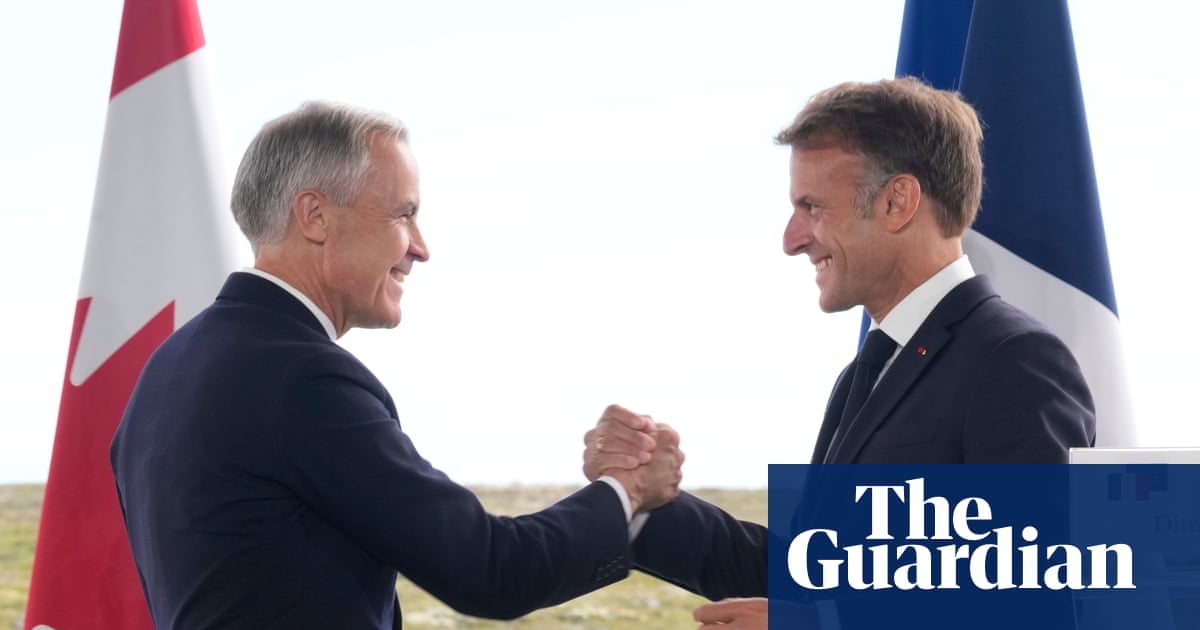
A Meeting Designed for the Headlines
Saint-Pierre and Miquelon is a remote cluster of islands 25 kilometers off Canada’s southern coast. For two weeks in September 2026, it became the most geopolitically charged piece of French soil in the Western Atlantic.
Emmanuel Macron and Mark Carney met there on Sunday — the first visit by a French president to the territory since Jacques Chirac in 2014, the first by a Canadian prime minister ever. The choice of location was deliberate. The islands sit at the edge of Canada’s exclusive economic zone, within sight of major shipping lanes, and just a day’s flight from both Washington and Paris.
They also sit inside the border Trump drew on social media days earlier.
The former US president posted an image mapping North America and parts of Central America and the Caribbean under a single American flag — including Saint-Pierre and Miquelon, Greenland, Iceland, and French Caribbean territories. He called it the “United States of America.” The post carried no official designation, but the implication was unmistakable: these places belong to the United States.
Macron did not rise to the bait directly. When asked about the post, he said only that he did not need to reaffirm French sovereignty over the islands every day because of “strange ideas” from abroad. Carney was more pointed. He framed the meeting around what he called “new storms” — climate change, erosion of democratic norms, and threats to sovereignty.
The word sovereignty appeared three times in the joint statement.
Energy as Strategy
The most concrete outcome of the meeting involves liquefied natural gas.
France’s domestic fuel prices are rising, a political vulnerability for Macron as he faces pressure ahead of the next parliamentary cycle. Canada sits on some of the world’s largest untapped LNG reserves. Most of those reserves currently flow to Asia, where prices have been higher. Europe, desperate to reduce its dependence on Russian gas and stabilize prices, has been looking south.
Macron explicitly called for Canada to broaden its LNG exports to Europe rather than primarily to Asia. He called Canadian projects “important for Europe.” Carney did not commit to specific volumes, but the framing was clear: this is not a commercial conversation. It is a strategic realignment.
Canada already supplies electricity to parts of the northeastern United States through interconnection lines. Expanding that model to include LNG shipments to European ports would represent a significant shift in North American energy geography. It would also tighten the link between Ottawa and Brussels in ways that Washington cannot easily ignore.
The Associate Member Proposal
The more provocative element of the discussion centered on the European Union’s proposal to make Canada its first associate member.
The idea has not been formally adopted. The EU Commission floated the concept as a way to deepen ties with democratic partners outside the continent without offering full membership. Canada has expressed interest. Macron said France supports the proposal.
Trump called it “laughable” and threatened “serious tariffs” and a trade halt if the EU moved forward. The threat was vague — the US and EU trade in goods and services exceeds $1 trillion annually. Tariffs on that scale would hurt both sides. But the signal was clear: Washington views any deepening of EU-Canada relations as a challenge.
This is not new thinking from Trump. He has previously mocked NATO allies for not spending enough, questioned the value of the transatlantic alliance, and imposed tariffs on Canadian steel and aluminum in his first term. The difference now is the tone. The social media post redrawing borders — even satirically — crosses into territory that signals a willingness to test the boundaries of allied relationships.
The Ratification Problem
None of this will be easy.
The Comprehensive Economic and Trade Agreement between the EU and Canada — CETA — has been in place provisionally since 2017. Full ratification requires approval from every EU member state and the European Parliament. More than a decade later, several countries have not ratified, including France.
French opposition to CETA has come from agricultural interests worried about competition, labor unions concerned about standards, and political groups skeptical of deeper integration with non-European partners. The same government that is now championing closer ties with Canada has not signed off on the existing trade framework that would make those ties easier.
Carney’s visit does not solve that problem. But it adds political pressure. If Canada becomes an associate member of the EU, France would face heightened domestic criticism for blocking an agreement its own government supports. The timing — just weeks before the UN General Assembly — suggests Paris wants to put the issue on the international stage.
Who Wins, Who Loses
France wins credibility. Macron has positioned himself as a defender of European autonomy for years, but the track record is mixed. This meeting gives him a concrete win outside the EU structure — a bilateral relationship with a major resource-rich democracy that is explicitly framed around shared values and strategic independence.
Canada wins leverage. Ottawa has been trapped between a hostile trade partner to the south and a regulatory superpower to the north. Moving energy exports from Asia to Europe, deepening ties with the EU, and cultivating a personal relationship with Macron gives Canada options. That is valuable whether Trump returns to office or not.
The European Union wins a template. The associate member concept, if it gains traction, could be replicated with other democratic partners — Japan, South Korea, Colombia. It offers a way to build a network of aligned economies without requiring treaty changes or accession negotiations.
The United States loses influence. Not immediately, not catastrophically. But the message from Trump’s map post was that American dominance is assumed, not earned. The response from Paris and Ottawa was to build alternatives. That is how influence erodes.
What Comes Next
The next step is technical. Energy cooperation requires regulatory alignment, shipping routes, and infrastructure. The associate member status requires EU Council consensus and Canadian domestic approval. Both are possible. Neither is guaranteed.
What is clearer is the geopolitical signal. France and Canada are treating the transatlantic relationship as something that needs defending, not something that happens automatically. That is a shift from the post-Cold War assumption that security and trade across the Atlantic were settled.
Macron and Carney met on a small island off the coast of Newfoundland and said, without saying it directly, that the old order is fraying. The question now is whether they can build something durable before the next crisis arrives.