Malta's acquittal tests EU's rule-of-law muscle
The acquittal of tycoon Yorgen Fenech in the murder of journalist Daphne Caruana Galizia exposes a critical flaw in the EU's ability to uphold democratic norms within its borders. With Malta's political class implicated in an atmosphere of impunity, the verdict raises urgent questions about accountability across the bloc.
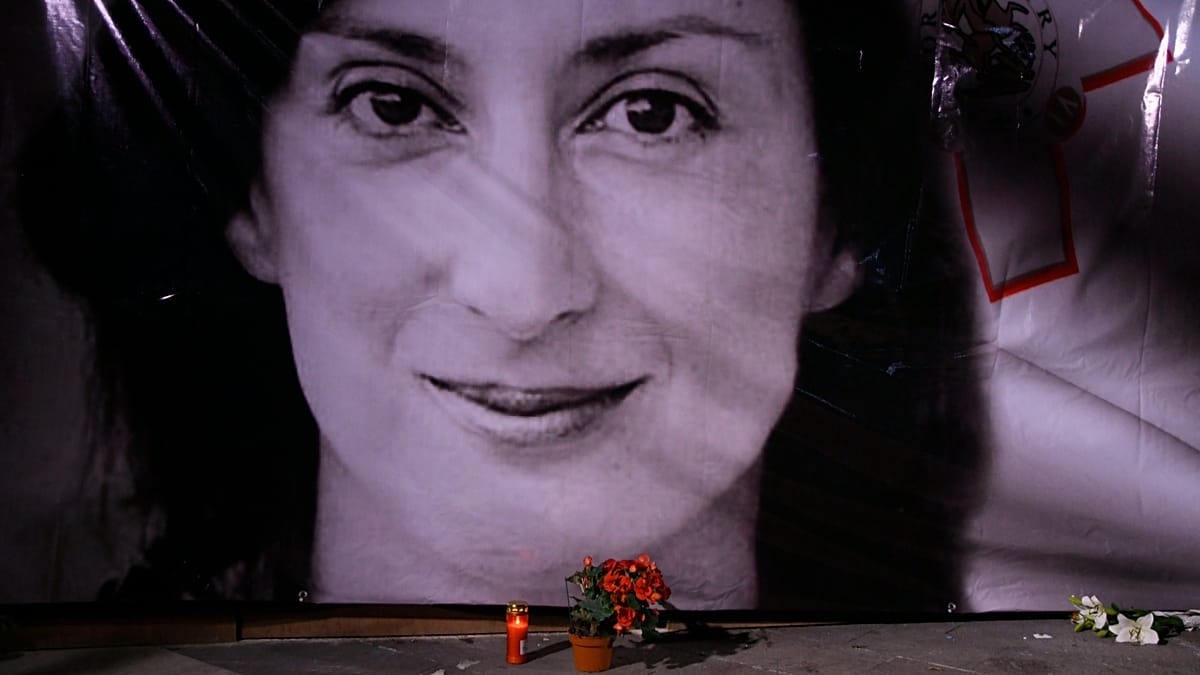
The verdict that should have ended
Yorgen Fenech walked free on Wednesday. The Maltese court cleared the energy and tourism tycoon of orchestrating the 2017 car‑bomb killing of investigative journalist Daphne Caruana Galizia. Her son Matthew called it a “terrible decision…that our country may never recover from.” Media watchdogs declared the ruling “disturbing.” Nine years after the bomb detonated outside her home, the man prosecutors painted as the mastermind received not a life sentence but a dismissal.
This is not merely a national scandal. It is a stress test for the European Union’s claim to be a community built on the rule of law. Malta, the bloc’s smallest member state, has produced an atmosphere where a journalist could be murdered with apparent confidence that her killers would be shielded. The EU’s treaties, value reports, and infringement procedures have so far failed to reverse that reality. The question now is whether Brussels can credibly enforce democratic standards when one of its own members harbours a suspect accused of ordering a journalist’s assassination.
A one‑woman WikiLeaks
Caruana Galizia was 53 when she died. She had spent two decades digging into corruption, tax evasion, and money laundering at the highest levels of Maltese society. Reporters Without Borders called her “a one‑woman WikiLeaks.” Her reporting targeted the very network that connected business, politics, and state institutions—a web so dense that even after her death, a panel of three judges concluded that politicians had subjected her to “personal attacks and verbal abuse” that created a “favourable climate” for her murder.
The probe into her killing triggered a political crisis. Then‑premier Joseph Muscat resigned in January 2020 after mass protests accused him of protecting allies. A two‑year public inquiry, published in July 2021, found that the state should “shoulder responsibility” for the assassination. The judges wrote that there was “convincing evidence” the killers believed they would be protected by “persons in the highest state positions.” Accountability, the inquiry implied, was the missing ingredient.
Who has been caught, who has slipped away
Five people have been convicted in connection with the murder. In June 2025, Robert Agius and Jamie Vella received life sentences for supplying the explosives. Brothers George and Alfred Degiorgio and Vince Muscat are serving prison terms for carrying out the bombing. All were low‑level actors in a chain that stretched upward.
Fenech was arrested on his yacht in 2019 as he tried to sail out of Malta. Prosecutors alleged he ordered the killing because Caruana Galizia was about to publish an article exposing his uncle’s dealings. A middleman had been offered a pardon in exchange for naming those behind the murder. Instead of a conviction, Fenech now walks free.
Her family’s statement was blunt: “Accountability is now overdue for all those who enabled, facilitated, or protected her murderers.” They added that “institutional failures that enabled her murder remain unaddressed and unreformed.” Nine years on, the state’s own inquiry had already found such failures. The verdict simply reopened the wound.
Why the EU cannot look away
The European Union is not a legal neutral zone. Its membership requires adherence to Article 2 values: human dignity, freedom, democracy, equality, the rule of law, and human rights. When a member state allows a journalist’s killer to escape conviction, it undermines the entire project. The EU’s rule‑of‑law mechanism, introduced in 2020, exists precisely to address systemic breaches. So far, it has been applied to Poland and Hungary. Malta has not faced the same scrutiny—but its record is arguably worse.
The Verfassungsgerichtshof in Austria once noted that the rule of law is not a mere slogan but a condition for mutual trust among member states. When that trust erodes, the EU’s collective credibility erodes with it. Caruana Galizia’s murder exposed a rot at the heart of Maltese governance. Fenech’s acquittal suggests the rot remains.
Brussels has tools. It can launch infringement proceedings for failure to protect fundamental rights. It can suspend funding. It can refer the matter to the European Court of Justice. It has yet to wield them meaningfully against Malta. That silence sends a message: democratic backsliding in small states carries less cost.
Who wins, who loses, what happens next
The immediate winners are those who benefit from opacity. Tycoons, politicians, and their associates gain confidence that connections can insulate them from justice. The losers are journalists, witnesses, and any citizen who expects the state to protect those who expose wrongdoing. Caruana Galizia’s family, her colleagues, and media freedom advocates feel the loss acutely. The European Centre for Press and Media Freedom warned that the verdict sends “a disturbing message to those who attack and kill journalists.”
What happens next? Malta’s government faces pressure to appeal or reopen investigations. The public inquiry’s findings remain unimplemented. The EU’s rule‑of‑law framework awaits a test case. For now, the verdict stands. Caruana Galizia’s name is attached to a tragedy that is far from resolved.
The stakes beyond Valletta
Malta’s crisis is not unique. Across the EU, journalists face threats, legal harassment, and violence. The European Commission’s 2025 report recorded a rise in attacks against reporters. Yet the Caruana Galizia case is distinct because it implicates the highest levels of state power. It is not a random act of violence but a calculated elimination enabled by a culture of impunity.
If the EU tolerates this in Malta, it signals that rule‑of‑law commitments are conditional—easier to enforce against larger, more vocal members than against quiet, sunny islands. That double standard corrodes the bloc’s moral authority. It also emboldens illiberal forces elsewhere.
Justice for Caruana Galizia is not just about one verdict. It is about whether the EU can hold its members to the standards they have sworn to uphold. Until it does, the journalist’s legacy will remain a warning: when democracies fail to protect their watchdogs, the price is paid by everyone.