Merz's Budget-Ukraine Gamble Tests EU Unity
German Chancellor Friedrich Merz ties the EU's seven-year budget to fresh Ukraine aid, forcing a reckoning among member states. The move risks fracturing bloc cohesion but could lock in long-term support.
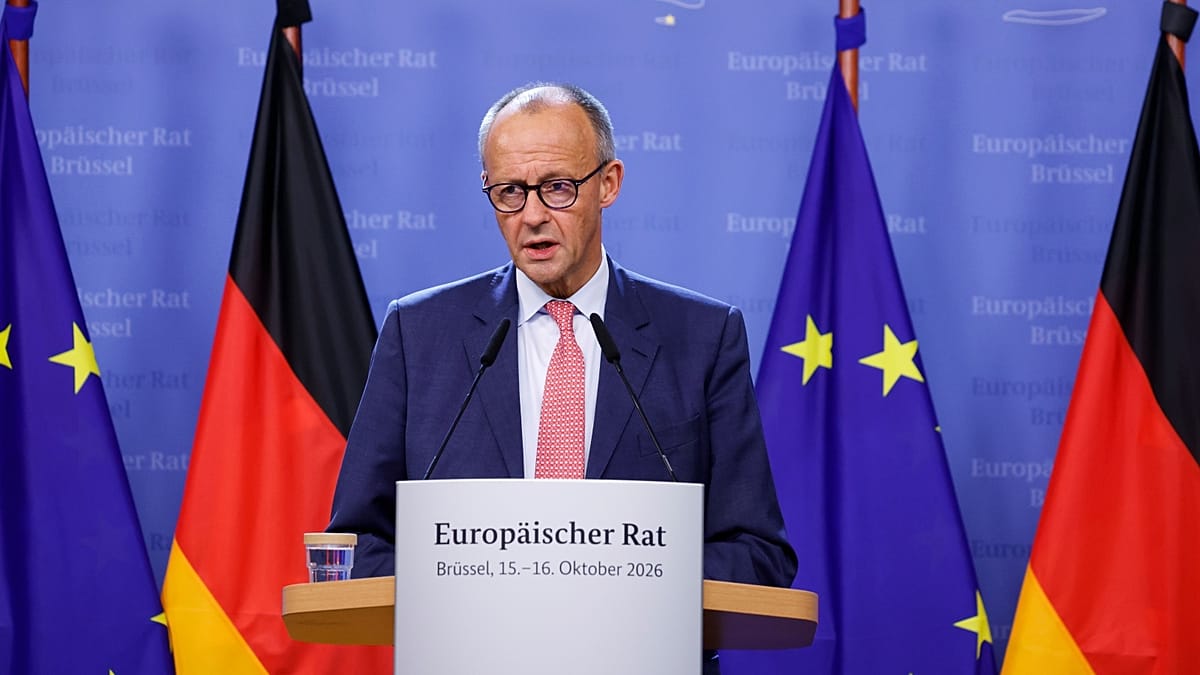
The Leverage Play
Friedrich Merz just made the hardest choice Brussels has faced since the pandemic. By declaring that no agreement on Ukraine’s €45 billion funding gap automatically blocks the entire seven-year EU budget, the German chancellor has turned a technical negotiation into a high-stakes test of European solidarity. The move forces every capital to pick a side—and exposes a fault line that runs deeper than any dispute over agricultural subsidies.
Kyiv is staring at a €70 billion shortfall for its 2027 budget, a hole carved by relentless Russian airstrikes. The EU had pledged two-thirds of that sum through a yet-to-be-defined instrument. Now Merz is saying the pledge must be collective, unconditional, and backed by common borrowing—or nothing moves forward in Brussels.
The timing is deliberate. A special summit ends next week in Dublin, where Ireland’s presidency will try to broker a deal before markets price in another year of uncertainty. Merz’s letter to European Council President António Costa asks that Ukraine financing be elevated to a priority topic on an agenda that originally never intended to include it. That alone signals how far Germany is willing to stretch diplomatic protocol.
Who Carries the Weight—and Who Refuses
Support for Ukraine has been distributed unevenly across the union, with Germany, Denmark, Finland, the Netherlands, and SwedenShouldering the lion’s share. Those same countries are the “frugals” or “modernisers” who also want across-the-board cuts to the draft budget. They see a contradiction they cannot accept: paying twice for European security while some members opt out of joint debt and still demand full cohesion spending.
“The cohesion camp cannot have their cake and eat it,” one diplomat told Euronews. The math is simple. There is no money tree in Brussels. If €45 billion flows to Kyiv, it must come from somewhere—and if four eastern states refuse to join the borrowing pool, the rest face a steeper bill or a weaker commitment.
Hungary, Slovakia, and the Czech Republic already secured an opt-out from the €90 billion support loan in exchange for granting unanimity. Bulgaria, a vocal critic of weapons deliveries, is expected to follow. Their resistance is not merely fiscal; it reflects a broader skepticism toward further military engagement with Moscow. Yet their refusal comes at a moment when interest payments on the existing loan—initially estimated at €3 billion annually—are rising sharply due to higher borrowing costs.
The Budget Bombshell
Linking the two files changes everything. Before Merz’s intervention, the EU budget and Ukraine aid could have been negotiated separately, allowing technical compromises to mask political disagreements. Now they are fused. Any holdout on Ukraine support can veto the entire multiannual financial framework. Any break on the budget becomes a break on Ukraine.
Simon Harris, Ireland’s finance minister, agrees with the linkage. “It’s very hard to have a serious conversation about the European budget for the next several years without Ukraine and the financing of Ukraine,” he said Monday. “This is actually European security.”
But not all leaders share that view. Poland’s deputy minister Ignacy Niemczycki warned last week that binding the two issues could backfire, making a final deal even harder. Slovak Prime Minister Robert Fico called the approach “very dangerous.” Both governments fear that using budget leverage might isolate key partners rather than reinforce them.
The friction between the frugals and the Friends of Cohesion is now personal. Countries like Spain, Greece, and Portugal argue that cohesion funds are essential for convergence and that cutting them would harm the union’s social fabric. They see Merz’s move as a northern imposition disguised as solidarity.
What Moscow Hears—and What Kyiv Fears
For Vladimir Putin, the news is both encouraging and unnerving. Encouraging because the visible split proves that Europe’s unity is conditional. Unnerving because Merz’s gambit suggests Berlin is preparing to institutionalize support regardless of electoral shifts elsewhere. If the EU commits to a binding mechanism backed by joint debt, even partial opt-outs won’t stop the flow.
The interest liabilities on the €90 billion loan add urgency. Principal repayment is deferred until Russia agrees to war reparations—a condition unlikely to be met soon—but annual interest payments begin next year. Every month of delay increases the total cost. Kyiv needs certainty now, not promises for 2028.
President Volodymyr Zelenskyy’s government has watched the disarray with growing anxiety. The €45 billion promised for 2027 is contingent on a Council decision that may not come until after the summit. Delays risk paralyzing Ukraine’s fiscal planning, disrupting defense procurement, and widening the gap between wartime needs and peacetime economics.
The Dublin Reckoning
All eyes turn to the end-of-November summit. Ireland will present options drafted by the European Commission, likely including a new round of joint borrowing, enhanced conditionality, or a voluntary coalition model where only participating states issue guarantees. Each path carries political risk.
A forced unanimity rule preserves sovereignty but hands a veto to Budapest and Bratislava. A variable geometry approach rewards commitment but deepens division. Merz’s framing suggests he prefers the latter—if enough major economies sign up, the rest can be left behind.
Yet the European project has always thrived on inclusive compromise. Abandoning four member states entirely could set a precedent that weakens the logic of solidarity itself.
Who Wins, Who Loses
If Merz’s linkage succeeds, Germany emerges as the guarantor of European security, shifting responsibility away from bilateral goodwill toward institutional obligation. The frugal northern bloc gains leverage to reshape the budget around strategic priorities. Kyiv receives predictable, multi-year funding—a lifeline.
If it fails, the budget stalls for another year, Ukraine’s financing remains ad hoc, and the EU looks incapable of executing its own commitments. Moscow interprets the deadlock as proof that Western resolve is fragile. Eastern members feel punished for past vetoes. Northern taxpayers grow resentful of carrying disproportionate burdens.
Either outcome recalibrates the relationship between national interests and collective action. The real question is whether Europe chooses硬化或碎裂。
The Long Game
What happens next will define the EU’s geopolitical posture for the decade. Merz is betting that tying budgets to security creates accountability. His opponents fear it creates paralysis. Both sides assume the other will blink first.
For Kyiv, the immediate priority is closing the 2027 gap. For Brussels, the longer game is preventing a return to ad hoc charity. For Moscow, the opportunity lies in exploiting the cracks until they widen.
The summit in Dublin is not just a meeting—it is a threshold. Beyond it, the EU will either demonstrate that it can fund its values under pressure, or reveal that those values expire when the bill comes due.