Meta's Muse Is a Bet That Personal AI Will Redefine Everything
Mark Zuckerberg is betting Meta's future on Muse, a personal AI agent that could upend how everyone interacts with every app online. The move isn't just about competing with Google — it's a philosophical statement about who should control the most powerful technology in history.
The Personal AI Agent Is the Next Platform War
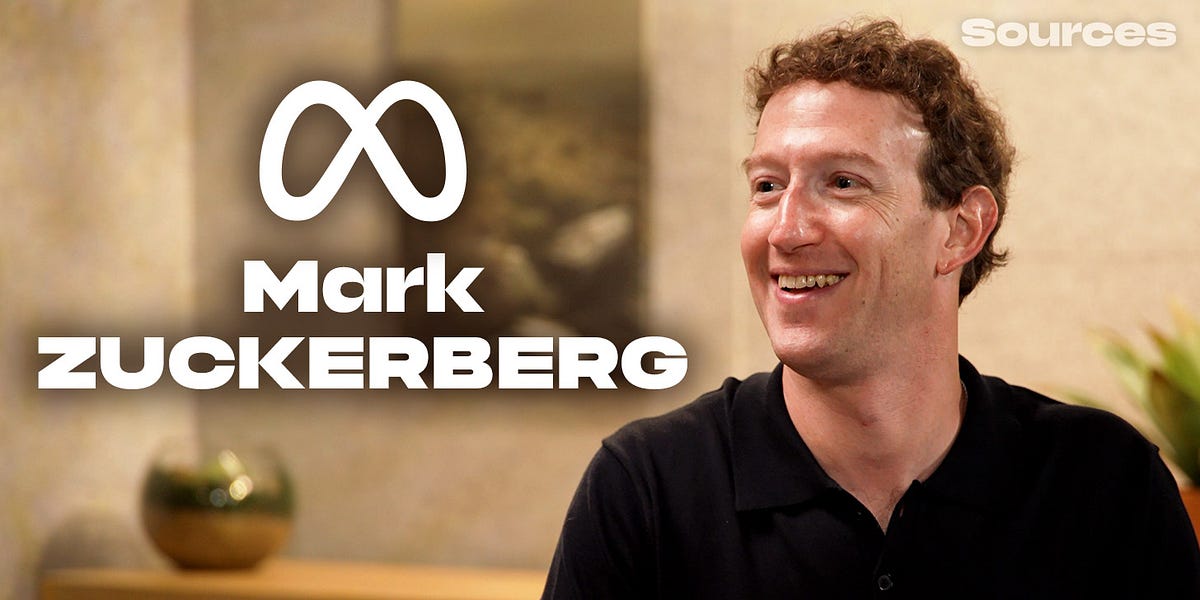
Mark Zuckerberg called someone last weekend through AI-powered glasses while they were fishing. He wasn’t bragging. He was demonstrating something far more consequential: the company’s newest and riskiest bet on the future of computing.
Muse is Meta’s answer to the personal AI agent — a product that Zuckerberg calls the biggest manifestation of his company’s AI vision. It’s not just another chatbot. It’s designed to understand a person’s goals and work on their behalf around the clock. If the pitch lands, it changes everything about how humans interact with every app, service, and piece of content they consume online.
That is a wildly ambitious claim. And it’s precisely why this matters beyond Silicon Valley.
A Philosophy Wrapped in a Product Launch
What makes Muse distinct isn’t just what it does. It’s the framework Zuckerberg built around it. In a 15-page essay published recently, he laid out three principles that separate Meta’s approach from competitors like Google and OpenAI.
First, empowering individuals is the source of prosperity. Second, AI’s primary purpose is invention, not automation. Third, safety comes from distributing technology widely, not restricting it to a handful of labs.
Those aren’t marketing slogans. They’re direct rebuttals to the prevailing wisdom in AI development, especially at Google, where the strategy has leaned toward gating access to advanced models behind strict licensing and partnerships. Zuckerberg is arguing the opposite: that hoarding capability is dangerous, and the only path to both safety and prosperity is putting tools in the hands of billions.
The argument is bold, but the timing is shrewd. Google has been quietly building its own personal AI agents, with projects like Gemini Advanced positioned as personal assistants. Meta is now going all-in on the same battlefield, but with a fundamentally different go-to-market thesis.
The Open Source Gambit
Zuckerberg’s insistence on open source isn’t just ideological. It’s strategic armor.
He referenced the Hugging Face incident directly — when the popular AI community faced a cybersecurity intrusion and had to pivot to open source models because they lacked access to certain closed systems. The point: if every important institution depends on a single provider’s proprietary stack, the entire ecosystem becomes fragile.
Meta is positioning itself as the alternative. The company released MuseSpark 1.3, built on an internal pre-training codenamed Avocado, and hinted at a model called Watermelon coming soon. Some models will be open. Some won’t. Zuckerberg acknowledged that as a for-profit company, Meta doesn’t need to share everything. But the overall thrust is clear: Meta wants to be the platform where the AI ecosystem develops, not just another gatekeeper.
That matters for developers. It matters for enterprise customers. And it matters for advertisers, who will increasingly interact with AI agents on behalf of consumers.
The Ad Revenue Question
Here’s what most commentary is missing: Muse has second-order implications for digital advertising that could be enormous.
If a personal AI agent handles a significant portion of a user’s digital interactions — searching, booking, purchasing, communicating — then the agent becomes the new intermediary between consumers and brands. That shifts where advertising dollars flow and how they’re spent. Companies that build relationships with AI agents will have an advantage over those that rely on traditional display and social ads.
Meta already owns some of the most valuable social data in the world. Muse gives the company a potential gateway into a new layer of commerce and interaction. Google is chasing the same opportunity with Gemini. The race isn’t just about who builds the smarter agent. It’s about who owns the relationship between the agent and the consumer.
Data Centers and Community Politics
Zuckerberg also addressed something most tech CEOs avoid: the growing backlash against data centers in local communities.
He drew a sharp distinction between speculative developers who buy land and flip it to AI companies, and operators like Meta that plan to invest for decades. Louisiana, he noted, is an example where Meta’s data center tax revenue funded $50,000 bonuses for teachers. The company also launched America’s Workforce Academy, a training program guaranteeing jobs for graduates in skilled trades needed for infrastructure buildout.
The message is aimed at policymakers and skeptical communities. Meta is trying to position itself as a long-term partner, not a transient extractor. Whether that translates into political goodwill remains to be seen, but the attempt signals that Zuckerberg understands AI infrastructure can’t scale without social license.
The Bigger Picture
What’s striking about this moment is how much Meta has changed since its social media heyday. The company no longer sees itself primarily as a platform for human connection. It sees itself as a vehicle for distributing powerful tools to individuals — whether that’s social features a decade ago or personal AI agents today.
The personal superintelligence essay Zuckerberg published a year ago laid the groundwork. Muse is the payoff. Whether it pays off commercially is another question. Google, OpenAI, and Apple are all moving in the same direction. The winner may not be the one with the smartest model. It may be the one that builds the most trust with the widest distribution.
Zuckerberg’s bet is that Meta can do both. That’s a bet worth watching.