Miami Runway Collision Exposes US Air Safety Frailties
A UPS cargo plane and Copa Airlines jet collided while taxiing at Miami International Airport, underscoring how surface safety is buckling under the strain of post-ground-stop recovery at major US hubs.
A Collision At the Edge of Recovery
Two planes met on the tarmac at Miami International Airport on Saturday night in a collision that should not have been possible.
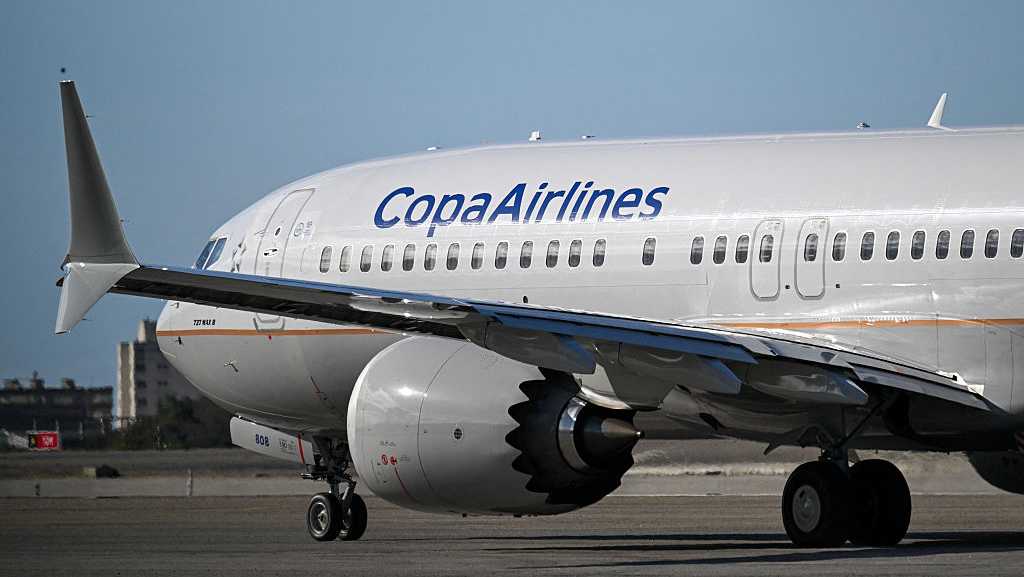
A UPS Boeing 767 freighter taxiing toward Gate 30 for a flight to Bogotá clipped the wingtip of a Copa Airlines Boeing 737 that had just arrived from Panama City. The impact occurred around 9:15 p.m., minutes before traffic control audio captured the UPS crew admitting they had taxied too far forward. Fire trucks rolled to the scene within three minutes of the initial call. Two passengers were treated on site for minor injuries and released — one reportedly suffering a mild wrist sprain after being thrown slightly off balance during the impact, the other complaining of neck stiffness. Both were evaluated by Miami International’s on-site EMS team and walked away without transport to a hospital.
The near-miss sounds like an isolated incident until you place it against the broader timeline. Only hours earlier, the FAA had lifted a nationwide ground stop that had lasted more than four hours and stretched back into Friday afternoon — the longest such halt in 25 years. Controllers were clearing a backlog of tens of thousands of delayed aircraft. Pilots were working through congested runways and unfamiliar taxi routes after being diverted or held overnight. And in the middle of that pressure cooker, a freighter walked into a commercial jet carrying roughly 160 people on its wings.
How This Happened
The details are still emerging from the National Transportation Safety Board preliminary review, but the air traffic control recording tells part of the story. The Copa 737 pilot reported being struck on final approach to the ramp area. The UPS 767 crew acknowledged crossing the path of the arriving aircraft — a textbook error, one that happens when ground movement gets chaotic and positional awareness slips between visual references and mental mapping.
Both flights carried relatively light loads by the time they reached the ramp area — the UPS aircraft was mostly empty after offloading inbound freight, and the Copa jet was nearly empty after deplaning. That likely explains the narrow scope of injuries. But the absence of serious harm does not reduce the seriousness of what occurred. A mid-tarmac collision between a 767 freighter and a 737 carrying roughly 160 people is exactly the kind of accident that sits in the gap between routine and disaster. One different turn. One second later. One missed check between the controller and the cockpit.
Investigators will scrutinize several factors: whether the UPS crew misread their position relative to active taxiways, whether surface markings and lighting were adequate at the point of contact, and whether controller workload during the recovery period contributed to any delay in issuing hold-short instructions. Miami International has been flagged in previous GAO reports as having taxiway infrastructure that predates current traffic volumes, with some intersections relying on signage rather than physical separation — a design philosophy that worked when daily movements were a fraction of today’s levels.
Why Miami?
Miami is one of the busiest international airports in the United States and a primary gateway for Latin American traffic. It handles heavy cargo volume — UPS operates a major hub there with nightly sorting operations that keep the airfield active well into early morning — and sees high-density passenger movements at any given hour. When the FAA ground stop dropped thousands of flights onto a compressed schedule, Miami absorbed a disproportionate share of the disruption because it serves as a natural reroute point for flights coming off the East Coast.
By Saturday night, more than 6,400 flights scheduled for the day had already been canceled across the system, with Miami accounting for hundreds of those disruptions directly. Another 800-plus Sunday departures fell victim to the same cascading delays. Hotels near the airport reported full occupancy as stranded passengers sought lodging. Ground transportation networks buckled under the weight of rebooked connections — ride-share wait times exceeded two hours in some terminal zones, and rental car lots remained cleared out days after the original cancellations.
Congested airfields during surge conditions create the exact environment where surface collisions thrive. Controllers manage more simultaneous movements than their training scenarios typically prepare them for. Pilots encounter longer taxi times and unexpected hold-short instructions that interrupt established flow patterns. Fatigue sets in — both cabin crews managing displaced passengers and ground staff working extended shifts. Communication channels jam as multiple parties attempt to coordinate on shared frequencies. Errors slip through the cracks precisely when the margin for precision is thinnest.
The Ground Stop Context
The original trigger remains in dispute, and that ambiguity itself is a problem. Transportation Secretary Sean Duffy attributed the nationwide stoppage to routine maintenance on navigation equipment that unexpectedly failed during testing — a claim the FAA has neither fully confirmed nor denied with technical specificity. The FAA framed it as a precautionary measure taken to protect en-route traffic while engineers assessed whether the affected equipment could cause misleading instrument approaches. Either way, the result was the same: a systemic paralysis that exposed how fragile US airspace management has become under mounting demand.
Four thousand flights cancelled in a single weekend is not a normal operational hiccup. It signals that the system lacks sufficient redundancy. When one piece of infrastructure stumbles — whether GPS augmentation gear or a meteorological phenomenon — the entire network seizes because there are few parallel pathways built into the architecture. The FAA’s NextGen modernization program promised progressive upgrades over decades, but key components remain incomplete. Controllers still rely heavily on legacy radar and voice communication systems in many sectors.
And when the network restarts, the residual congestion is unpredictable — weather clears, altimeter settings shift, departure queues reorganize in real time. That unpredictability is exactly what produced Saturday’s collision. Pilots holding for fuel restrictions encountered altered taxi procedures. Controllers managing the return-to-service wave juggled information from multiple overlapping sectors with no single authority coordinating surface movements across the entire airfield perimeter.
Second-Order Effects
The ripple effects extend well beyond the immediate safety question. Insurance carriers monitoring aviation claims are already reassessing risk models for hub operations, which could push premium costs higher for airlines operating at congested airports. Delta and United, both of which maintain significant Miami presences, face reputational exposure even though neither was directly involved. Passenger trust erodes incrementally with each incident, and that erosion translates into booking hesitation — particularly among leisure travelers who constitute a large share of Miami-bound traffic.
Cargo operators like UPS face scrutiny too. The company has faced criticism before for prioritizing scheduling efficiency over ground coordination, especially at facilities where package volume peaks during overnight windows. The intersection of cargo-heavy operations with passenger terminal flows at Miami creates unique conflict points that have received insufficient regulatory attention. NTSB investigators will almost certainly examine whether UPS’s internal taxi protocols align with the heightened congestion environment created by sporadic ground stops and surge recoveries.
Regional airlines connected to Miami through codeshare agreements also feel the pain indirectly. Connections missed on Saturday night rippled into Monday schedules as crews positioned themselves for return flights, creating a feedback loop of disruptions that stretched compensation obligations and forced schedule resets across multiple carriers.
What Comes Next
The FAA will almost certainly launch an investigation into the Miami collision. National Transportation Safety Board protocols require it whenever a reportable aviation incident occurs involving injury or substantial property damage. The findings will examine everything from controller workload to pilot situational awareness to the adequacy of surface signage and lighting at a terminal that has not been upgraded to match current traffic volumes. Expected recommendations will likely include mandating advanced surface detection radar at major hubs, revising controller training for post-disruption recovery operations, and establishing clear accountability frameworks for ground movement coordination during surge periods.
But the deeper question is structural. US airports are operating at or beyond capacity on a good day. They are being asked to absorb shock events with little margin for error. The ground stop was an extreme example; surface collisions during recovery periods may become routine unless Congress and the FAA confront the underlying capacity problem head-on.
That means investing in next-generation navigation systems, expanding runway and taxiway capacity at critical hubs like Miami, and redesigning how the national airspace responds to cascading failures rather than grinding to a halt. None of those fixes are cheap or quick. Miami International’s long-envisioned $14 billion redevelopment plan — which includes new taxiway configurations and expanded apron space — remains years from completion. Meanwhile, the FAA’s budget requests for NextGen acceleration face congressional stalls that reflect broader infrastructure governance dysfunction.
Who Wins, Who Loses
Passengers lose first — long lines, missed connections, canceled plans, and the quiet humiliation of being told your trip depends on someone else’s system functioning perfectly. Airlines lose next — damaged reputations, compensation costs, regulatory scrutiny, and the slow accumulation of brand erosion that no marketing spend can reverse. The FAA loses credibility each time a precautionary shutdown or a runway collision makes headlines, reinforcing public perception that oversight is perpetually behind the curve.
Regulators stand to gain if the Miami incident becomes a catalyst for meaningful reform funding and oversight modernization. Lawmakers who push through appropriations for surface safety technology and airspace capacity expansion will have a concrete narrative to justify their investment. Industry groups representing pilots and controllers will gain leverage to demand better staffing ratios and improved working conditions — factors that connect directly to human error prevention.
What is clear is that Saturday night’s collision at Miami is not an anomaly. It is a symptom. The US aviation system has been running hot for years, absorbing growth without proportional investment in the physical and procedural infrastructure that keeps people safe. The ground stop proved how brittle it can be. The runway incident proves how dangerous that brittleness becomes once operations resume. Every missed connection, every delayed cargo shipment, every anxious phone call to customer service represents the ordinary cost of a system operating at the edge of its tolerance.
Fixing it requires more than investigations and apologies. It requires treating surface safety and system resilience as urgent priorities, not afterthoughts — the kind of investments that won’t make headlines today but might prevent the headline tomorrow.