Micron's Boom Masks Samsung-SK Memory Woes
Micron is smashing records while Samsung and SK Hynix face mounting pressure in the very memory segment that defines their survival. The divergence tells a story the earnings charts alone won't reveal.
The weather vane is spinning in opposite directions.
Micron just reported numbers that crushed every consensus estimate — revenue up 379 percent year-over-year, with its fourth-quarter sales guidance landing at roughly $50 billion. The company is also dismissing the so-called “peak-out” concern that has haunted the memory cycle for a decade, explicitly projecting a memory shortage that will stretch through 2028. CEO Sanjay Mehrotra did not mince words: demand is outpacing supply by a margin that has no precedent in modern memory markets.
Samsung and SK Hynix, Korea’s two memory giants that have collectively dominated this space for thirty years, are supposed to be riding that same wave. Instead, they are bracing for a third quarter that marks the beginning of a difficult chapter — one that could reshape the competitive architecture of the entire industry.
The divergence is not a temporary blip. It is a structural shift in who captures value as AI demand accelerates, and Korea’s dominant memory players are losing ground in their own backyard at exactly the moment when the stakes have never been higher.
What the numbers actually say
IBK Securities expects Samsung to post a quarterly operating profit of roughly 100 trillion won for Q3 — a milestone the company has never reached before. On the surface, that sounds like vindication for a division that has cycled through brutal downturns and aggressive capacity bets over the past three years. But the 100-trillion-won forecast already assumes the won weakens meaningfully against the dollar, adding a currency tailwind that has nothing to do with operational performance. Strip out the currency translation effect, and the real operating picture is far less dramatic. The bank noted the result could undershoot even that revised estimate once non-recurring costs — including facility upgrades and HBM4 qualification expenses — land on the books.
SK Hynix is in a similar bind, though its situation carries different nuances. It is accelerating HBM3E shipments across the business at a pace that has impressed observers, and analysts expect another record quarter. But the company’s guidance assumes it can sustain pricing power in HBM while competing head-to-head with Micron, which now has its own fourth-generation HBM product line moving into volume production with yields that are reportedly closing the gap on SK Hynix’s earlier lead.
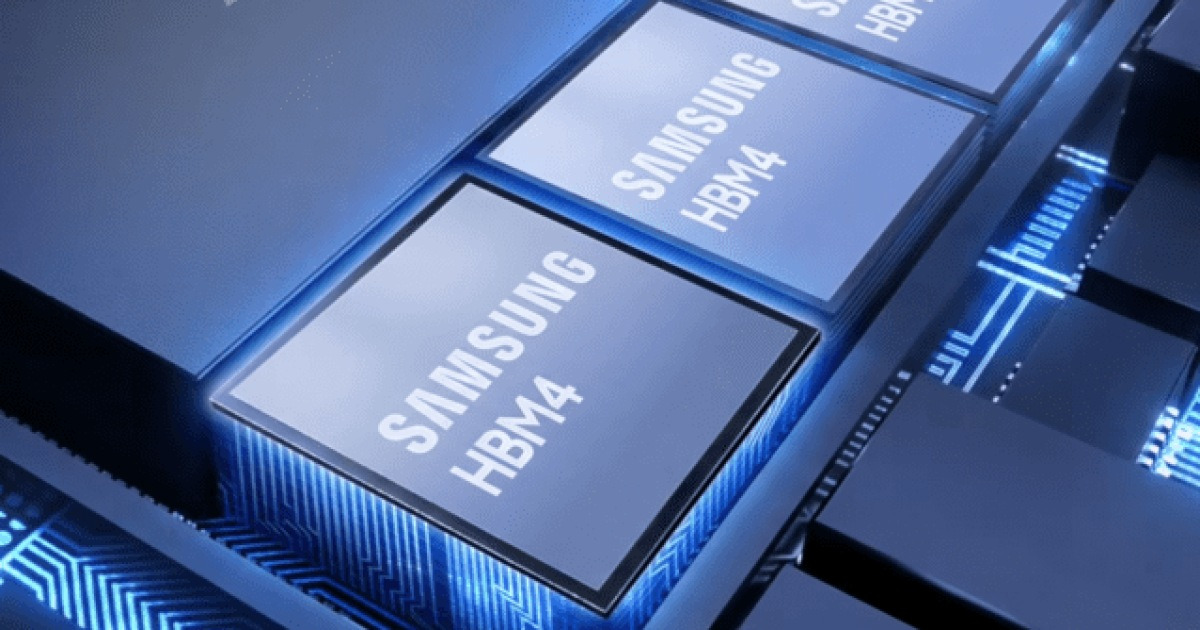
The core problem is pricing dynamics. General-purpose DRAM prices are rising, yes, but the increases are modest and uneven across product segments. Meanwhile, the cost of capturing AI-driven memory demand is climbing steeply. Samsung and SK Hynix are spending heavily to qualify for HBM4 — Samsung’s sixth-generation high-bandwidth memory — investing billions in new manufacturing lines and R&D simultaneously. But Micron’s head start in the market means it is collecting more of the margin premium at exactly the moment Korea’s rivals are still racing to catch up. Each quarter of delay compounds: every missed customer qualification round is a quarter of revenue that flows elsewhere, and every customer locked into a Micron supply agreement raises the switching cost for the next round of negotiations.
Who is actually buying, and why it matters
The most important detail in the Micron report was not the revenue number. It was the customer base, and the structure of how those customers are buying.
Major AI companies, including OpenAI, are now purchasing memory directly rather than routing orders through GPU assemblers or system integrators. That structural shift matters more than most analysts are acknowledging. Direct buyers negotiate harder, demand longer-term supply guarantees, and push for pricing terms that favor the vendor with the strongest delivery track record. They are not buying a commodity anymore — they are securing strategic capacity for products that define their competitive positioning.
Shinhan Investment noted that Samsung and SK Hynix are “wrapping up negotiations better than the market feared” and widening their customer base. But the phrase “better than feared” is telling in a way that deserves attention. The baseline expectation from the street was worse. The question is no longer whether Korea’s memory players can survive this cycle — it is whether they can recover the pricing leadership that defined their dominance for decades.
Micron, by contrast, entered these conversations with a product that was already qualified, already shipping at scale, and already embedded in customer supply chains. When a buyer like OpenAI needs guaranteed delivery tomorrow — when its training runs depend on HBM availability and every day of delay represents millions in opportunity cost — it does not gamble on a second-source supplier that is still ramping. It locks in the supplier that can deliver.
The supply chain ripple effects
This is not only a Korea story, and the ripple effects are already visible across the Pacific. Taiwan’s TSMC, which packages advanced memory chips for NVIDIA and other AI accelerator makers, is feeling the pressure from two opposing directions simultaneously.
On one hand, stronger Micron shipments mean more HBM is flowing through TSMC’s CoWoS packaging lines — which is straightforward revenue for the foundry. On the other hand, if Samsung and SK Hynix cannot match Micron’s HBM volume, TSMC loses a major customer for the higher-margin HBM packaging work that would otherwise come from those Korean fabs. The net effect tilts toward Micron. Every quarter that Korea’s memory players lag in HBM qualification is a quarter where TSMC’s AI packaging revenue leans more heavily on American supply, reinforcing a feedback loop that advantages Micron further.
Apple and Meta, both of whom are investing tens of billions in custom AI silicon this year, are watching this supply landscape closely. Their capex plans assume consistent HBM supply at predictable prices. If Korea cannot deliver volume on schedule, those plans either cost more — because they must pay a scarcity premium to Micron — or slip further, because custom silicon timelines are unforgiving. Neither outcome serves their interests, and both outcomes strengthen Micron’s negotiating position.
Second-order consequences
The implications extend beyond quarterly earnings. Korea’s memory industry is not simply losing market share — it is losing the optionality that comes from pricing power. When you are the first source, you set terms. When you become a second source, you react to terms. That distinction shapes investment decisions, workforce planning, and long-term strategic posture.
Samsung’s research and development expenditures in memory have climbed sharply, but the returns are lagging. The company is investing aggressively in HBM4, GDDR7, and next-generation NAND, but each new product cycle requires more capital and faces steeper competition. Meanwhile, Micron is financing its expansion from a position of surplus cash flow generated by strong pricing in HBM3E and DDR5. The gap in financial flexibility between the two camps is widening, not narrowing.
There is also a geopolitical dimension that deserves attention. The U.S. government has signaled continued support for domestic semiconductor manufacturing through subsidies and export controls that disadvantage Chinese competition. Micron benefits from this environment directly — it is an American company expanding its footprint in a sector the government considers strategic infrastructure. Samsung and SK Hynix, for all their technological prowess, are Korean corporations operating in a environment where U.S. policy preferences increasingly align with American supply chains. That alignment may seem abstract in a single quarter but accumulates weight over time.
What happens next
The Korean won’s trajectory will remain a near-term wildcard. A weaker currency boosts reported results in dollar terms but does nothing to improve unit economics or competitive positioning. Samsung’s management has signaled confidence that HBM4 qualification will open a new profit tier, presumably within the next twelve to eighteen months. The timeline is uncertain, and the ramp is never as smooth as the press release suggests. History in this industry is littered with companies that announced breakthrough qualifications only to stumble on yield curves and customer adoption.
Micron’s projection of a memory shortage through 2028 is aggressive. If it holds, the entire AI hardware stack — from data-center GPUs to consumer devices — faces continued cost pressure that could slow deployment cycles and compress margins across the sector. If it fails, the overshoot comes hard and fast, and everyone who expanded capacity on the upside assumption pays the price. The probability distribution is wide, and the consequences of either outcome are significant.
For Samsung and SK Hynix, the window to re-establish pricing leadership in memory is narrowing with each passing quarter. They have the fabs. They have the engineering talent. They have deep relationships with the world’s largest cloud providers. What they are struggling to maintain is the margin advantage that comes from being first, not first-after. In an industry where the difference between leadership and parity can be measured in single-digit percentage points of margin, being first-after is effectively being last.
The weather vane is pointing one direction. Korea’s memory industry is learning, too late, that knowing which way the wind blows matters less than how fast you can set your sails.