Microsoft’s Copilot Rebuild: Inside the Agentic Pivot That Redefines the OS
Microsoft is collapsing its scattered AI tools into a single Copilot platform that acts as both interface and operating system for the AI era. The move reframes the competitive battle with OpenAI—and reveals an Asian media narrative that Western desks have yet to pick up.
The OS Gamble
Microsoft just rebuilt Copilot from the ground up, and the subtext is unmistakable: Satya Nadella is no longer positioning his AI assistant as a feature. He is declaring it the operating system of the AI era.
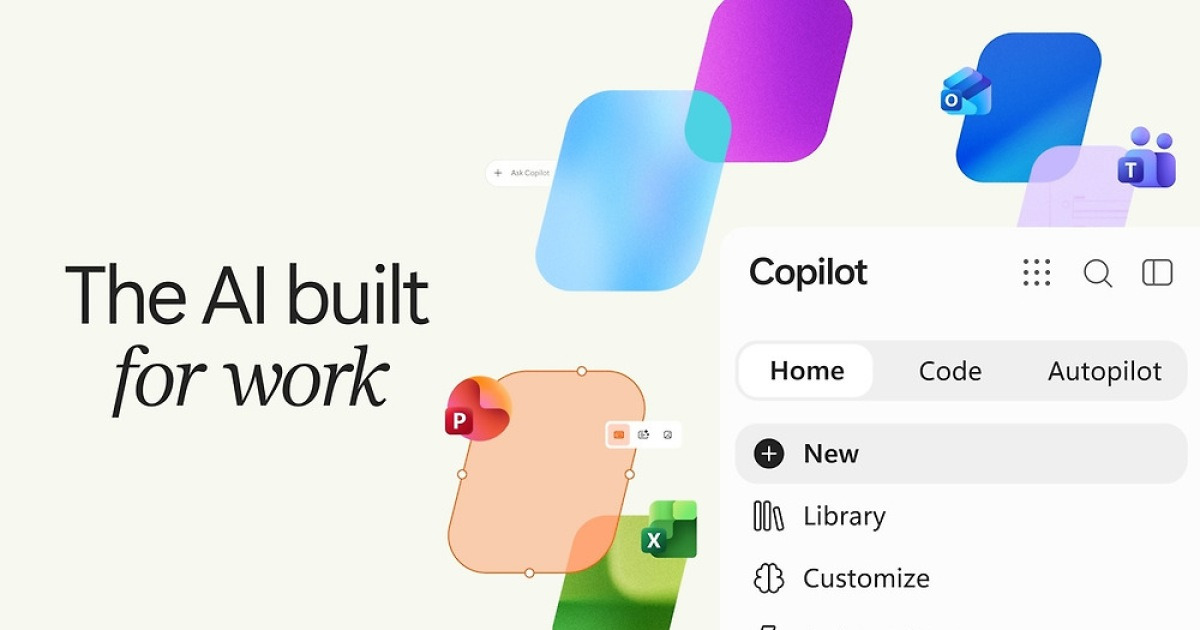
The new Copilot merges three previously separate products—Home, Code, and Autopilot—into one continuous interface. Chat answers, task delegation, app generation, and autonomous 24-hour execution all live under a single roof. Word, Excel, and PowerPoint are embedded directly in the chat window instead of requiring separate launches. The old Scout agent has been renamed Autopilot and now operates without human prompting once you assign it a name and a role.
This is not incremental. It is a platform restructuring.
The Agent Turn
The most consequential shift is the move from chatbot to agent. Past versions of Copilot responded to prompts. The new version is expected to act between prompts. Autopilot runs continuously. It does not wait for a user to type. It monitors context, executes routines, and reports back. That is a fundamentally different product architecture—and a fundamentally different pricing architecture.
Microsoft confirmed the hybrid model today: routine chat and Office features remain on the existing monthly subscription, but autonomous agent actions and access to advanced models will carry usage-based charges. The company is drawing a line between conversational assistance, which it wants to commoditize, and agentic execution, which it intends to monetize at the meter.
That distinction matters. Usage-based billing for agents creates revenue upside that flat subscriptions cannot match, but it also introduces friction—every autonomous action becomes a billable event. Microsoft is gambling that enterprise buyers will accept that friction in exchange for productivity gains that outstrip the cost.
The Korean Frame
What makes this announcement noteworthy beyond the product changes is how quickly the Korean business press has already framed it. Daum News ran the story under the headline “MS, ‘AI시 đại OS’ 새 코파일럿 공개…챗봇서 에이전트로 진화”—roughly, “Microsoft unveils new Copilot as ‘OS of the AI era’… evolving from chatbot to agent.”
The vocabulary choice is telling. “AI 시대 OS”—the AI-era operating system—is the frame Korean outlets have adopted before major US business desks picked it up. That is unusual in a market where American financial media typically sets the narrative first. It suggests the Korean press is reading Microsoft’s positioning with a sharper strategic eye than the wire-cycle coverage in New York and San Francisco.
Western headlines so far have focused on the product itself—the merged interface, the pricing shift, the Autopilot rename. Few have picked up on Nadella’s explicit claim that Copilot is replacing Windows as the primary interface layer for work. That is the real story. Microsoft is not competing with other chatbots anymore. It is competing with the desktop.
Why Nadella Is Flipping the Script
Nadella’s remarks at the event carried more weight than the product details. He pushed back directly on the prevailing narrative that AI replaces humans, arguing instead that “human capital and token capital” must work in synergy. On the surface that sounds like corporate caution. In context it is a competitive move.
The “human capital plus token capital” frame positions Microsoft as the pragmatic choice for enterprises that are wary of OpenAI’s automation-first pitch. It draws a line between Copilot and autonomous agent startups that promise headcount reduction. Microsoft is selling augmentation, not replacement—and in the current regulatory climate, that distinction is politically safer and possibly more defensible against EU AI Act requirements.
But the deeper play is the OS claim. If Copilot becomes the default work interface, the implications for Windows are enormous. A generation ago, applications owned the desktop. Now Microsoft is proposing that the AI layer owns the desktop. Office is no longer the portal; it is a module inside Copilot. That is a role reversal the software industry has not seen since the browser challenged the application.
The Competitive Calculus
OpenAI is simultaneously building agents and lobbying for an open API model. Google is integrating Gemini across Workspace. Both are moving in the same direction Microsoft is announcing today, but neither has the installed base of 365 enterprise contracts that Microsoft can leverage as a distribution moat.
Microsoft’s advantage is not faster AI. It is deeper workspace penetration. Every enterprise that already pays for Microsoft 365 is a trial customer for the new Copilot. The friction to adopt is lower than for any competitor starting from scratch.
The risk is equally clear. If autonomous agents become truly capable, they will expose every gap in Microsoft’s underlying models. Copilot’s usefulness depends on whether it is running GPT-4-class reasoning or Microsoft’s own fine-tuned variants. The company has not disclosed that detail publicly. Until it does, the “agent” promise is partly theatrical.
Who Wins, Who Loses
Enterprise IT buyers win if the autonomous features deliver on their schedule. The hybrid pricing model means early adopters may pay more per seat as agents execute more tasks autonomously—but they also get more value per dollar if those tasks replace manual work. Small and mid-market firms that currently lease Office 365 as a flat fee will feel the pricing shift first. Individual consumers who rely on basic chat features should see little change.
OpenAI loses the narrative if Microsoft successfully frames Copilot as the AI-era OS while positioning its own agents as enterprise-grade and compliant. It does not lose the technology race—that is still too close to call—but it loses the positioning advantage that came from being the first mover in public consciousness.
The broader software industry loses if Microsoft’s vision succeeds. A world where the AI agent is the primary interface means fewer traditional applications, fewer desktop software licenses, and a concentration of power around whoever controls the agent layer. That is a consolidation risk for everyone else.
What Comes Next
The pricing model will be the true test. Usage-based billing for agents introduces variables that make forecasting harder for CFOs. Enterprises that signed multi-year 365 deals at predictable rates may resist moving to a consumption hybrid. Microsoft will need to demonstrate clear ROI before that resistance melts.
The competitive cadence will accelerate. Expect OpenAI and Google to respond with their own agent announcements in the coming quarters, likely with their own OS-adjacent positioning. The race is no longer about who has the best chatbot. It is about who controls the workflow layer.
Korean media is already writing the OS story. The question is whether the rest of the world catches up quickly enough to notice.