Mitsubishi's Pajero Returns — And It Could Reshape Off-Roading in Asia
After seven years of silence, Mitsubishi has revived the Pajero as a compact SUV. The move signals a bold strategic pivot for a company fighting for relevance against Chinese EV dominance — but electrification remains unclear.
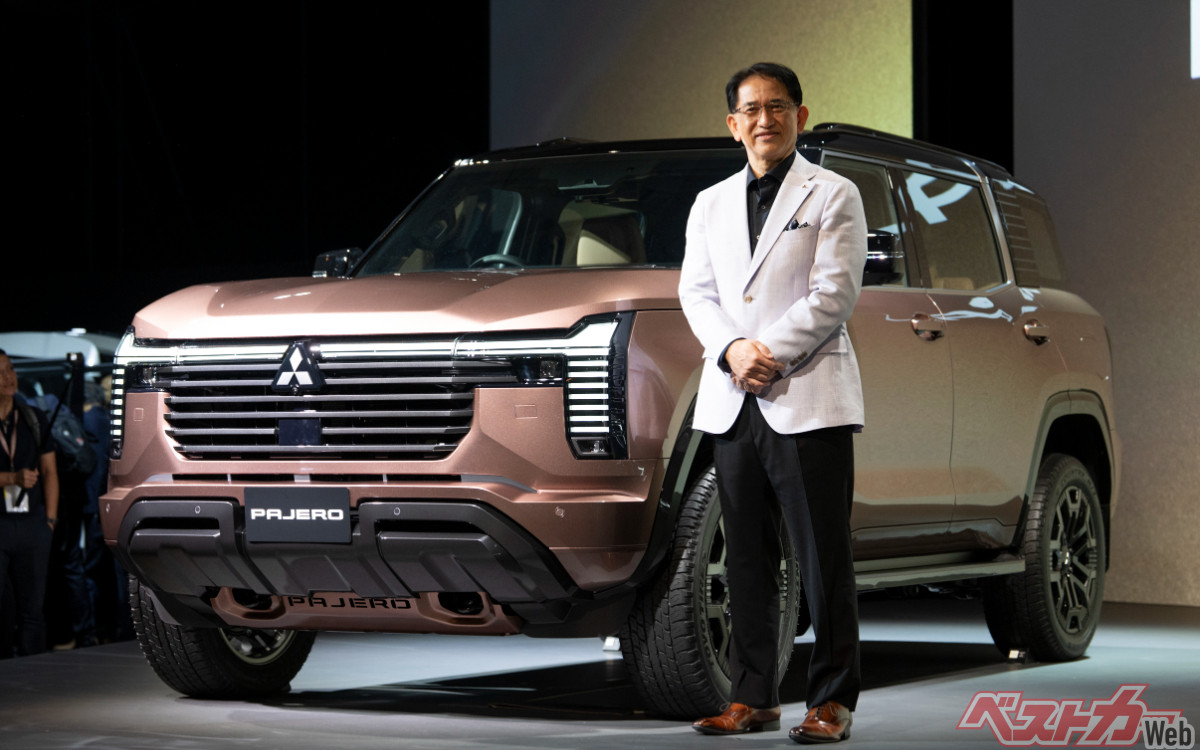
The Pajero is Back — And Mitsubishi Knows It
On September 2, 2026, inside a Tokyo event space, three top executives from Mitsubishi Motors took the stage and announced the return of the Pajero. Seven years had passed since the model quietly vanished from showrooms around the world. Now it was back — smaller, newer, and carrying an extraordinary amount of weight on its shoulders.
This is not merely a product launch. It is a statement of intent from a company that has been fighting for survival in a market where Chinese automakers are rewriting the rules. The Pajero’s revival comes at a moment when Mitsubishi must prove it still has something meaningful to offer a generation of buyers who have largely stopped looking at Japanese brands for their next purchase.
The atmosphere at the event reflected the gravity of the moment. Executives spoke with measured confidence, careful not to overpromise while making it clear this was not a nostalgia play. The Pajero name, after all, has carried enough emotional weight across four decades to make this announcement feel like a reckoning.
Why This Matters Beyond Japan
The Pajero built its legend over decades. It conquered the Dakar Rally, survived the African savanna, and became a symbol of unbreakable Japanese engineering. When it disappeared, its absence was felt acutely — especially by off-road enthusiasts who had nowhere else to turn in a market increasingly dominated by crossovers masquerading as SUVs.
Now, the global off-road segment is shifting beneath everyone’s feet. Chinese brands like BYD and Great Wall are flooding markets with electric and hybrid off-roaders at price points that would have seemed impossible just five years ago. The Pajero’s return arrives at a moment when the category itself is being redefined — and Mitsubishi has chosen to re-enter the fight on its own terms.
But here’s what English-language outlets have yet to fully digest: the new Pajero is compact. This is a deliberate choice, not a compromise. Mitsubishi is betting that the next generation of off-road buyers does not need a full-size behemoth — they want something more accessible, more maneuverable in tight terrain, and ideally, more affordable than the traditional offerings. The compact format also aligns with urban living trends across Southeast Asia and India, where road conditions and parking constraints make large SUVs impractical despite their appeal.
That bet carries real risk. Compact off-roaders occupy an awkward middle ground — too small to impress hardcore adventurers, too rugged-looking for city commuters who just want appearance over substance. But it also carries opportunity in a segment that has been largely unoccupied by Japanese manufacturers willing to invest seriously.
The Strategic Play Behind the Pajero
During the press conference, Mitsubishi President Keisuke Kishinami was blunt about the brand’s ambition. “The primary goal is to strengthen our brand as our flagship model,” he said. “Sales volume and profitability will follow.”
That framing matters enormously. Mitsubishi is not launching the Pajero to save its bottom line overnight. It is launching it to rebuild credibility in a market where the company has been perceived as dormant — lagging in electrification, retreating from key regions, and allowing its reputation to erode while competitors moved aggressively. The Pajero is meant to be a beacon, a reminder that Mitsubishi still builds vehicles people care about, that the engineering heritage is real and not just marketing copy.
Deputy President Takeshi Yamaguchi, in charge of development, emphasized that the new Pajero would carry forward the core values of its predecessors: ruggedness, speed, and comfort. But he also acknowledged the central challenge facing the project. “We need to use customer feedback and advanced technology to reshape the brand image,” he said, noting that the team had spent months conducting focus groups across Southeast Asia, Australia, and the Middle East — markets where the Pajero name still held significant resonance.
Reshaping the brand image is precisely the point. Nostalgia alone will not save this project. Mitsubishi has to convince buyers that the new Pajero represents not just a return to form but an evolution — one that can compete with the sophistication and technology level of Chinese alternatives while retaining the mechanical integrity that defined the original.
Who Is the New Pajero For?
This is where the press conference revealed something subtle but important. The company is targeting younger buyers — including those who never experienced the Pajero boom of the 1990s and early 2000s.
Kishinami noted that many young people today discover car culture through social media and YouTube. They may never have sat in a Pajero, but they know what it represents — through influencer content, documentary series, and online communities centered on off-road adventure. The question haunting Mitsubishi is whether that digital awareness translates into showroom visits and purchase decisions.
Yamaguchi offered a different angle that proved particularly revealing: many of today’s young off-road enthusiasts are the grandchildren of Pajero owners. The emotional connection is inherited, not firsthand. Parents and grandparents who grew up with the model have passed down stories, videos, and even actual vehicles. That intergenerational transmission is a powerful marketing asset, and one Mitsubishi clearly wants to exploit through targeted campaigns aimed at family gift-giving occasions and heirloom-style ownership narratives.
But the real test lies ahead. Will younger buyers — raised on Chinese EVs and subscription-based mobility solutions that reframe car ownership entirely — see a compact off-roader as relevant to their actual lives? Most young consumers in target markets now view vehicles as utilities rather than status symbols or passion projects. Convincing them otherwise requires more than a compelling nameplate.
The Timing Is Everything
Pre-orders open October 1, 2026, with a formal announcement on October 29 and a December 17 launch date. Annual production is capped at 10,000 units in the first year — a number that Mitsubishi officials described as conservative but deliberate.
That production cap is telling on multiple levels. Mitsubishi is not flooding the market or gambling on immediate volume. It is testing the waters with controlled availability, which serves several purposes: it creates artificial scarcity that can generate buzz, it limits financial exposure if reception is tepid, and it allows the company to refine manufacturing processes before scaling up. A modest production run suggests caution — but also confidence that demand will be strong enough to sell through quickly and justify further investment.
Compare this to the Chinese market, where brands like Tank and Yangwang are launching electrified off-roaders with massive marketing budgets, annual model refreshes, and aggressive pricing strategies designed to capture share immediately. Mitsubishi’s approach is deliberately low-key, almost almost defiant in its restraint. It is a signal that the company is playing a long game — betting that sustained credibility matters more than short-term volume spikes.
The timing also benefits from a broader trend: off-road tourism is experiencing a renaissance across Asia, driven by rising middle-class disposable income and social media-driven adventure culture. Countries like Thailand, Vietnam, Indonesia, and Australia are seeing growth in expedition tourism, rental outfitters, and off-road clubs — all potential customer pipelines for the Pajero.
The Electrification Question — Unanswered
One of the most pressing questions raised at the event — and the one that drew the most follow-up from journalists — remains officially unanswered: where does electrification fit into the Pajero’s future?
The source material does not provide a clear answer. No concrete timeline for a hybrid or fully electric variant was disclosed. No commitments were made about battery options, range targets, or charging compatibility. That silence is significant and deliberate. In a market where Chinese competitors are already shipping electric off-roaders with ranges exceeding 500 kilometers and prices that undercut traditional combustion alternatives, Mitsubishi’s reluctance to address electrification directly raises legitimate concerns about competitive positioning.
However, industry analysts suggest there may be method to the apparent avoidance. Mitsubishi could be waiting to see how the conventional Pajero performs in real-world conditions before committing resources to a powertrain strategy. The company has experience with plug-in hybrid technology through the Outlander PHEV, and technical expertise certainly exists within the organization. But deploying that expertise requires investment, and Mitsubishi may be waiting for market signals before pulling the trigger.
That is a calculated risk — one that could pay off if the combustion version generates strong demand and funds the electrified variant organically, or it could leave Mitsubishi further behind if competitors fill the vacuum in the meantime. The longer the company waits, the more difficult it becomes to credibly position the Pajero alongside electrified offerings from brands that have already established themselves in the space.
What Comes Next
If the Pajero succeeds, it will do more than boost quarterly sales figures. It will restore Mitsubishi’s credibility as a manufacturer of serious, capable vehicles in a segment that increasingly gets treated as decorative. It will draw younger buyers back into showrooms that have gone quiet in many markets. And it will send a message to the rest of the industry — particularly Chinese competitors — that Japan is not ceding the off-road segment without a fight, even if the strategy relies on patience rather than aggression.
The second-order effects could be significant. A successful Pajero revival might encourage other Japanese manufacturers to reconsider their own neglected nameplates and heritage models. Honda’s discarded off-road ambitions, Nissan’s retreating 4x4 portfolio, and Subaru’s narrowing focus all exist in a market where Mitsubishi’s move could create competitive pressure to respond.
If it fails, the consequences could be severe and far-reaching. Mitsubishi has already lost ground in multiple markets — Europe, India, and parts of Southeast Asia — through inaction and strategic confusion. Another high-profile misstep would accelerate that decline and potentially force a fundamental reassessment of the company’s direction. The stakes, therefore, extend well beyond a single vehicle launch.
For now, the world will watch. The Pajero is back, carrying the hopes of a company that knows its survival depends on proving it still has something unique to offer. Whether it can outrun its rivals — especially the fast-advancing Chinese brands that are redefining the off-road category — remains the question that will determine not just Mitsubishi’s fate but the shape of Asia’s automotive future.