The Last Living Finger Pointing at Srebrenica Is Gone
Ratko Mladić's death at 83 ends the final living link between the Srebrenica genocide and those who prosecuted its architect. What happens to accountability, memory, and Balkan politics now?
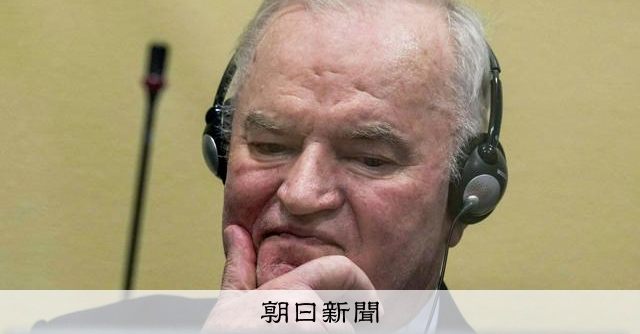
The man who ordered Srebrenica is dead. What remains?"
Ratko Mladić died on August 27 in a hospital in The Hague, where he had been serving a life sentence for genocide, war crimes, and crimes against humanity during the Bosnian War. He was 83.
His death closes the last active chapter of direct legal accountability for the atrocities committed between 1992 and 1995 — atrocities that killed roughly 100,000 people and produced what the International Criminal Tribunal for the former Yugoslavia called the worst massacre in Europe since the Second World War.
What comes next is not nothing. It is something harder to pin down.
Mladić was not merely convicted. He was the symbol — the one finger still pointing at the center of the Srebrenica genocide. Born in 1942 or possibly 1943, depending on whether you trust the United Nations or his family, he commanded the Army of Republika Srpska, the military force of the self-proclaimed Serb state within Bosnia. His troops overran the UN-declared “safe area” of Srebrenica on July 11, 1995, and within days, more than 8,000 Bosniak men and boys had been killed.
He fled. He lived in the open for sixteen years, a ghost in plain sight across Belgrade, until Serbian authorities finally arrested him in May 2011. At his trial, he did not deny what happened. He denied responsibility. He said the killings were committed by irregular forces acting independently. The judges — and later the appeal chamber in 2021 — rejected that. Mladić was found to have planned, orchestrated, and overseen the mass executions.
His conviction stood. The verdict was one of the most consequential in the history of international criminal law. And now he is gone.
For the families of the victims, this is a complicated grief. The trial produced testimony, photographs, forensic data, and a detailed historical record that no塞尔维亚 or Bosnian government ministry could ever have shouldered alone. The ICTY gave Srebrenica an archive. But it also bound the victims’ experience to a living defendant who could appear in court, hear the names of his victims spoken aloud, and be confronted in real time by those he had destroyed.
That confrontation is now over. The courtroom — the most important public space for processing what happened — has lost its central figure.
Goran Hadžić, the other major Bosnian Serb military commander convicted by the ICTY, died in 2016. Radovan Karadžić, the political leader who worked alongside Mladić, is still alive in Germany, serving his own life sentence. But Karadžić’s conviction was largely about political intent — the strategy of ethnic cleansing across municipalities. Mladić’s was about the act itself: the order to kill, the coordination of the shootings, the burial pits, the transport routes. He was the operational brain of Srebrenica. His death removes the last person who could stand in a courtroom and be asked, face to face, what he chose to do on those July days.
There is also a broader institutional question. The ICTY closed in 2017. Its remaining functions were absorbed by the Mechanism for International Criminal Tribunals, which sits in The Hague and Arusha and handles appeals, enforcement of sentences, and review requests. The mechanism announced Mladić’s death. No new cases are being prosecuted under its authority. The machinery of post-Yugoslav war-crimes justice has effectively gone dormant.
This is not the first time a major international tribunal has exhausted itself. The Special Court for Sierra Leone closed in 2013 without finishing every case against every suspect. The Extraordinary Chambers in the Courts of Cambodia continue, slowly, with limited funding and political resistance from Phnom Penh. But the ICTY was unique in scale and ambition — it was the most comprehensive war-crimes prosecution project in modern history, and it ended not with a dramatic conclusion but with a quiet succession of sentences served and inmates dying in foreign hospitals.
Mladić’s death makes that ending visible.
Balkan politics does not pause for legal timelines. In Bosnia, the narrative war continues with or without Mladić. Serb nationalist politicians in Republika Srpska, led by Milorad Dodik, continue to question the Srebrenica verdict, to challenge the legal finding of genocide, and to push for greater autonomy that some observers see as a path toward eventual secession. Mladić’s presence — his physical confinement in The Hague, his appearance at trial — served as a tangible counterweight to those claims. His absence removes a concrete reminder.
In Serbia, the government has officially cooperated with the ICTY since Mladić’s arrest in 2011, and President Aleksandar Vučić has periodically expressed regret over Srebrenica. But the broader society has never undergone a systematic reckoning. Mladić died without having given a public interview, written memoirs, or explained himself outside the constraints of courtroom procedure. What he knew about how the orders flowed, who else was involved, what political leaders may have known — that knowledge dies with him.
There is a small biographical detail worth noting. Reuters reported, citing family members, that Mladić was born in 1943 rather than 1942, the date long cited by United Nations documents. Whether he was 83 or 84 at death changes nothing about the substance of his convictions, but it does highlight how even the minutest details about these figures remain contested. Mladić’s story — like so much of the Yugoslav wars — has never had a single authoritative version.
What happens to historical memory when the last living defendant dies? The answer depends on whether you believe memory is anchored in institutions or in people. The ICTY record is preserved. The forensic evidence from Srebrenica remains. The lists of the dead, compiled by the Commission on Missing Persons, contain over 8,000 names from that one town alone. But institutions can become abstract. People do not.
Mladić’s death ensures that the next generation will inherit a legal verdict and a body of evidence but no longer a living embodiment of the crimes. That is not inherently bad — many victims preferred not to watch their tormentors grow old in comfort — but it does shift the burden of remembrance from the courtroom to schools, museums, and the difficult work of teaching a war that some still insist never happened.
The era of watching a genocidaire sit in a defendant’s dock and hear his victims’ stories read aloud is over. What replaces it is less visceral, less immediate, and entirely up to those who decide whether the past deserves to be remembered or simply archived.