Mocha Falls to Houthis — The Red Sea Chokepoint Tightens
Houthi forces have captured the strategic port of Mocha in Yemen's Taiz province, bringing them within striking distance of the Bab el-Mandeb strait. The move intensifies the Saudi-Iran proxy war and threatens the shipping lanes that carry a significant share of global oil and trade.
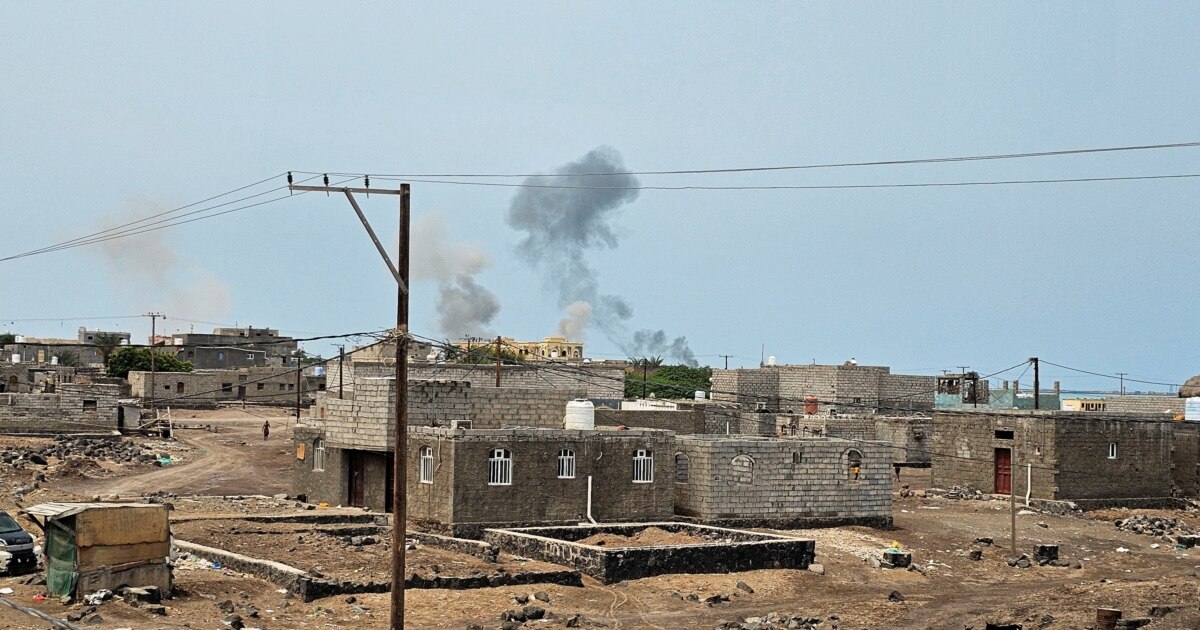
Mocha is gone. And the math of the Red Sea just changed.
The port city of Mocha — a name once synonymous with coffee and now with something far more consequential — has fallen to Houthi forces after days of heavy fighting in Yemen’s Taiz province. Reuters cited four Yemeni government sources confirming the capture. Houthi fighters are now pressing southeast toward Duwab, another coastal port, and have launched attacks against the Hani fish islands in the Red Sea.
What happens next hinges on geography. Control of Mocha places the Houthis within visual range of the Bab el-Mandeb strait, the 20-mile-wide maritime gateway that links the Red Sea to the Gulf of Aden and, beyond that, the Suez Canal. Roughly 10 percent of global trade passes through this chokepoint every year. Oil tankers from the Persian Gulf funnel through it. Container ships carrying electronics, textiles, and spare parts follow the same corridor. When the Houthis tighten their grip on the coastline here, they are not just capturing territory — they are reshaping the leverage calculus around the world’s second-busiest shipping lane.
Why a Korean-language report matters
The initial signal did not come through London or Washington. It surfaced through Yemeni government sources quoted by VOA Korea. Western wire desks were slow to confirm what a Korean-language broadcast picked up first. That lag matters. In conflicts where information travels as fast as kinetic operations, early attribution shapes market reactions, insurance premiums, and naval posture. The Houthis benefit from the fog. Every hour between a report and independent confirmation is an hour in which shipping companies reroute cargoes and insurers adjust risk models based on incomplete data.
The Yemeni government has not yet issued an official statement confirming the fall of Mocha. That silence itself is a signal — it suggests the government is still assessing how much ground it has lost and whether it can mount a counteroffensive without exposing more forces to Houthi ambushes along the narrow coastal corridor.
The Saudi-Iran axis tightens
Colonel Mahmoud Al-Subaie, a senior Yemeni military officer stationed at the front line in Taiz, told his troops on September 9 that the Houthi offensive was “part of an Iranian strategy to seize control of international sea traffic at the Bab el-Mandeb strait.” Whether or not Teheran is directly directing every Houthi maneuver, the alignment is clear enough. The Houthis have been striking Saudi commercial vessels since late July, when Riyadh’s assault on Sana’a’s airport provided the pretext. This week alone, Houthi missiles and drones hit Saudi territory, wounding at least 73 people and damaging oil infrastructure. Riyadh has classified the attacks as acts of terrorism and vowed to protect its shipping under international law.
The British Foreign Office threw its weight behind Riyadh on September 10, placing full responsibility for the escalation on the Houthis and warning that their actions threaten not only regional stability but the freedom of navigation through the Red Sea and Bab el-Mandeb. The United States, which designated the Houthis as a terrorist organization, has warned them to stop disrupting maritime traffic and promised “necessary measures” to protect freedom of navigation — though it has stopped short of deploying additional combat forces to the strait.
What the Houthis are saying — and what they mean
A senior Houthi official, Abdulaziz bin Haitour, told the group’s Saba news outlet on September 10 that the situation in the western coastal region was “a matter of Yemeni sovereignty” and posed no threat to international navigation. The message is deliberate. The Houthis want to project confidence without triggering a direct military response from the US or its allies. By framing the capture of Mocha as an internal Yemeni matter rather than an act of aggression against global shipping, they buy themselves diplomatic cover while consolidating territorial gains.
They also demonstrated capability on the same day, claiming to have shot down a Saudi drone during “hostile operations” over Hudaydah province. Whether the claim is verified or not, the timing reinforces a narrative: the Houthis remain the dominant military force along Yemen’s Red Sea coast, and they can still strike deep into Saudi territory at will.
Who wins, who loses
The Houthis win the most. They now control a string of ports and coastal positions that give them a continuous operational corridor from Mocha down toward Duwab and the approaches to Bab el-Mandeb. They can threaten shipping, intercept supply lines to government-held territories, and continue launching strikes into Saudi Arabia with reduced risk of counterbattery fire.
Saudi Arabia loses strategically. Every mile the Houthis advance along the Red Sea coast narrows Riyadh’s ability to project power from its southern flank and complicates any future naval operation in the Red Sea. The damage to oil infrastructure from this week’s attacks is a reminder that the Houthis can still inflict economic pain despite years of Saudi air campaigns.
The Yemeni government loses credibility. Its forces were pushed out of Mocha after days of fighting. Its claim that it is supporting troops on the front line rings hollow if it cannot hold a city of this size. President Rashad Al-Alimi urged foreign diplomats to rethink their approach to the conflict on September 9, arguing that the international community has focused on managing tensions rather than addressing root causes. His warning that escalation is a tactic used by “rogue armed groups that misjudge peace as weakness” was aimed squarely at the Houthis — but it also read as an acknowledgment that the government has been losing ground.
Global shipping loses certainty. Even if the Houthis do not formally block the strait, the perception of risk is enough to alter routing decisions. Insurers raise premiums. Tanker operators add distance. Delays cascade through supply chains that are already fragile.
What happens next
If the Houthis take Duwab, they will control virtually the entire stretch of Yemen’s Red Sea coast between Mocha and the Bab el-Mandeb. That is the threshold where their leverage shifts from disruptive to coercive. They would not need to physically block the strait to make it expensive for everyone who uses it — they would only need to make every transit a calculated risk.
The US and its partners are unlikely to respond with ground forces. An aerial or naval response is more plausible, but striking Houthi positions along a populated coastline carries political costs that Washington and London are eager to avoid. Expect increased maritime patrols, enhanced ship self-defense capabilities, and diplomatic pressure on regional actors to isolate the Houthis further. The status quo of managed tension is about to be tested.
For global markets, the immediate impact will be measured in insurance spreads and detour decisions. For Riyadh, the question is whether it canreopen a southern front it has struggled to win for nearly a decade. For Tehran, the calculation is simpler: every mile the Houthis push toward Bab el-Mandeb is leverage extracted from a rival at minimal cost.
Mocha fell quietly. The Red Sea did not erupt. But the geometry of power along Yemen’s western coast has shifted, and the next port on the Houthis’ list — Duwab — may be the one that turns maneuver into strategy.