Musk Finally Admits Grok Is Behind — Here's What Changes Next
Elon Musk's rare concession that Grok trails competitors marks a striking departure from X's usual posture. The Cursor acquisition, the Anthropic callout, and a push for raw compute dominance signal a new phase in the AI race.
The Uncharacteristic Confession
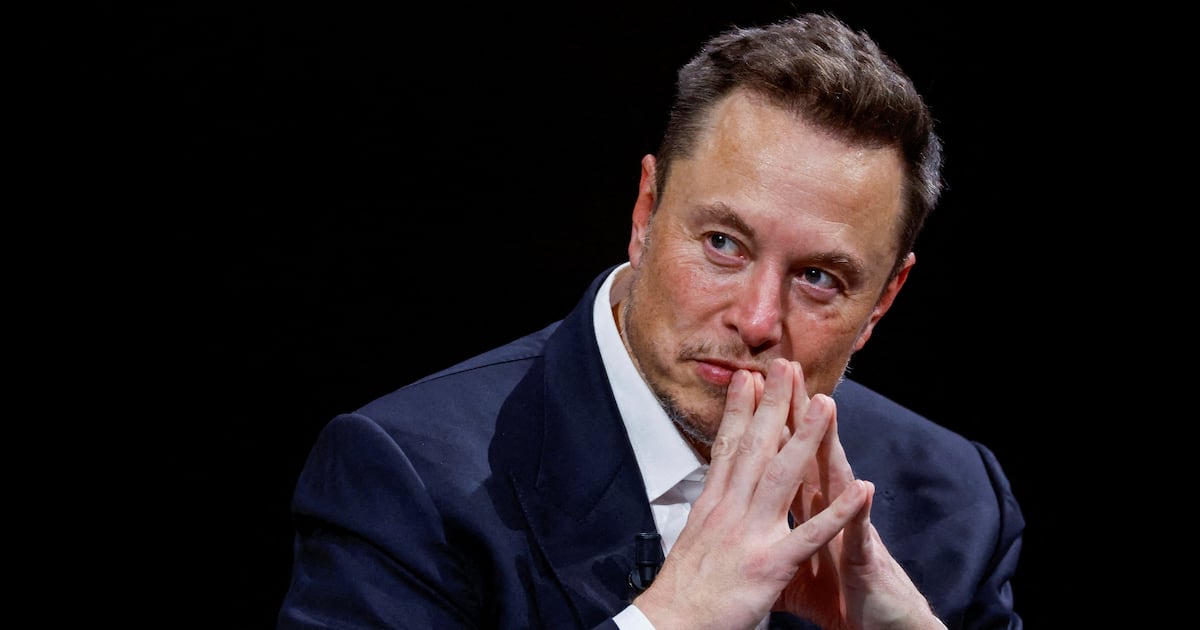
Elon Musk does not typically admit defeat. Yet according to reports, he stood before roughly 1,000 Cursor employees in his first all-hands meeting after acquiring the AI coding startup and said something remarkably honest: Grok is behind. Not neck-and-neck. Not catching up. Behind.
The phrase that followed carried more weight than the admission itself — “I’m not used to losing.” It was a crack in the bravado that has long defined Musk’s public posture on AI. X and its associated brands have spent years positioning Grok as the rebellious alternative to OpenAI and Google, often with little concrete evidence of parity, let alone leadership.
Now the gap is being acknowledged openly, and the timing is anything but casual. The Cursor deal closed only weeks ago, and this appears to be Musk’s first sustained engagement with the company’s engineering culture since the acquisition. The environment — a room full of builders rather than investors or media — likely lowered the threshold for candor. What came out of that room, however, will reverberate far beyond X’s internal strategy sessions.
Why Cursor Changed Everything
Musk’s purchase of Cursor last month should be read as a strategic admission of weakness, not just a talent grab. Cursor is a coding-focused AI tool, and Musk specifically cited Grok’s coding capabilities as a短板 — a gap that needed closing. The inference is clear: X’s foundational model isn’t competitive enough in the areas that matter most for developer adoption and enterprise use.
Cursor engineers bring something X couldn’t easily replicate on its own — deep expertise in putting AI models to work in real coding environments, a domain where Anthropic and OpenAI have already built substantial moats. By absorbing 1,000 people from Cursor, Musk isn’t just adding headcount; he’s importing a culture of shipping useful AI tools, not just training larger models on raw benchmarks.
The second-order implications are worth noting. Cursor’s integration into X could accelerate the development of agentic AI workflows — systems that don’t just generate code but understand context, debug autonomously, and operate within complex software stacks. If X can productize that capability faster than its rivals, the Cursor acquisition becomes one of the more consequential moves in the AI talent war, regardless of what happens to Grok’s benchmark scores.
The Anthropic Callout
Perhaps the most striking detail from the meeting wasn’t the self-criticism but the praise directed at a competitor. Musk identified Anthropic as the current leader in AI competition. That is notable for several reasons.
First, it breaks from the pattern of X’s marketing, which has consistently framed Grok as the more free-thinking, less corporate alternative to Anthropic’s Claude. The shift from mockery to acknowledgment suggests Musk is recalibrating his internal assessment of where the technology actually stands.
Second, Anthropic benefits from a subtle endorsement at exactly the moment it is deepening its relationship with Microsoft and expanding its enterprise footprint. Musk’s recognition lends credibility to Anthropic’s positioning without costing X anything tangible — it’s free publicity wrapped in strategic honesty.
OpenAI, notably, was not singled out in the same way. That silence is informative. Musk may view OpenAI as a rival he cannot afford to legitimize publicly, or he may genuinely believe Anthropic holds the edge in the capabilities that matter now. Either way, the differential treatment reveals where Musk perceives the real competitive pressure to be coming from.
Compute as a Weapon
Musk’s message to Cursor employees extended beyond talent and model improvements. He stressed that SpaceX is committed to securing more computing capacity than any other company in the AI race. This is not just about buying more GPUs — it is about building dedicated data center infrastructure through SpaceX’s broader operations.
The logic is straightforward but risky. The prevailing view in the industry is that open-weight models and improved training efficiency will eventually compress the advantage of sheer compute. Musk is betting against that thesis. If he is right, X gains a durable edge. If he is wrong, the capital expenditure becomes a white elephant.
SpaceX also has a structural advantage here. Its satellite and launch operations already require massive computing resources, and the marginal cost of adding AI workloads to that infrastructure is lower than for a pure-play AI company starting from scratch. Whether that advantage is meaningful at scale remains an open question, but the geometry of the bet favors Musk’s instinct: vertical integration of compute infrastructure is something few competitors can replicate.
The Control Argument
Musk offered a rationale for urgency that went beyond market share. He expressed the view that AI models will inevitably reach a point where they become difficult for humans to control, and that securing that level of capability first is therefore a strategic necessity — not just a business decision.
This framing elevates the competition from a commercial rivalry to something resembling a race for existential positioning. It echoes arguments made by other AI leaders about frontier capabilities, but coming from Musk it carries a different tone — part genuine conviction, part narrative construction that positions X as essential to a broader project rather than merely another player in a crowded market.
The control argument also has a practical dimension. If Musk believes autonomous AI systems will soon be deploying code, managing infrastructure, and making high-stakes decisions without human oversight, then the company that controls the most capable models controls the leash. For X, that translates into a potential monopoly on the tools that will underpin the next generation of automated systems — a defensible moat even if Grok never wins a consumer popularity contest.
What Happens Next
Musk’s concession is unlikely to be the last of its kind. X’s AI product roadmap will almost certainly accelerate, with Cursor’s engineering culture infusing Grok’s development. The next 12 months will reveal whether the acquisition translates into measurable capability gains or simply adds voice to an already noisy chatbot.
For competitors, the admission is both validation and warning. It confirms that the gap between X and the leaders is real — but it also signals that a well-funded, technically ambitious adversary is now fighting with a different temperament. The bravado was always part of X’s brand. Without it, the competition becomes purely about results.
The most important metric to watch is not revenue or user numbers but coding performance and enterprise adoption. Those are Cursor’s domains, and they are where Musk has now placed his bets. If Grok doesn’t improve there quickly, the admission will look less like a turning point and more like a prelude to retreat.
But if Cursor’s engineers can weaponize their expertise inside X’s compute ecosystem, the combination could produce something neither company could have built alone — a vertically integrated AI stack optimized for the one use case that matters most in the next phase of the race: autonomous coding at scale.