Musk's Skydance Bet Rewires Hollywood and Space's Future
Elon Musk's $1bn investment in David Ellison's Skydance marks a convergence of entertainment, aerospace, and political power that could reshape both industries. The deal is less about movies and more about what happens when rocket money meets Hollywood consolidation.
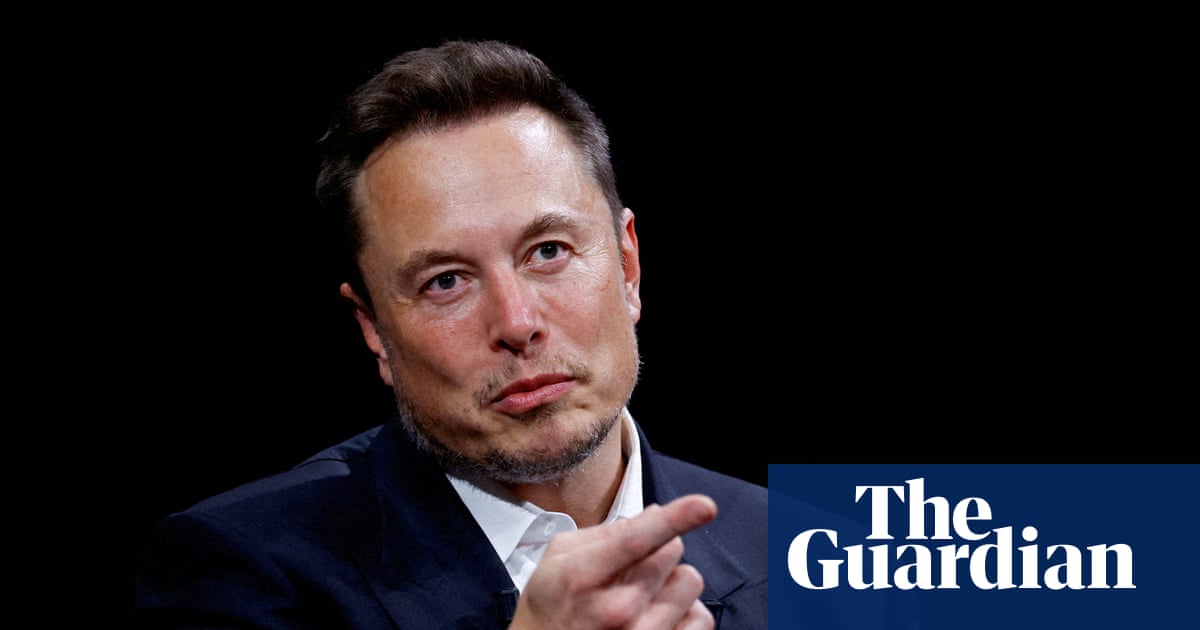
The Deal That Connects Rockets to Red Carpets
Elon Musk has put roughly $1bn behind Skydance, the newly minted media colossus born from Paramount’s $111bn merger with Warner Bros Discovery. On its face, this looks like another billionaire diversifying into entertainment. But read closer and the move reveals something sharper: Musk is aligning his capital with the architecture of a future where aerospace infrastructure and content distribution share the same balance sheet.
David Ellison runs Skydance now. He’s the son of Larry Ellison, the Oracle co-founder who bankrolled Musk’s 2022 acquisition of X for $1bn and chipped in $45m for Trump’s 2024 re-election. Laurene Powell Jobs, Steve Jobs’ widow, is also on board as an existing investor. This is not a random circle. It’s a network built around three things: tech-scale capital, political access, and media reach.
Semafor broke the story first. The Guardian reached out for comment. Nobody responded.
Why This Isn’t Just About Movies
Skydance now controls Paramount Pictures, Warner Bros. studio, HBO Max, CBS News, and CNN. The settlement that enabled the merger — after 12 states including California and New York sued to block it — requires the new company to release at least 30 films and more than 180 television shows annually. CBS and CNN must maintain editorial independence. That’s the legal constraint keeping competition alive.
But the economics tell a different story. Skydance is targeting $6bn in cost savings over three years. Los Angeles county officials estimate that alone could mean 4,500 film and television job losses in the city. Co-CEOs David Ellison and Ynon Kreiz, who previously led Mattel, told employees the integration would bring “difficult decisions that affect our workforce.”
That’s the language of consolidation. The question isn’t whether it will happen. It’s who gets picked up when the dust settles.
The SpaceX Connection No One Is Loud About
Here’s what the mainstream coverage misses: Musk doesn’t invest in media just for content. He invests where content touches his core businesses. SpaceX’s commercial ambitions have always included satellite broadband, Earth observation, and direct-to-consumer distribution. Starlink is already shipping internet to millions of homes. The next step — and this is speculative but logical — is owning or influencing the pipelines that carry data, content, and advertising at scale.
A media empire gives you audience. A satellite network gives you delivery. Put them together and you control more of the stack than any single entertainment company or telecom ever has. That’s the play. The $1bn isn’t a bet on box office returns. It’s a bet on vertical integration between aerospace infrastructure and content distribution.
Larry Ellison understood this dynamic when he backed both Oracle and Musk. He’s not a passive investor. He’s building networks. The fact that he invested in Skydance alongside Musk suggests he sees the same convergence — just from the software side instead of the launch-pad side.
Politics Is the Hidden Ledger
This deal cannot be separated from politics. Musk has spent more than $290m supporting Trump’s re-election and over $350m backing Republicans in the current midterm cycle. Larry Ellison contributed $45m to Trump’s 2024 bid. The Ellison and Musk families are among the wealthiest financial backers of the current administration.
Media consolidation and political alignment reinforce each other. When you control distribution, you control narrative. When you control narrative, you control policy. That’s not conspiracy thinking. It’s basic industrial organization.
The settlement requiring editorial independence for CBS and CNN is a legal checkbox, not a structural guarantee. News organizations can remain nominally independent while ownership shifts the economic gravity toward content that serves shareholder interests. That’s how consolidation works in practice. The 12-state lawsuit tried to prevent exactly this outcome. They lost. The settlement was a compromise, not a victory.
What Hollywood Loses, What Space Gains
Let’s be concrete about the trade-offs.
Hollywood loses 4,500 jobs in Los Angeles alone, according to county estimates. It loses competitive pressure on content spending. It loses the diversity that comes from multiple independent studios competing for talent and audiences. The 30-film, 180-show annual floor is a minimum, not a ceiling. Skydance can produce more. It might also produce cheaper, faster, and with less creative risk.
SpaceX gains access to a media empire with global reach. It gains a partner with political connections spanning Washington and Silicon Valley. It gains an ecosystem where content creation, satellite distribution, and advertising sales can be optimized across a single corporate structure. That’s worth far more than $1bn in pure financial terms.
The real question isn’t whether this deal closes. It already has. The real question is what happens next. Will Skydance use its distribution platform to promote Starlink expansion? Will SpaceX leverage its satellite footprint to accelerate media delivery? Will the political connections that brought this deal together translate into regulatory favors down the line?
The Next Phase
Musk’s Skydance bet signals a shift from pure technology play to infrastructure-and-audience play. He’s moving beyond rockets and electric cars into the layer that connects both to human attention. That’s where the money is. That’s where the power is.
David Ellison inherited a media company built from the ashes of two competitors. He now has a billionaire co-investor with a track record of vertical integration. The combination could reshape Hollywood’s economics for a decade. It could also accelerate SpaceX’s commercial ambitions in ways that don’t make headlines yet.
The 12 states sued. The settlement demanded output floors and editorial independence. The jobs will fall. The content will keep flowing. The questions will keep accumulating.
This is the next phase of Musk’s strategy: own the launch, own the pipeline, own the audience. The $1bn is just the down payment.