Nasser Hospital strike shows ceasefire was never viable
An Israeli airstrike on Nasser Hospital killed six people during a U.S.-backed ceasefire. The attack reveals the truce was always fragile — and that the hospital system itself is now a battleground.
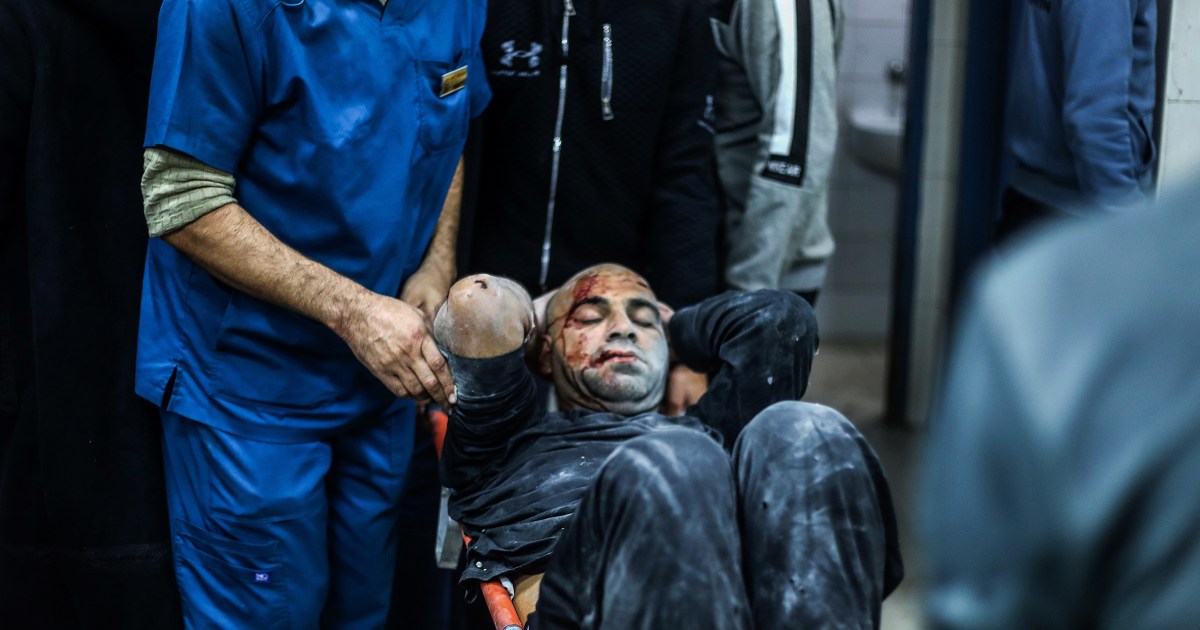
Hospitals Are Not Immune Anymore
The aerial blast that ripped through Nasser Hospital overnight wasn’t just another casualty of war. It landed inside a building already stripped bare by two years of bombardment, where the remains of Gaza’s healthcare system were pretending to function anyway. Six people died. Among them: a surgeon who didn’t abandon his post for a single day during the entire conflict, and a thirteen-year-old boy.
What makes this strike different from the dozens that came before isn’t the death toll. It’s the timing.
Israel says it targeted Muhammad Abu Ismail, commander of Hamas’ Khan Younis Brigade, alleging he used the hospital as a command center. Hamas called the claim a lie and labeled the strike a war crime. Both sides have been trading accusations since the ceasefire took hold in October — over 1,600 Palestinians and four Israeli soldiers have died in that period alone.
But the real story here isn’t who was in that building when the bombs fell. It’s that the ceasefire, from its first day, looked less like peace and more like armed exhaustion with a press conference attached.
The Ceasefire That Was Never Really There
A truce between Israel and Hamas was supposed to deliver hostages home, unlock aid, and create space for something resembling normalcy in Gaza. Instead, hospitals keep getting hit. Civilians keep dying. And the architecture of any eventual political settlement looks thinner with every passing week.
More than 74,600 Palestinians have been killed since October 2023. Of Gaza’s thirty-seven hospitals, only two remain fully functioning. Eighteen are partially operating. Seventeen are nonfunctioning. Nasser itself has survived one airstrike before — a double-tap strike in August 2025 that killed at least twenty people, including journalists and health workers.
The pattern is deliberate enough to stop being coincidence. The ceasefire isn’t collapsing from external pressure or broken agreements. It’s being hollowed out from within, struck at repeatedly until there’s nothing left to hold it together.
Israel argues Hamas embedded fighters among civilians and weaponized medical facilities. There’s documented evidence of weapons found inside some hospital complexes. But international law still draws a line: using a hospital for military purposes doesn’t strip it of protected status. Targeting it knowing medical personnel and patients are inside still counts as a war crime — regardless of which side holds the advantage on the ground.
Medical Aid for Palestinians put it plainly after the latest strike. The ceasefire, the organization said, “has brought neither safety nor an end to Israel’s attacks on Gaza’s healthcare system.”
Who Wins When Hospitals Become Battlegrounds
No one wins when a hospital gets bombed. But some actors benefit more than others from the chaos that follows.
For Israel, striking inside a hospital carries enormous reputational cost — especially when intelligence officials frame it as removing a senior Hamas commander responsible for hostage-taking. The IDF shared photos of alleged weapons stored at the complex. But sharing those images and actually stopping hospital strikes are two different things. If the goal is dismantling Hamas’ command structure, precision targeting is possible without leveling surgery wings and patient wards.
For Hamas, the calculus is different. Every strike on a medical facility reinforces the narrative that Israel is committing systematic war crimes — a story that travels fast in Global South capitals and cracks Western political coalitions. Whether the organization actually uses hospitals as command centers matters less than the perception that they do, because perception drives policy more than evidence does in this conflict.
For the United States, the damage lands squarely on diplomatic credibility. Washington brokered this ceasefire. American doctors featured in documentaries covering their work in Gaza are now dead. The administration can insist it’s investigating, but investigations don’t stop missiles mid-flight.
What Comes Next When There’s No Road Left
The path toward any durable truce in Gaza runs through a narrow corridor: hostage releases, aid delivery, and reconstruction funding. All three are currently stuck.
Hostage deals depend on trust that both sides will honor their commitments. When a hospital bombing kills a recognized surgeon featured in an American documentary, that trust evaporates faster than concrete dust after an explosion. The family of Khaled Abu Anza — a man reportedly targeted while receiving physical therapy after surgery — says he came to Nasser for treatment, not combat. Whether he was a fighter or a patient may never be resolved. What’s clear is that his brother Tahani watched him die in a place that should have offered protection.
Aid flows into Gaza through crossings that Israel controls and monitors. Each new strike complicates negotiations over rerouting shipments, inspecting cargo, and guaranteeing safe passage for medics. Rain has started falling across the enclave. Winter is coming. Two functioning hospitals won’t treat seventy thousand wounded people.
Reconstruction money sits promised but unopened. Donor conferences produce headlines, not hemoglobin. Gulf states, European capitals, and American agencies all say the same thing publicly — Gaza needs a political horizon. Privately, most admit they don’t know what that horizon looks like anymore.
The Hard Truth About This Ceasefire
Ceasefires require two things: mutual interest in stopping fights, and mechanisms to enforce compliance. Gaza has neither right now.
Israel continues airstrikes. Hamas continues rocket fire and guerrilla operations. The United States watches and writes statements. International courts investigate and issue warrants that change nothing on the ground. Cameras roll. Footage spreads. The death count rises.
Nasser Hospital existed before the war. It will exist after — if anything left standing can qualify as existing. But the institution itself is gone, and with it goes whatever symbolic value hospitals carried as bastions of neutrality in modern warfare.
The people who lose here aren’t abstract populations or statistics. They’re surgeons like Dr. Rizk Abu Shaira, who worked every day without leaving. They’re children like the thirteen-year-old caught in the blast radius. They’re brothers like Khaled Abu Anza, seeking physical therapy instead of taking up arms.
They lose because the ceasefire was never going to save them. It was always going to be tested, and every test has moved it closer to collapse. Not because someone pulled a trigger deliberately, but because no one built a system strong enough to hold when the pressure mounted.
Gaza’s healthcare system was destroyed in the war. Its truce is being destroyed now — slowly, methodically, one hospital strike at a time.