A 70,000-Year-Old Spear Wound Changes What We Know About Neanderthals
A Neanderthal discovered in a Kurdish cave bears the distinctive signature of a spear wound — the oldest direct evidence of fatal interpersonal violence among human ancestors. The finding reframes a century-old debate about whether weapon violence is a human invention or an inheritance.
The Wound That Arrives Late
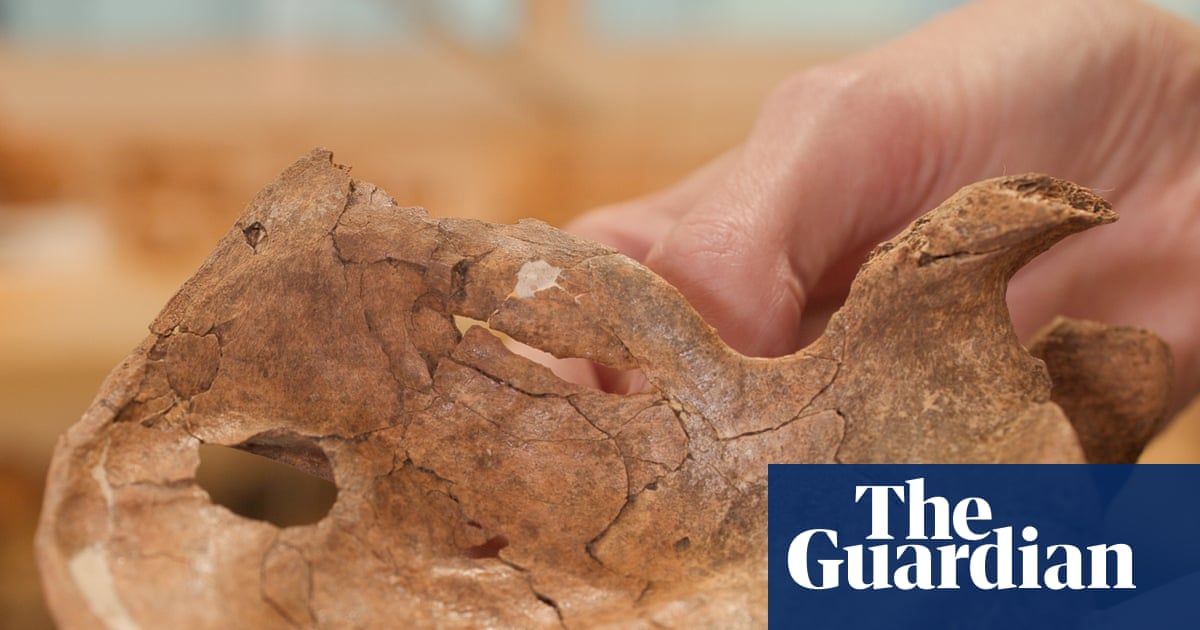
Seventy thousand years is a long time for a story to wait. The Neanderthal in question died in Shanidar cave, perched in the Zagros foothills of what is now Iraqi Kurdistan, and his skeleton was buried beneath nearly eight metres of rock and sediment. For decades he was just another fragment in the archive of dead relatives. Then, close inspection of the left shoulder blade revealed a 1.5-centimetre-round hole with three fractures radiating from it — bone shards packed inside the wound, as though the impact had punched fragments inward.
The hole is the mark of a wooden spear thrust from the front. The spear would have entered the chest, probably punctured the lung, severed major arteries, and then exited through the thin bone of the scapula. The person affected, a roughly 45-year-old adult, was almost certainly killed by the wound. They were also already in serious trouble. A lower incisor was split vertically, neighbours twisted inward, and hardened plaque had built up over at least a year around the damage. Someone or some Neanderthals had been living with a face full of pain before the spear finished the job.
The discovery, published in Scientific Reports, is being presented with appropriate caution. The authors, including Dr Emma Pomeroy of Cambridge and Professor Chris Hunt of Liverpool John Moores, acknowledge that the wound could, in principle, have been inflicted during a hunt gone wrong. That explanation feels thin. Pomeroy herself called the injury a “kill shot” directed at the heart, and noted the force required to drive a spear through the ribcage and out the shoulder blade is not the sort of thing you stumble into accidentally.
The larger point is not that Neanderthals were bloodthirsty — it is that the capacity for directed violence between individuals who belonged to the same species, or something very close to it, is far older than we used to think.
Who Is the Enemy?
One of the most persistent narratives in popular anthropology has been the neat separation between two deep human histories: Neanderthals as shy, cave-bound foragers tending their dead, and early Homo sapiens as the ruthless, warfare-prone innovators who eventually replaced them. The split is seductive because it absolves us of certain responsibilities. If only we fought. If only we were violent. Then our darker impulses are uniquely human, perhaps even civilising.
That story does not survive scrutiny against this single wound.
Shanidar has long been one of the most important Neanderthal sites in the world precisely because of its burials. At least five individuals were laid to rest at the same spot, one depositing body atop another that was still decomposing, over a span of years or decades. The behaviour is unusual in the Neanderthal record. It implies intentionality, repetition, possibly a symbolic relationship with the dead. Now it also carries the scar of a weapon strike.
The spear itself would not have survived. Wood rots in soil. That is why the Clacton spear — over 400,000 years old — and the waterlogged timber tools from Germany sit in such isolated prominence. But the wound is the proxy. And the proxy points toward a conclusion that will make some readers uncomfortable: the toolkit of interpersonal violence, of weapons aimed at other hominins rather than at game, predates the supposed emergence of behavioural modernity.
This does not prove that Neanderthals fought each other at scale. One wounded individual in one cave is not an army. But it does shift the burden of proof. The default position can no longer be that weapons were reserved for animals until sapiens arrived on the stage. The stage was shared, and the weapons were already in use.
The Teeth Tell a Story the Bone Almost Misses
The dental damage on this Neanderthal is quietly remarkable. A vertical split through a lower incisor, neighbours pushed inward, plaque sealed into the crack for a year or more. Someone hit that face hard. The trauma is the kind you see in close-quarters fights, not in hunting accidents. Think of it this way: a spear thrown at an ibex does not normally send a human skull reeling backward into broken teeth. This looks like a blow from another person or a small group in confined space.
The plaque detail matters because it gives the injury chronological depth. This was not a fresh wound dressed up as something dramatic. The person lived with it. They survived long enough for a year’s worth of calculus to accumulate inside a split tooth. If Pomeroy’s reading is right, others may have helped them — feeding, sheltering, staying close while a fractured face healed unevenly. Surviving violence and then receiving care is a different cognitive world from surviving it alone.
Which raises a second uncomfortable question: if Neanderthals tended their wounded, could they also have targeted enemies with the same coordinated intent? Competence in one domain does not automatically produce competence in the other, but it removes the assumption that these behaviours require entirely separate mental architectures.
Why the Cave Matters
Shanidar is not a random location. It sits in the Zagros mountains, a zone of overlap between Neanderthal territory and, later, the migratory routes of early Homo sapiens. Whether the two groups encountered each other here is unknown. What is clearer is that the cave was a repeated destination. Bodies were brought back to the same depression, again and again, behind a huge boulder near the entrance. No other Neanderthal site in the region shows that degree of repetition.
That repetition is why the broader team, led by the late Tim Williams, has spent years excavating. The stratigraphy is thick. Eight metres of sediment means many seasons were lived and abandoned above this burial ground. Each layer is a question. The current find answers at least one, and opens several more.
The spear wound is the oldest direct evidence of lethal interpersonal violence among hominins. Older claims exist — fragments with cut marks, ambiguous fractures — but this is specific. The circular wound track, the fracture pattern, the bone debris inside the canal created by the impact: together they converge on a single interpretation. Wooden shaft. Chest-level entry. Lethal force. Delivered by a hand, or held steady, close to the body that received it.
The Hunting-Accident Escape Hatch
The authors themselves offer the escape hatch. Hunt is clear that Shanidar Neanderthals hunted ibex with wooden spears, and that accidents happen. A slipping throw, a panicked animal, a shaft that deflects and strikes a companion. The hypothesis is logically possible. It is also hard to falsify from a fossil. No one can return to the moment and observe the throw.
But the escape hatch has limits. The dental trauma argues against a simple hunt mishap. The anterior position of the wound on the scapula argues against a stray shot from behind. The cumulative weight of the injuries points toward a confrontation, not a coincidence. Even if the authors resist calling it warfare, they have offered the oldest clear case of one hominin inflicting a spear wound severe enough to kill another.
What Comes Next
The paper will be read differently depending on who reads it. Palaeoanthropologists will look for matching wounds. Forensic specialists will examine whether the force metrics match known spear-thrust parameters. Popular historians will reach for headlines about cavemen fighting. All of those responses are legitimate. The research that matters most, though, is still ahead.
Shanidar has five or more burials. There may be more beneath the sediment. Each skeleton is an archive of trauma, disease, diet, and behaviour. If the spear-wounded individual is not an outlier, the pattern could shift the timeline for interpersonal violence by tens of thousands of years. If it is an outlier, the exception itself tells us something: even in a society where most deaths came from age or animal risk, the option of weapon violence was available.
Either way, the neat separation between Neanderthal tenderness and human ruthlessness is harder to maintain. The cave produced both. It produced people who returned to the same spot to lay down their dead, sometimes over others already there, and it produced the deepest evidence yet that someone once used a sharpened piece of wood to end a rival’s life. Both facts belong to the same place. That is the harder lesson, and the more accurate one.