Nepal's Floods Are Just the Latest Melting Point in Asia's Glacier Crisis
Nepal is burying thousands after floods wiped out villages in minutes. But the real story, one Asian press is connecting and Western outlets are missing, is the 95,000 glaciers slowly dissolving above those villages.
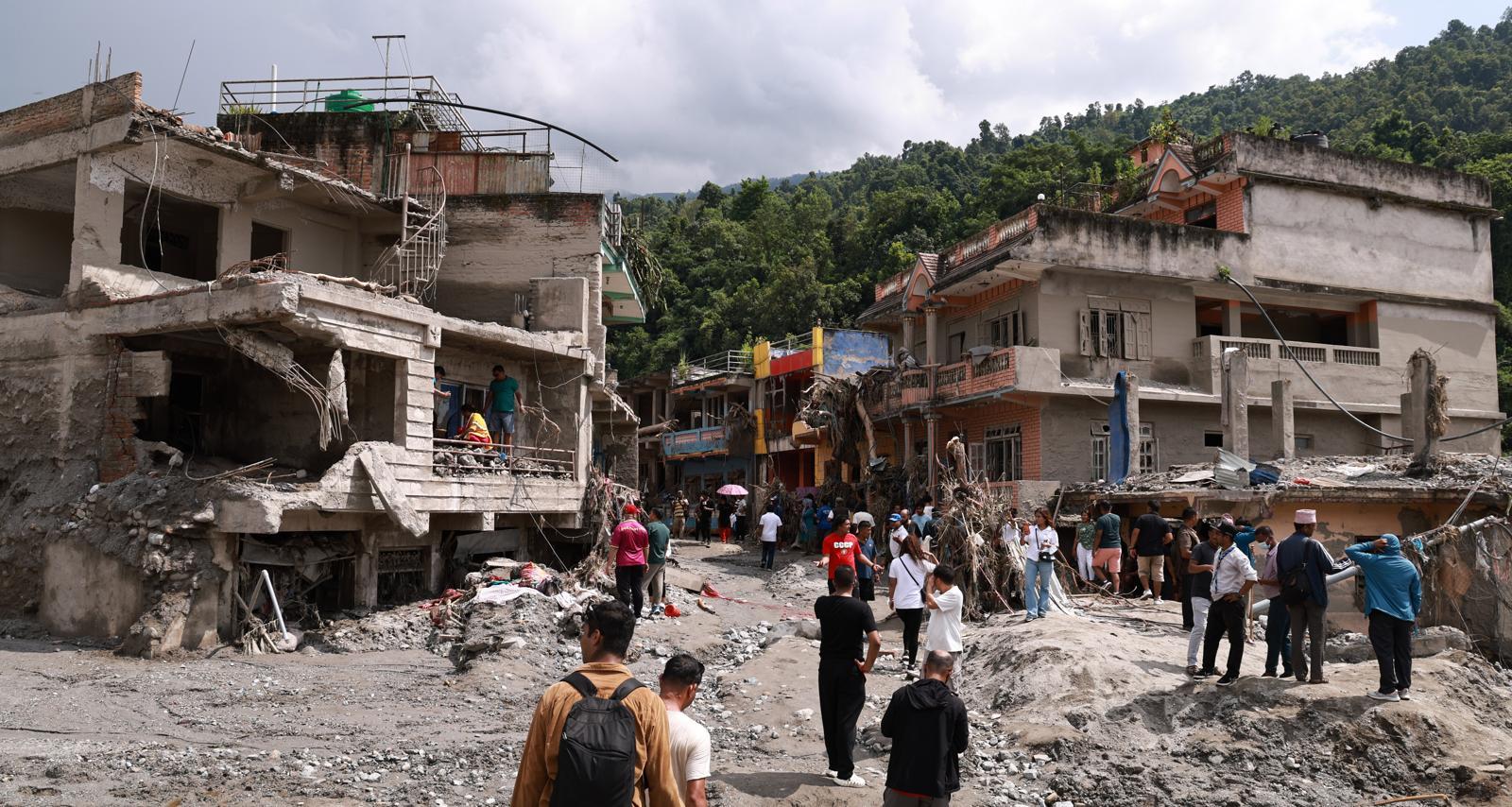
The Water That Swallowed a Village
A hydroelectric worker in Nepal posted a video on August 29 showing an emergency siren blaring and people sprinting up a hillside. Within hours, Pratik Gautam was missing. His roommate and colleagues were missing too. The village they lived in was gone — swept away in twenty to thirty minutes by floodwater and debris that geologists say came from a high-altitude rockslide and glacier collapse acting in concert.
Four days into the disaster, Nepal’s death toll stood at 633, including seven in Chinese-administered Tibet. Roughly 3,000 people remain unaccounted for. Some bodies are decomposing so rapidly in the heat that officials are considering mass burials without individual identification. Relief workers describe entire settlements erased.
The floods are only part of the story. The part Western newsrooms are largely missing is the one Korean journalists have been linking together: the 95,000 glaciers dotting Asia’s mountain ranges, which are melting at a pace that turns seasonal rain into catastrophic flash events like the one that buried these villages.
A Number That Should Haunt You
Dan McGrath, a geoscientist at Colorado State University, told CNN that the glaciers across Asia’s mountain ranges cover an area roughly the size of South Korea. They are losing mass rapidly. The water they release each year is enough to submerge New York City to the top of the Empire State Building — 381 meters of water spreading across the entire metropolitan area.
That is not a poetic image. It is a hydrological fact. And it is the arithmetic behind every flood that follows an intense rainfall event in the Himalayan foothills.
Nepal alone has more than 2,000 glacial lakes. Monitoring them with the kind of real-time laser altimetry and drone surveillance used in Alaska’s Mendenhall Glacier basin would be nearly impossible across Nepal’s terrain. Eran Hood, an Alaska-based ice-flood researcher, said the logistical gap is stark: the tools exist, but the landscape does not cooperate with them.
So Nepal watches its mountains the way most of the world watches its own — poorly, and only after the water arrives.
The Infrastructure Gap
The floods struck hydropower infrastructure hard. Nepal relies on electricity exports and domestic hydropower for a significant share of its energy and revenue. Damage to facilities representing more than 12 percent of the country’s generating capacity is not just a power outage — it is a blow to the economy at a moment when recovery costs are already estimated at $4 billion to $5 billion, according to Finance Minister Swarnim Wagle.
That figure, roughly 10 percent of Nepal’s GDP, sits below the $9 billion damage estimate from the 2015 earthquake but carries a different character. The earthquake shattered buildings; the floods are washing away the river valleys where those buildings sit and the agricultural land that feeds them. Recovery from one requires reconstruction. Recovery from the other requires relocation, and relocation requires political will that emerging economies rarely possess in full measure.
China’s border region saw seven confirmed deaths, but the full toll across the Tibetan side remains unclear. Cross-border glacial systems do not respect customs posts.
Why This Story Is Split in Two
Read English-language wires on the Nepal floods and you get an excellent disaster report: casualty figures, rescue operations, weather forecasts for additional rain over the weekend. Read the Korean coverage and you get the same report plus a section on the 95,000 glaciers, the South Korea–sized ice sheet above the valleys, and the slow-motion collapse of the water regime that the Himalayas have regulated for millennia.
The Korean press, anchored by outlets like Donga Ilbo, appears to be treating the flood and the glacier melt as one continuous event — a seasonal shock wearing a long-term mask. That framing matters. It changes the question from “how do we respond to this flood?” to “how do we live with a mountain range that is actively changing its output?”
Western reporting has not entirely ignored the glacier link. McGrath’s comments about New York’s imaginary flood made it into CNN. But the structural connection — between a village in Nepal’s Nuwakot district and the ice fields feeding the rivers below it — rarely carries beyond a single paragraph of context.
That is a missed editorial opportunity. The 3,000 missing people in Nepal are not just victims of bad weather. They are living at the downstream end of a process that is unfolding across every major mountain range in Asia: the Hindu Kush, the Karakoram, the Tian Shan, the Hengduan. The same hydrological logic applies wherever glaciers feed monsoon-dependent river systems.
What Comes Next
The immediate risk is still rising. Weather services in Nepal’s Gandaki, Bagmati, and Lumbini provinces have warned of continued rainfall through the weekend. Two glacial lakes in flood-prone areas are being monitored for sudden overflow. Another wave of displacement is possible.
On the longer timeline, the options narrow. Alton Byers, a glacier hazard specialist at the University of Colorado, has argued that early warning systems alone are insufficient when flood waves move faster than evacuation routes. The practical recommendation is land-use policy: restrict construction in floodplains, mark and maintain clear evacuation corridors, and accept that some valleys are no longer safe for permanent settlement.
Those are ugly choices for a country where mountain communities have nowhere higher to go. They are also the choices that separate adaptation from repetition.
Nepal’s floods will dominate headlines for days. The glacier data will not disappear — it will just sit in academic papers and environmental briefings while the next heavy rain season arrives. The Korean press is doing something useful by keeping the two stories attached. The rest of the world’s newsrooms should pay attention.