Nepal floods expose the hidden risk of Japanese diaspora travel
Five Japanese nationals went missing after entering Nepal from Tibet amid catastrophic flooding that has killed at least 165 people. The incident reveals how climate-driven disasters are catching foreign travelers off guard in South Asia's most vulnerable border zones.
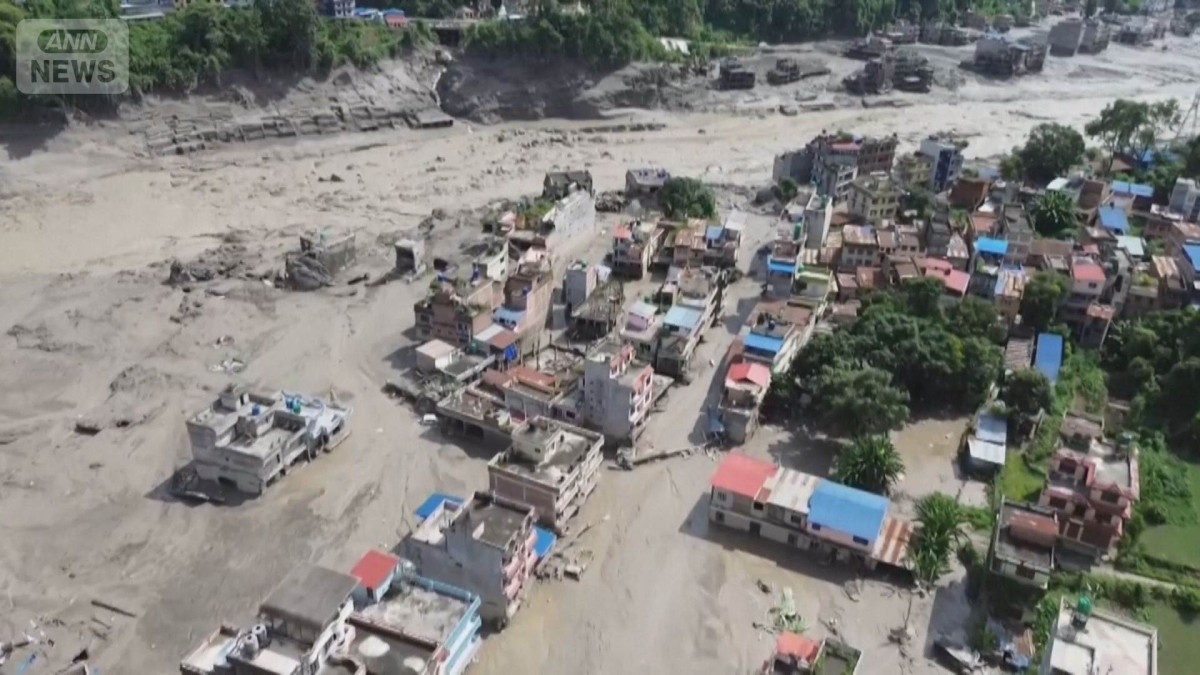
The border town where five Japanese tourists vanished
The last message came through at 8:51 a.m. on August 26. A Nepali tour company driver, waiting at the border crossing in Kerung, confirmed he had met five Japanese travelers — a couple with three children who had crossed from the Tibetan side the morning before. After that, the line went dead.
Five days later, they remain unaccounted for. Nepal’s Rasuwa District, a mountainous corridor between the Tibetan plateau and Kathmandu, has been devastated by catastrophic flooding. Local authorities report at least 165 dead and over 800 people missing, including 466 foreigners from India, Malaysia, the United States, Australia, South Korea, and Japan. Infrastructure including hydropower facilities has been washed away. Roads are severed. Communications are down.
Japan’s Chief Cabinet Secretary Hirokazu Matsuno confirmed that Tokyo is requesting search and rescue operations through Nepali authorities and has activated an emergency task force at the embassy in Kathmandu. South Korea dispatched a joint government team on August 27. China’s state media reported that debris flows from Nepal’s side also swept into Tibet’s Shigatse region, leaving 265 people missing on the Chinese side.
The timing of these floods is not coincidental. Scientists have linked intensifying monsoon patterns and glacial melt in the Himalayas to accelerating climate change. What was once a seasonal risk in high-altitude regions is becoming a recurring catastrophe.
The geography of risk English-language reporters miss
Rasuwa District sits on a well-trodden tourist corridor. For years, trekkers and overlanders have crossed between Tibet and Kathmandu through this narrow mountain valley. The route is popular precisely because it bypasses the more crowded Everest base camp trail — cheaper, faster, and advertised as an adventure route.
But the geography of this valley makes it acutely vulnerable. River systems originating on the Tibetan plateau funnel through narrow gorges before opening into the Kathmandu Valley. When heavy rainfall or glacial lake outbursts occur upstream, the water has nowhere to go but straight through populated areas like Sundarijal and Khopre, which sit directly in the floodplain.
The Nepal Bureau of Standards and Technical Administration has flagged Rasuwa, Dhading, and Gorkha districts as high-risk zones for flash flooding. Yet travel advisories from most Western governments still list Nepal as a generally safe destination with standard precautions. The specific danger of this border corridor — the one most Japanese travelers use when coming through Tibet — rarely appears in those briefs.
That gap matters. The five Japanese nationals were not on an independent trek. They were part of an organized tour arranged through a Chinese travel agency and picked up by a Nepali operator at the border. This model — Chinese tourists entering Nepal through Tibet-bound packages — has expanded significantly since border crossings reopened after the pandemic. Operators compete on price. Risk assessment is often informal. Travelers rarely receive detailed safety briefings about specific route hazards.
Who benefits from the current system and who pays the price
Japan’s Ministry of Foreign Affairs maintains a tiered system for overseas safety information. Nepal currently sits at Level 1 — exercise standard precautions. That rating has not changed despite years of documented landslide and flood fatalities in the very district where this flood occurred. The system prioritizes broad categories: political instability, terrorism, natural disaster risk by country. It does not drill down into the specific corridors that attract Japanese visitors.
The Korean government’s response was notably faster. Seoul deployed a joint ministry-police team within 24 hours. Japan’s foreign ministry has confirmed that search and rescue requests have been submitted and that emergency team deployment is being prepared, but the operational timeline remains unclear. Both governments face the same fundamental problem: when communications infrastructure is destroyed, finding missing persons in a mountain valley becomes a logistical puzzle with no reliable solution.
This is not merely a diplomatic embarrassment. It reveals a structural weakness in how Japan protects its citizens abroad. The consular system was designed for a world where disasters were unpredictable anomalies. It was not designed for a world where extreme weather events follow predictable seasonal patterns in known geographic zones. The five Japanese tourists were missing because they were in a known flood zone during a known rainy season — circumstances that should have triggered enhanced travel guidance well before they boarded a vehicle in Kerung.
What happens next for Japanese tourism in the region
The incident will almost certainly trigger a review of how Japanese authorities assess risk for South Asian destinations. But reviews do not prevent the next disaster. The real question is whether the tourism industry — Japanese tour operators, travel agencies, and the Chinese agencies that feed passengers into Nepali ground operators — will adopt mandatory safety protocols for high-risk corridors.
Some Japanese operators already require travelers to register with the embassy before departure and carry satellite communication devices in mountain regions. Those protocols did not reach this family. Whether that is a failure of the system or a failure of enforcement remains unclear.
What is clear is that the number of Japanese visitors to Nepal has been climbing. Pre-pandemic, annual arrivals exceeded 100,000. The trend is accelerating as China-Nepal border traffic recovers and as Japanese travelers seek alternatives to the overcrowded Southeast Asian circuit. More visitors means more exposure to routes like Rasuwa — routes where climate risk is rising faster than safety guidance is being updated.
The floods in Nepal and Tibet will dominate headlines for days. The five missing Japanese nationals will dominate Japanese media coverage. But the deeper story is this: South Asia’s disaster risk landscape is shifting faster than the systems designed to protect travelers can keep up. Until that gap closes, the next missing group is not a matter of if — it is a matter of when and where.