Netanyahu's Iran Hardline Shift Reshapes Global Sanctions
Netanyahu's public backing of Trump's economic D-Day against Iran signals a hardening of Western policy that could close off diplomatic off-ramps and tighten a global sanctions net reaching far beyond the Middle East.
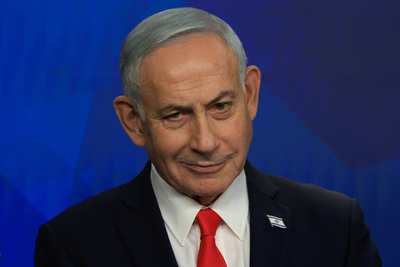
The End of the Diplomatic Off-Ramp
Benjamin Netanyahu’s recent remarks about Iran represent more than another Israeli hardline statement. What matters is the timing. Just as the United States appears to be pivoting toward sustained economic pressure rather than renewed military action, Netanyahu is publicly closing the door on diplomacy. The implication: any off-ramp that was tentatively available is now gone.
Netanyahu told a gathering in the West Bank settlements on August 25 that he met with Donald Trump and discussed the possibility of a diplomatic solution with Iran. His conclusion was blunt. “That group, those barbarians”—he said—could not be dealt with. “I will say it clearly: an agreement cannot be reached.”
This is not new rhetoric from Netanyahu. He opposed the 2015 Iran nuclear deal under Obama and has long argued that diplomacy with Tehran is futile. But his willingness to openly endorse Trump’s current strategy while simultaneously foreclosing any diplomatic path is strategically significant. He is effectively boxing in the American president.
Trump’s Economic D-Day
Trump declared an “economic D-Day” against Iran on August 24, escalating financial pressure on a regime already reeling from years of sanctions. The administration’s posture has shifted notably since February, when the U.S. and Israel conducted a joint military strike on Iran.
That conflict triggered a sharp spike in international oil prices and generated growing domestic opposition in the United States. By April, Trump had agreed to a ceasefire. Now, the administration is pursuing a different playbook: economic strangulation rather than kinetic warfare.
Netanyahu praised this approach as a “third option”—more aggressive than diplomacy, less destructive than war. He specifically highlighted that Trump’s strategy targets not just Iran itself but the networks and regimes that support Tehran’s leadership. “He decided to tighten the encirclement around those who help this regime, this terrible dictatorship,” Netanyahu said.
The Sanctions Architecture Expands
The real story here is what happens next. When the U.S. narrows its focus to economic pressure—and Israel’s prime minister publicly backs that pivot—the sanctions architecture will expand in scope and severity. We are likely to see:
- Secondary sanctions on third-country banks and firms continuing to trade with Iran
- Tighter enforcement on shipping and insurance channels that facilitate Iranian oil exports
- Broader targeting of regional proxies and state sponsors, including Hezbollah and Hamas networks
- Pressure on Asian economies to choose between Washington’s financial system and Iranian energy supplies
This is the model the U.S. has built before. After the 2018 withdrawal from the JCPOA, Washington reimposed sanctions that effectively cut Iran off from the global financial system. The campaign worked—oil exports dropped from roughly 2.5 million barrels per day to under 500,000 at their nadir—but it also strained relations with allies who continued trading with Tehran in violation of U.S. law.
The difference this time is that Netanyahu is removing the diplomatic escape hatch. In 2018, the JCPOA framework still existed, however damaged. Today, the Israeli prime minister has declared that no agreement is possible. That changes the calculus for every country weighing whether to comply with U.S. pressure or maintain ties with Iran.
What This Means for Asia
For Asian economies—particularly Japan, South Korea, and India—the implications are direct and substantial. These countries have historically navigated a careful middle path: maintaining energy imports from Iran while staying within the bounds of U.S. sanctions. South Korea, for instance, has imported Iranian crude despite American warnings, often using intermediaries and alternative payment mechanisms.
Netanyahu’s hardening position makes that balancing act far harder. If the United States interprets Israeli support as political cover for aggressive secondary sanctions enforcement, Asian governments will face genuine dilemmas. Compliance means losing a supplier and facing potential penalties. Defiance means risking inclusion on U.S. enforcement lists and losing access to dollar-clearing systems.
The energy market dimension is equally important. Iran remains one of the world’s largest oil producers. Any successful squeeze on Iranian exports could tighten global supply, pushing prices higher. Asian refiners—many of whom process Iranian crude as part of their feedstock mix—would bear the cost. India’s dependence on Iranian oil has fluctuated over the years but has always been a strategic lever in New Delhi’s relationship with Tehran.
Who Wins, Who Loses
Netanyahu wins politically. He solidifies his base by demonstrating that he will not entertain reconciliation with Iran—a position that resonates deeply in Israeli politics after the October 7 attacks and the ongoing conflict with Hamas and Hezbollah. He also aligns himself with the Trump administration’s preferred tool, giving Israel influence over the direction of U.S. policy.
Trump wins by gaining an ally’s public endorsement of his strategy. It legitimizes economic pressure as the preferred path and reduces domestic criticism that the administration is backing away from hardline goals.
Iran loses. It faces intensified economic isolation with no diplomatic lifeline visible. The regime’s calculus shifts from negotiating terms to surviving pressure—a far more volatile position.
Asian economies lose too. Their ability to hedge between competing powers erodes. The assumption that diplomacy remained possible—even as a long-term option—provided cover for continued engagement with Iran. Without that option, they are forced to pick a side sooner than they might have preferred.
What Happens Next
The next moves will come from Washington. Trump has signaled frustration with Iran’s refusal to accept U.S. demands but remains cautious about reopening full-scale military operations. The economic D-Day is likely to involve new executive orders, broader designation of Iranian entities, and intensified pressure on third-country financial institutions.
Israel will watch closely. Netanyahu has staked his position on this approach. If the economic pressure fails to produce Iranian concessions—and history suggests that is a real possibility—he will face renewed calls for military action, which could force Trump into a harder choice.
The broader question is whether the sanctions architecture can hold. The 2018 campaign demonstrated that U.S. secondary sanctions can damage Iran’s economy but not shatter it. The regime adapted through smuggling networks, barter deals, and relationships with countries willing to defy American pressure. A tightened net will increase costs but may not change behavior.
What is different this time is the removal of the diplomatic off-ramp. That makes the situation more unstable, not more contained. When a regime perceives no path to relief other than defiance, the risk of miscalculation rises. And in the Middle East, miscalculation is never far from catastrophe.