Nintendo Is Fixing FromSoftware's Worst Feature — And It's Brilliant Marketing
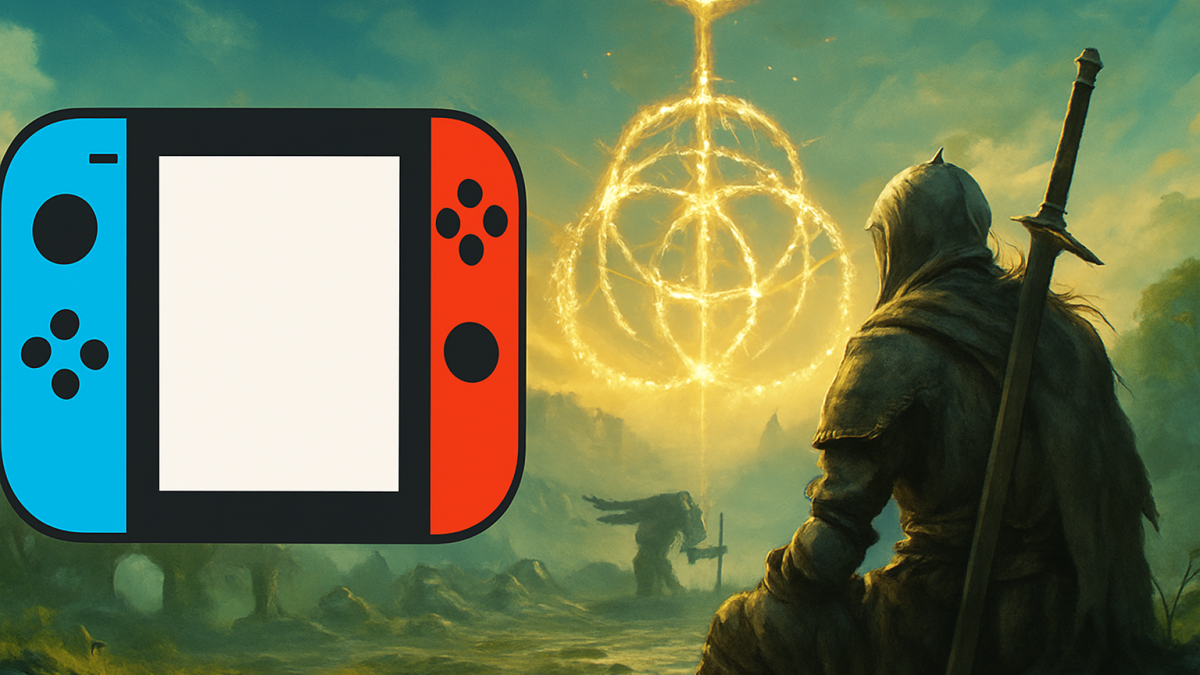
Nintendo's hyper-detailed Elden Ring tutorial video for Switch 2 went viral precisely because it contradicts FromSoftware's DNA. The contrast between two Japanese gaming giants' philosophies became the real story of the launch.
The Video Nobody Asked For
On August 27, Nintendo posted a tutorial video for Elden Ring on X. It was not from FromSoftware. It was not the moody, atmospheric trailer the game’s developer is known for — the kind that shows misty landscapes and distant boss silhouettes, leaving players to wonder what they’re looking at.
This was something else entirely. It was a patient, almost pedagogical walkthrough of Elden Ring’s basics, explaining enemy placement, combat pacing, and the concept of a Tarnished. It opened with the line: “Let me tell you about you — the Tarnished, guided to the Lands Between.”
The internet lost its mind.
One user noted the absurdity of the contrast: FromSoftware doesn’t make detailed tutorials, so Nintendo had to step in, and that somehow felt like a gift. The post accumulated 7,820 likes and over 4 million impressions. Another user, genuinely moved, wrote: “I cried. Nintendo made an intro video for Elden Ring. And then they asked what a Tarnished is…”
A third comment, which captured the mood most precisely, observed: “FromSoftware wrote the book on mystery. Nintendo just bound it in a language everyone can read.”
The joke wasn’t mean-spirited. It was affectionate recognition of two opposing design philosophies colliding in real time.
FromSoftware’s Unwritten Contract
FromSoftware built its reputation on a specific kind of hostility. Dark Souls, Bloodborne, Sekiro, and Elden Ring all share a design ethos: the game does not owe you explanations. Lore is buried in item descriptions. Mechanics are revealed through failure. The world is deliberately opaque.
This isn’t carelessness. It’s the brand. Players who love FromSoftware games love the friction. The confusion is part of the reward. Figuring things out on your own — or with the help of a community that has spent years decoding every detail — is the experience.
Miyazaki Hasumi’s interviews reinforce this philosophy. He has repeatedly described his games as castles, urging players to explore rather than be led by the hand. The developer’s social media presence is correspondingly spare — trailers that offer atmosphere over information, character portraits shrouded in shadow, and a habit of responding to fan speculation with nothing more than emoji reactions.
So when Nintendo produced a video that essentially said, “Here is what a Tarnished is, and here is why you should avoid that tree guard enemy until you’re stronger,” it felt almost transgressive. Like someone translating a poem into bullet points. A licensed translation of a sacred text.
And yet. The video went viral. Not as mockery, but as celebration.
Why the Contrast Went Viral
The humor worked because everyone recognized both sides. FromSoftware fans know the developer’s style intimately — the cryptic trailers, the lack of hand-holding, the way the company seems to almost pride itself on ambiguity. Nintendo, meanwhile, has spent decades making games that explain themselves clearly. Its first-party titles are models of accessibility without being condescending.
When these two approaches met in the context of a cross-publisher release, the tension was obvious enough to be funny, but not so hostile as to be bitter. The resulting social media moment was pure organic marketing: millions of people talking about Elden Ring, about Switch 2, and about the strange cultural negotiation happening between two of Japan’s most important gaming companies.
The second-order effect was immediate. Within hours, content creators began producing reaction videos, side-by-side comparisons of Nintendo’s tutorial against FromSoftware’s actual in-game prompts, and long-form analyses of what the video said about each studio’s philosophy. Gaming journalists picked up the story as a framing device for their Switch 2 coverage. Even non-gaming outlets noted the cultural significance of two Japanese companies communicating across their design differences.
Nintendo didn’t set out to make a meme. But in making a straightforward tutorial, it accidentally produced content that was more memorable than any trailer FromSoftware could have released.
What This Means for Switch 2
The broader context matters. The Elden Ring Tarnished Edition launches on Switch 2 on August 28 as a comprehensive bundle: the base game, the Shadow of the Erdtree DLC, four new armor sets, two new starting classes, and three cosmetic outfits for the spectral steed Torrent. The price is ¥9,020 including tax.
For players who already own Elden Ring on PS5, PC, or Xbox, Nintendo is also offering a separate “Tarnished Pack” for ¥550 — containing only the new Switch 2-exclusive additions.
Patch 1.17, released simultaneously across all platforms, includes significant balance changes: 23 large shields received guard strength buffs, 14 of them also lost weight, weapon skills and sorceries were adjusted, and two new NPC invasion events were added for Caelid and the Royal Capital. Two new starting classes — the Knight of the Ideal and the Heavy Knight — are also available through the Tarnished Pack.
But the real story isn’t the patch notes. It’s that Nintendo is willing to do the interpretive labor that FromSoftware will never do. The Switch 2 audience is broad by design — it includes casual players, lapsed gamers, and people who have never encountered a Souls-like. Sending a notoriously difficult game onto that platform without support would be irresponsible. Sending it with a Nintendo-made tutorial is a statement: this game belongs here now.
The move also signals Nintendo’s confidence in the Switch 2’s install base. The company doesn’t need to soften a prestige title to sell hardware. It can afford to treat Elden Ring as both an artistic achievement and an accessible experience simultaneously — a balancing act that many platforms attempting to court both hardcore and casual audiences struggle to maintain.
The Brand Negotiation
This isn’t the first time Nintendo has explained another company’s difficult game to its own audience. The company has produced approachable guide content for titles like Monster Hunter and Dark Souls in the past. But Elden Ring is different in scale and cultural weight. It’s FromSoftware’s biggest game ever, and placing it under Nintendo’s explanatory umbrella reframes the relationship between the two studios.
FromSoftware gains access to a wider audience it couldn’t reach on its own. Nintendo gains a prestige title that elevates the Switch 2’s launch credibility. And both gain from the social media moment that their contrasting styles accidentally generated.
There is a subtle power dynamic at play here as well. Nintendo, by producing the tutorial, positioned itself as the gatekeeper and translator of FromSoftware’s work for a new audience. In doing so, it claimed a role that goes beyond distribution — it becomes the mediator between an artist’s uncompromising vision and a platform holder’s commercial responsibilities. That mediation is valuable currency in an industry where third-party publishers often struggle to justify porting difficult games to console platforms.
The viral video was free advertising no one planned. It proved that two companies with opposite design DNA can coexist productively — and that the space between their philosophies is where the most interesting conversations happen.
What Happens Next
The long-term implications of this partnership remain unclear. Will Nintendo continue to produce tutorial content for future FromSoftware releases on Switch 2? Will FromSoftware respond with any acknowledgment of the tutorial’s existence — a simple retweet, perhaps, or a comment in a future interview? Or will the developer maintain its practiced silence, letting the market decide the value of the arrangement?
What is certain is that the tutorial has shifted the conversation around how difficult games are marketed and distributed. It has demonstrated that accessibility and artistic integrity are not mutually exclusive — that a company can honor a developer’s vision while also investing in the infrastructure that helps new players engage with it. The model could reshape how other platform holders approach third-party ports of challenging titles.
FromSoftware made a game that rewards curiosity. Nintendo made a video that rewards patience. Together, they made a story — one that neither studio would have told alone, and one that the internet was eager to hear.