Why the Nobel Peace Prize Picks a Guardian of International Law
The Nobel Committee's choice of Navi Pillay is a rare direct rebuke to the Trump administration and Israel, and a signal that the world's most prestigious peace prize now sees international law itself as under existential threat.
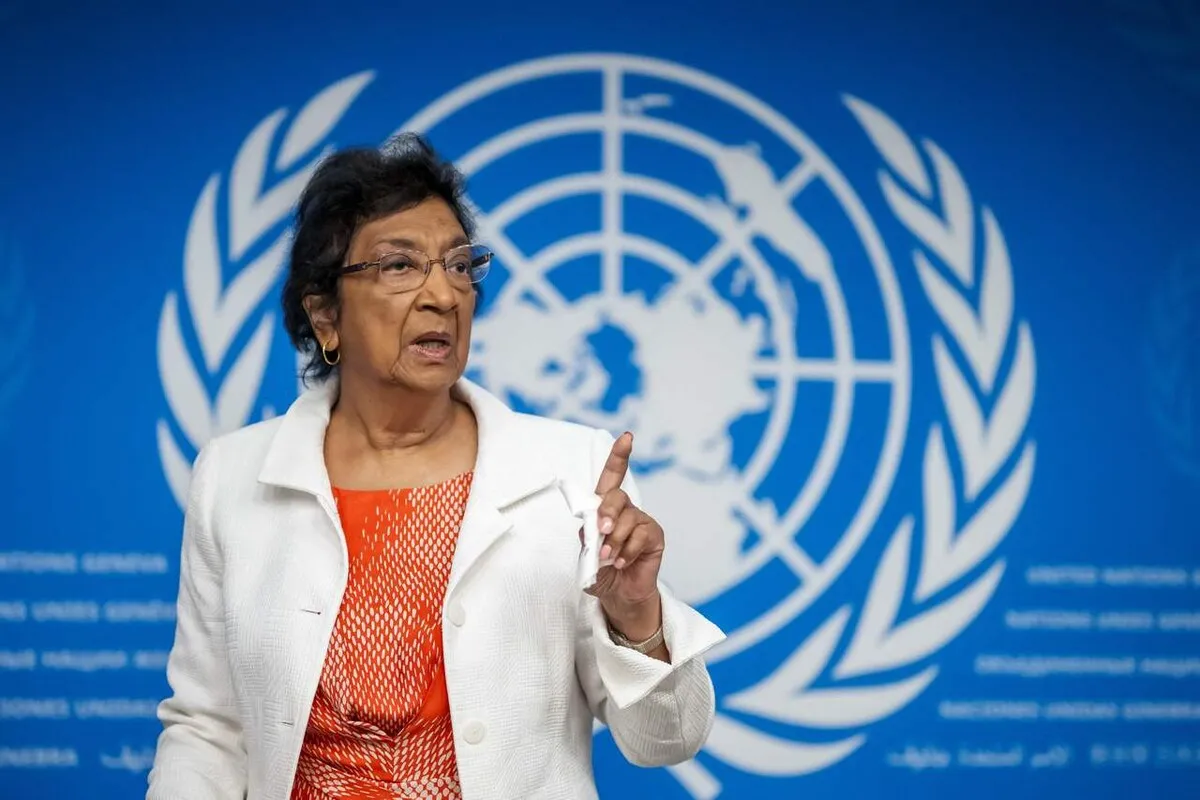
A Direct Shot Across the Bow of the Trump White House
The Nobel Committee rarely makes political statements of this caliber. Selecting Navi Pillay, the former UN human rights chief and formerICC judge, as this year’s Peace Prize laureate sends an unmistakable message: the rules-based order that the United States under Donald Trump has spent years undermining is precisely what needs defending.
The timing is deliberate. Pillay took office at the UN human rights post in 2008, served through the Obama years, and has since become one of the few senior international legal figures willing to publicly conclude that Israel’s conduct in Gaza amounts to genocide. She led the UN’s Independent International Commission of Inquiry on the occupied Palestinian territories, which in 2024 found that Israel had committed acts of genocide against Palestinians in Gaza. She resigned from that role in 2021, citing personal reasons, but the committee made clear on Wednesday that her willingness to make that finding — and to do so in the face of intense political pressure — is exactly why she deserves the world’s most prestigious peace honor.
The Trump administration responded with immediate hostility. In 2024, after the ICC issued arrest warrants for Israeli Prime Minister Benjamin Netanyahu and other officials over war crimes allegations in Gaza, Washington slapped sanctions on ICC officials. Last August, it sanctioned ICC Prosecutor Karim Khan and the lawyers leading the Israel investigation. This month, reports emerged that the US Treasury was preparing to sanction the ICC itself, effectively attempting to cut the court off from the dollar-based financial system. Pillay’s appointment is a clear rebuke of that entire project.
The Deeper Reckoning: International Law as a Battleground
What makes this year’s selection unusual is how explicitly the Nobel Committee is taking sides. In its citation, the committee described “the increase in wars and armed conflicts” and noted that “judges and judicial bodies are being politically attacked.” It called for “courage, vision and determination” — qualities it said Pillay demonstrated on the bench.
This is not coded language. The committee is referencing the Trump administration’s systematic effort to isolate and weaken the International Criminal Court, an institution that exists precisely to prosecute war crimes when national courts cannot or will not.
The implications extend well beyond Israel-Gaza. Pillay’s career spans the Rwandan genocide tribunal, the ICC’s early years, and the ICJ’s consideration of Myanmar’s persecution of the Rohingya. She was the first non-white woman appointed to the South African High Court, having spent 28 years as a lawyer defending anti-apartheid activists alongside Nelson Mandela. Her record is one of consistency: she has argued that international law must apply equally to all states, regardless of power.
That principle is now under direct assault from the world’s most powerful military nation. The Nobel Committee’s selection suggests it considers the threat to the international legal order more urgent than any single conflict.
The ASEAN Implication No One Is Discussing
The ripple effects of this decision reach further than Washington-Tel Aviv relations. The Philippines, which revived its century-old dispute with China over the South China Sea through an international arbitration case that resulted in a landmark 2016 ruling, sits at the intersection of two trends that Pillay’s selection illuminates.
Manila has consistently positioned itself as a defender of international law in the region, filing the arbitration case that invalidated Beijing’s nine-dash line claim and continuing to challenge Chinese maritime harassment through legal and diplomatic channels. The current Philippine administration under President Ferdinand Marcos Jr. has deepened its security ties with the United States, welcoming increased American military presence and signing enhanced defense agreements that Beijing views as hostile.
If the Trump administration follows through on its threats to sanction the ICC or otherwise cripple international judicial institutions, the Philippines’ legal strategy in the South China Sea faces the same existential threat that Pillay’s award highlights. An ICC that cannot function because the US has weaponized the dollar against it is an institution that cannot protect smaller states from powerful ones. The 2016 arbitral award already has no enforcement mechanism — a weak enforcement environment is exactly what makes Pillay’s appointment symbolically significant.
The Philippines’ calculus is becoming clearer: in a world where great powers ignore international legal rulings, the only remaining leverage is institutional credibility. Pillay’s selection reinforces that very idea.
Zelenskyy’s Quiet Signal
Ukrainian President Volodymyr Zelenskyy has not made a public statement about Pillay’s award, but his government’s position on international law is well documented. Kyiv has relied heavily on the ICC’s investigation into Russian war crimes and the ICJ’s provisional measures order compelling Russia to halt its military operations. Both institutions exist in a legal ecosystem that the Trump administration is actively attacking.
Zelenskyy’s silence on Pillay may reflect diplomatic caution, but his government’s broader posture — insisting that international law must prevail over brute force — aligns directly with the Nobel Committee’s framing. The connection between the war in Ukraine and the war in Gaza, in terms of how both have tested the same institutions, is impossible to ignore.
Who Wins and Who Loses
The winners are the institutions Pillay represents: the ICC, the ICJ, the UN human rights apparatus. Their credibility receives a boost at a moment when powerful states are actively seeking to dismantle them.
The losers are the administrations — primarily Washington, but also Beijing, Moscow, and Tel Aviv — that have treated international legal bodies as inconveniences rather than constraints. The Nobel Committee has effectively placed them on notice.
What happens next is uncertain. The Trump administration has already signaled it will not honor the award or engage constructively with the ICC. But the symbolic damage to the administration’s reputation among allies and international institutions is real. European capitals, which have been searching for ways to maintain the relevance of international law without directly confronting Washington, now have a figurehead in Pillay.
The most consequential question is whether smaller states — the Philippines, Ukraine, Colombia, Venezuela — will interpret this selection as encouragement to double down on legal strategies that powerful nations prefer to ignore. Pillay’s career suggests they should. The Nobel Committee’s timing suggests they can.