Nord Stream Suspect Detained on a Movie Set — What Happens Next
A Ukrainian man charged in the Nord Stream bombing was arrested in Croatia while consulting on a Hollywood war film. The case exposes a growing collision between counterterrorism operations and cultural production — and puts Berlin in a diplomatically untenable position.
The Set and the Search Warrant
Volodymyr Zhuravlyov was working on a movie about the Nord Stream sabotage when he was arrested for allegedly being part of it.
German prosecutors executed a European arrest warrant against the Ukrainian national on Wednesday in Pula, Croatia, where he was serving as an advisor on the film Snake Island, directed by Doug Liman and starring Sean Penn and Adrien Brody. His presence on set — and his sudden removal — marks the latest collision between an active counterterrorism investigation and the cultural industries that sometimes document the events in real time. Production staff in Pula reported that the arrest occurred during a routine day of location work along the Croatian coast, with authorities moving in with the quiet efficiency characteristic of EU judicial cooperation mechanisms. No violence was reported; Zhuravlyov cooperated with the execution of the warrant.
The circumstances are almost too clean to be coincidental, though no one has suggested the arrest was anything but routine enforcement of an existing warrant. Zhuravlyov had already been in Polish custody for months. Poland refused to extradite him, ruling that a Ukrainian attack on Russian energy infrastructure would constitute an act of war rather than a criminal offense. That decision sent shockwaves through Berlin’s prosecutorial community, which had counted on Polish cooperation as a relay race handoff. Germany never accepted that framing. It kept the warrant alive and moved the search to another jurisdiction where the legal conditions were more favorable — a strategic pivot that required coordinates, paperwork, and diplomatic quiet from the German federal prosecutor’s office in Karlsruhe.
Croatia, a NATO member and EU candidate pursuing full membership, complied within hours. That detail matters more than it might appear. Zagreb has been carefully calibrating its relationship with both Brussels and Kyiv, and a swift execution of the warrant signals that Croatia sees no political calculus strong enough to override its EU judicial obligations. Ukrainian officials in Zagreb were notified after the fact, according to sources familiar with the procedure, leaving Kyiv with limited room to mount a last-minute diplomatic intervention. The film’s crew, meanwhile, scrambled to adjust shooting schedules. Snake Island had built its promotional identity around authenticity and real-world military consultation; losing its lead advisor mid-production introduced both logistical and reputational complications that the producers are now managing behind closed doors.
Who This Case Actually Targets
Zhuravlyov is not the primary defendant. He is described by German prosecutors as someone who worked closely with Sergiy Kuznetsov, another Ukrainian national arrested in Italy last year and already extradited to Germany. Kuznetsov is the figure prosecutors have built their case around; Zhuravlyov is accused of assisting in the planting of explosives on three of the four Nord Stream pipelines in September 2022. The distinction matters because it shapes how much independent culpability can be extracted from Zhuravlyov’s cooperation — or whether his role is best understood as peripheral, a consultant rather than a commander.
German investigators have spent two years reconstructing the operational chain that led to the explosions on the seabed of the Baltic Sea. Their publicly available summary describes a team that planned the mission, constructed the naval mines, transported them to a diver-operated vessel, and deployed them under cover of darkness. Zhuravlyov is alleged to have provided technical advice on underwater demolition and possibly on the selection of target pipelines, drawing on expertise he accumulated through prior military service. The exact scope of his involvement remains one of the case’s central unresolved questions, and Croatian courts will scrutinize that scope carefully before deciding whether the evidence meets Germany’s extradition threshold.
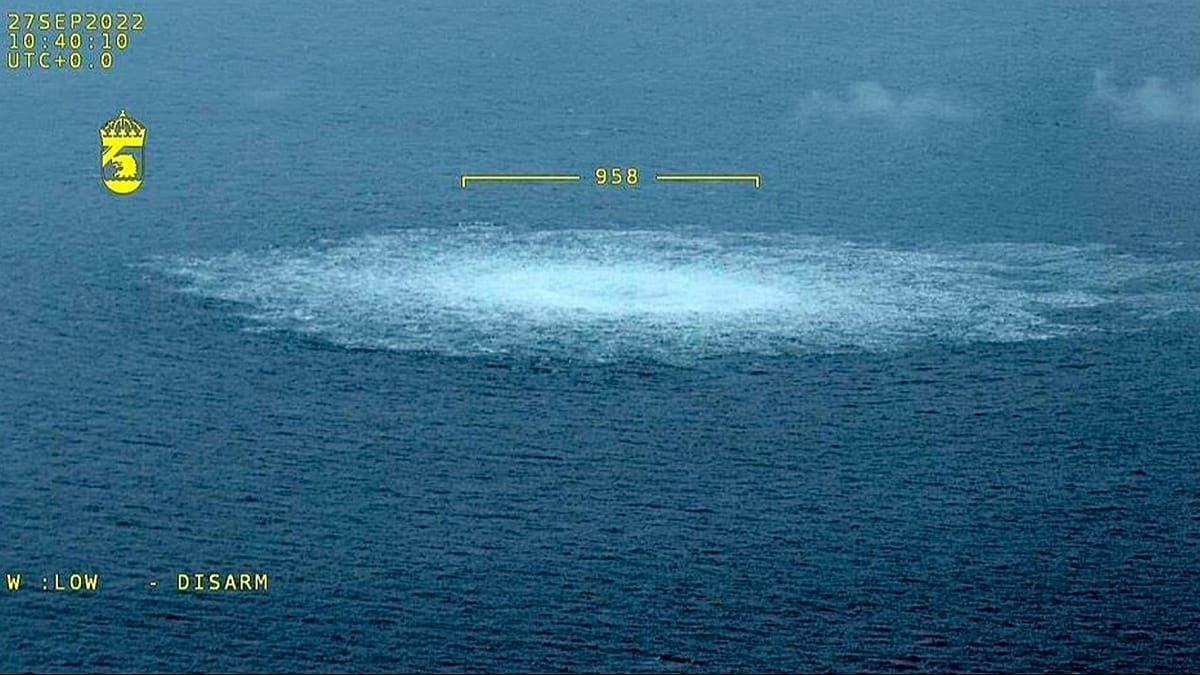
Germany’s position, articulated over two years of investigation, is that the sabotage was ordered by a Ukrainian state agency. The stated aim: deprive Russia of future energy revenues to undercut its war effort in Ukraine. The damage was immediate and strategic. Roughly a third of German gas imports had flowed through those pipelines. Three damaged lines meant a dramatic restructuring of Europe’s energy logistics overnight, accelerating a pivot toward LNG terminals and Norwegian supply that had already been on the drawing board but now became urgent necessity.
Kyiv has denied any involvement. President Volodymyr Zelenskyy has stated publicly that his government had no knowledge of a plan to detonate the pipelines. The Polish refusal to extradite Zhuravlyov reflected the same instinct — that the attack, if carried out by Ukrainian actors, served a wartime purpose that civilian courts should not punish. Some Ukrainian lawmakers have gone further, suggesting that even if individuals acted without central orders, their actions aligned with Ukraine’s strategic interests and deserved political protection rather than prosecution.
The Diplomatic Geometry
Germany finds itself in a corner it did not choose and cannot easily escape.
Berlin has been one of Kyiv’s most reliable supporters since February 2022. It has supplied weapons, training, and financial aid at a scale that surprised many observers and continues to stretch domestic political consensus. To pursue a Ukrainian national for an attack that some European allies view as legitimate resistance is to step into diplomatic quicksand — one that threatens to pull in defense contractors, intelligence partners, and the broader narrative of European solidarity that Chancellor Olaf Scholz’s government has worked painstakingly to construct.
The German government’s standard response has been to invoke judicial independence — the courts handle prosecutions, not the chancellery. That line is both legally accurate and politically insufficient. Prosecutions of this nature cannot be separated from the broader relationship between Berlin and Kyiv, especially as defense cooperation remains central to Ukraine’s survival. Every warrant executed against a Ukrainian citizen sends a signal, and signals travel faster than legal briefs. The German Foreign Office has reportedly circulated quiet clarifications to allied capitals, emphasizing that the investigation targets individuals, not the Ukrainian state, but those distinctions carry less weight in Kyiv’s political atmosphere than they would in a German courtroom.
NATO members other than Germany have taken varied positions, revealing fractures that few public statements have acknowledged. Poland’s refusal set a precedent that other allies may follow or reject — Hungary’s government, already sympathetic to Moscow, has questioned the wisdom of prosecuting Ukrainians at all, while the Baltics have remained strategically ambiguous, aware that legitimizing the Nord Stream case could eventually implicate their own security calculations. Italy, which extradited Kuznetsov, appears willing to cooperate with German warrants against Ukrainians, suggesting that Rome views the case through a narrower legal lens than Warsaw. The split tells you something about how different European capitals categorize the same act: terrorism, warfare, or something in between — a categorization that will only harden as the trial approaches.
What Happens Next
Zhuravlyov faces extradition proceedings in Croatia, which will determine whether he is sent to Germany to stand trial. That process can take weeks or months depending on Croatian judicial procedures and any appeals filed. If extradited, he will join Kuznetsov in the German system, where prosecutors have likely already built a substantial case file. The two men may be tried separately or together — German procedure allows for consolidated proceedings when defendants are alleged to have participated in the same criminal enterprise, and sources close to the investigation suggest that consolidation is the preferred route.
The film production continues without him. Snake Island, already in development, will need a replacement advisor and probably a reshoot or two. The coincidence of a Nord Stream suspect advising on a Nord Stream film is not something the producers will ignore in promotional material, and the question of whether to lean into the narrative or distance the project from it will shape the film’s marketing strategy for months. Industry insiders report that several other consultants on the production have expressed discomfort with the association, even as others see an opportunity to bring unvarnished realism to the final cut.
For Germany, the real question is procedural and political in equal measure. How far will the investigation extend? If Zhuravlyov is convicted, will it trigger a formal diplomatic complaint from Kyiv? How does the Bundestag, already debating defense spending and Ukraine aid, address a prosecution that some lawmakers view as undermining the very alliance Germany claims to defend? The Greens, long the most enthusiastic supporters of Ukrainian military aid, have been notably silent on the extradition issue, a silence that speaks volumes about internal party calculations. The SPD’s leadership has echoed the judicial-independence line but with less conviction than in previous cases. The opposition CDU has asked parliamentary questions that Berlin has so far declined to answer substantively.
Zelenskyy’s denial is categorical. If evidence emerges that links the Ukrainian state apparatus directly to the bombing, the legal and diplomatic consequences will extend far beyond two defendants in a Baltic Sea trial. They would touch the foundations of Germany’s Ukraine policy, potentially reopening debates about arms transfers, energy subsidies, and the moral clarity that has underpinned Berlin’s public posture throughout the conflict.
The Bigger Pattern
The arrest on a film set is colorful but secondary. The substantive issue is how European states prosecute acts of war committed on their territory by allies they still need — a question that will recur with increasing frequency as the lines between conventional warfare, asymmetric sabotage, and state-sponsored disruption continue to blur.
Counterterrorism investigations and wartime geopolitics are not usually this tangled. The Nord Stream case sits at the intersection — a sabotage attack on a German-Russian energy link, carried out possibly by a Ukrainian national, investigated by German prosecutors, resisted by Polish courts, and watched by NATO capitals trying to figure out where the line between ally and suspect should be drawn. The line itself is not new; what is new is the speed at which it has been tested and the willingness of some allies to redraw it in directions that others find unacceptable.
Zhuravlyov’s arrest in Croatia ensures the line is not yet erased. Whether it is redrawn in Kyiv’s favor or in Berlin’s will depend on what the evidence shows and how much political pressure either side can withstand. The trial — whenever it begins — will be the proximate battleground. But the real verdict, the one that will shape Europe’s approach to hybrid conflict in the years ahead, is being written now, in extradition hearings and foreign ministry cables and the quiet conversations between allies who are suddenly discovering that their shared threats no longer produce shared judgments.