Netanyahu's survival is the easy part — can Israel actually govern?
Israel's Oct. 28 election is being sold as a referendum on Netanyahu, but the real question is whether any coalition can hold together long enough to govern — or whether the country braces for more electoral cycles.
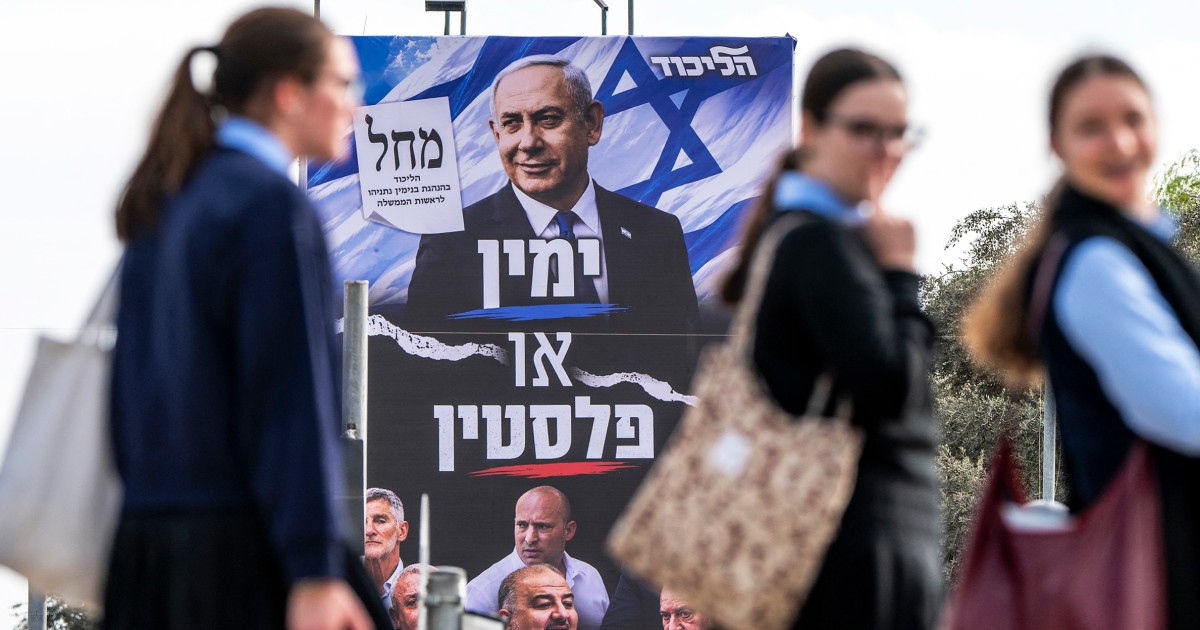
The vote is a referendum. The aftermath is the real test.
Israeli voters head to the polls on Tuesday with a narrow set of options that mask a far more complicated problem. Yes, this is a referendum on Benjamin Netanyahu — on his handling of the intelligence failures before Oct. 7, on the war in Gaza, on his refusal to accept accountability. But the deeper question hanging over this election is not whether Netanyahu can survive. It is whether anyone who replaces him can govern.
The structure of Israel’s political system guarantees that even a decisive electoral defeat for Likud will not produce a clean transfer of power. Israel’s proportional representation system, with its 3.25 percent threshold, fractures parliament into a constellation of parties — some large, most of them fiercely independent. No party has ever won a majority in the 120-seat Knesset. Coalitions are built, not inherited. And the smaller parties that become kingmakers have no interest in stability; they have interests of their own, usually financial or ideological, and they will extract price tags accordingly.
This is not abstract. Between 2019 and 2022, Israel held five elections. The outcome was always the same: Netanyahu returned. The difference this time is that the stakes are higher, the country is more wounded, and the international isolation is real.
Eisenkot leads, but leadership is not the same as governance
Latest polling from Wala has Gadi Eisenkot’s Yashar party ahead of Likud, 23 seats to 19. That sounds like a mandate. It is not. The margin is slim enough that any shift in turnout among Haredi or Arab-Israeli voters could flip the result. More importantly, Eisenkot’s seat count does not translate into a coalition. He would still need to negotiate with parties that are deeply skeptical of him — including elements of the settler movement and the religious right — to reach the 61 seats required to form a government.
Eisenkot served in Netanyahu’s war cabinet in the opening months of the Gaza war before breaking with the prime minister over strategy. He has called for an independent inquiry into Oct. 7, a long-term ceasefire, and the removal of Hamas from power within 18 months. Those positions are more palatable to Western capitals than Netanyahu’s. They are also less likely to hold together a coalition that includes the parties currently propelling Likud forward.
Polling also projects B’Yachad, the alliance of former prime ministers, at 14 seats — a third force that could tip the balance in either direction. The Democrats, representing the remnants of Israel’s leftist current, are at nine. Palestinian-Israeli parties, which collectively draw support from roughly 20 percent of the population, are expected to win a similar number of seats but are unlikely to join a governing coalition under current conditions. The rest is a menagerie of niche parties — Yisrael Beytenu, Otzma Yehudit, Shas, Religious Zionism, United Torah Judaism — each in the six-to-eight seat range, each with veto power over any coalition that hopes to include them.
The personal stakes are real — for Netanyahu and for Israel
Netanyahu is not running purely for ideology. He is running for survival. He faces criminal charges of fraud, breach of trust, and bribery — allegations he calls a politically motivated witch-hunt, but ones that could carry prison time if he loses the protections of office. Prime ministers in Israel have been prosecuted before, but never while still in the spotlight of an active war. The ICC arrest warrant for war crimes and crimes against humanity adds another layer of risk: a Likud government that falls could see Netanyahu traveling to very few countries and facing execution-style legal jeopardy abroad.
His supporters argue he is the only leader who fought back after Oct. 7, who expanded the war to multiple fronts, and who refused to negotiate hostage releases on Hamas’s terms. The death toll in Gaza stands at approximately 74,500 according to Palestinian health authorities. The war has also drawn Israel into sustained conflict with Hezbollah in Lebanon and direct exchanges with Iran. For many Israelis, Netanyahu is the only guarantee against further escalation. For others, he is the guarantee of exactly that escalation — and of the intelligence and strategic failures that made it possible.
The structural question no one is answering
What happens after the coalition is formed — if it is formed? A government that takes office in November or December will inherit a country with a devastated southern region, a hostage situation unresolved, a military overstretched across multiple fronts, and an economy under severe inflationary pressure. Tech-sector growth has not lifted the broader population. Housing costs, healthcare access, and organized crime — particularly in Palestinian-Israeli communities — are urgent domestic concerns that have little to do with security.
The compulsory conscription of Haredi men, who make up nearly 15 percent of the population, is another flashpoint. Ending the exemption is politically explosive and would require a coalition willing to confront one of its own members. No major party has yet offered a credible plan for how to do that without triggering a collapse.
And then there is Gaza — or rather, the absence of a plan for what comes after. Eisenkot has spoken of removing Hamas within 18 months. Netanyahu has offered nothing comparable. The United States has pressed for a post-war governance framework; Israel has refused to commit to one. Whatever government emerges from this election will face the same impossible choice: occupy Gaza indefinitely and risk becoming an occupying power with no end date, or withdraw and hand responsibility to a fragmented Palestinian authority that cannot hold the territory together.
What Washington gets wrong about this election
American coverage of Israeli elections tends to focus on the personality — who wins, who loses, whether the prime minister keeps his job. That is a mistake. The more consequential question is what kind of government Israel produces and whether that government can make decisions that affect regional stability. A weak coalition government, dependent on the goodwill of extremist factions, is less capable of making strategic choices — about Gaza, about the West Bank, about negotiations with America — than a strong one. It is also more volatile. Every confidence vote becomes a potential trigger for another election cycle.
The Trump administration’s relationship with Netanyahu has always been transactional. A change in Israeli leadership does not guarantee a change in American policy, but it does change the dynamics of how policy is implemented. An Israeli prime minister without Netanyahu’s personal ties to Trump, without the same degree of unconditional political cover, may find American support more conditional — and therefore more useful for diplomacy. Or it may find American support harder to secure, depending on who wins and how they position themselves.
The longer game
Even if Eisenkot or another figure forms a government, the structural problems remain. Israel’s political system rewards fragmentation. The security establishment remains deeply intertwined with partisan politics. The trauma of Oct. 7 has not been processed — it has been weaponized. And the occupation, which has expanded relentlessly since 2023, shows no sign of being questioned by any major party.
The peace process is not merely stalled; it is absent from the campaign entirely. No candidate has offered a credible path toward a political settlement. The two-state solution, already dead in all but name, received no mention in the competing visions on display. The West Bank continues to expand. Settler violence has intensified. Palestinian-Israeli citizens, who make up a significant voting bloc, are cast as a security concern rather than a constituency to be governed.
Netanyahu’s survival is the headline. But the real story is what comes after — and Israel’s political architecture is not designed to produce a clean after. It produces negotiation, compromise, and often paralysis. The question is whether a country at war can afford that luxury.
If the coalition-building process drags — and there is every reason to expect it will — Israel could face another period of government-by-diploma, where a caretaker administration manages daily crises without a mandate. That is not unprecedented in Israel. It is deeply dangerous when the country is fighting wars on multiple fronts.