North Korea's New Bridge Opens Door to Sanctions Evasion
Satellite-confirmed completion of the new Yalu River bridge signals deepening economic ties and potential sanctions-circumvention capacity between North Korea and China.
The Bridge That Changes Everything
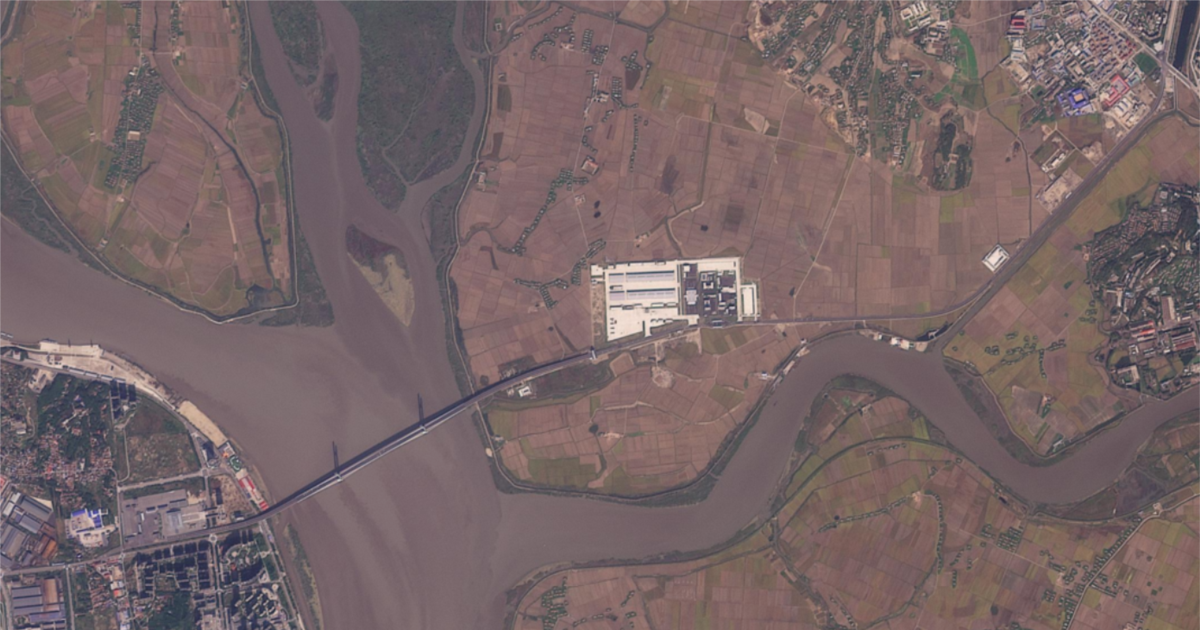
Twelve years after construction began, North Korea’s new bridge to China is finally ready. Satellite imagery confirms what official reports have suggested: massive customs facilities on the North Korean side, paved roads, and a three-kilometer span connecting Dandong to Sinuiju. The infrastructure stands complete. What it enables changes the strategic calculus around North Korea’s clandestine trade networks.
China’s Xinhua News Agency reported on the 15th that both sides agreed to open the bridge officially. The timing matters. North Korea has spent the past several years building alternative smuggling routes while simultaneously preparing the groundwork for more conventional trade corridors. This bridge completes that preparation.
The satellite photos from Planet Labs tell the story. A 467,000-square-meter facility — roughly the size of dozens of football fields — sits at the North Korean end of the bridge. Construction began with massive excavation in 2021, followed by a quiet period. Large-scale building work resumed last April. Rooftops appeared by August this year. Road paving completed recently. The facility is designed for customs processing and cargo handling. It’s not a temporary operation. It’s built for sustained, high-volume movement of goods.
China funded the entire project. The bridge itself — a four-lane span built from both sides meeting in the middle of the Yalu River — represents Chinese investment. But the North Korean side required its own infrastructure commitment. That commitment is now visible. The question isn’t whether the bridge will open. It’s what happens after.
The Sanctions Evasion Problem
North Korea’s economy survives through a combination of state-controlled trade and clandestine networks. International sanctions since 2006 have restricted its ability to export key resources like coal, iron ore, and seafood while limiting imports of luxury goods and dual-use technologies. The regime has adapted through shell companies, flag-of-convenience shipping, and informal trade routes through China, Russia, and Southeast Asia.
This bridge changes the physics of that adaptation. Currently, most North Korean-Chinese land trade flows through an older iron bridge further downstream. That bridge handles trains and trucks but operates at limited capacity. Traffic congestion is constant. Inspection points create bottlenecks. Smugglers exploit the delays. A new bridge with purpose-built customs facilities means faster movement, more processing capacity, and potentially more legitimate trade channels that can mask illicit shipments.
The math is straightforward. More capacity means more opportunities for concealment. Even if North Korea operates within legal trade volumes, the additional throughput creates cover for sanctioned goods moving in either direction. Coal exports become harder to track when multiple bridges handle the same commodity flows. Dual-use technology imports disappear into legitimate cargo streams.
China benefits immediately. Dandong’s economy depends on cross-border trade. The bridge increases capacity for Chinese exporters reaching North Korean markets while giving Beijing more leverage over Pyongyang through economic dependence. Russia watches closely too. Russian trade with North Korea has increased significantly since 2022, particularly around energy and military supplies. A new bridge strengthens the entire regional trade architecture that sanctions were designed to disrupt.
The Dependency Question
North Korea’s leadership faces a strategic dilemma. The regime needs economic survival but wants to maintain political independence. Opening new trade corridors requires accepting more Chinese oversight. Customs facilities on North Korean soil mean Chinese inspection protocols, documentation standards, and potentially intelligence gathering capabilities.
But the alternative is stagnation. North Korea’s economy shrank during the pandemic border closures and hasn’t fully recovered. Satellite imagery shows construction activity around the bridge site even before completion, suggesting Pyongyang viewed this infrastructure as essential to economic planning. The regime isn’t opening this bridge for symbolism. It’s opening it because it needs the trade.
The dependency dynamic works both ways. China gains leverage through economic interconnection. North Korea gains access to markets and supplies it cannot produce domestically. Both sides understand the arrangement. Beijing knows Pyongyang needs the bridge more than it needs sanctions compliance. Pyongyang knows China won’t risk destabilizing the regime that keeps a buffer zone between Chinese territory and American forces in South Korea.
This isn’t a one-sided relationship. It’s a calculated mutual dependence with clear boundaries. China won’t allow North Korea to become a security threat through nuclear testing or missile flights. North Korea won’t threaten Chinese territorial integrity or economic interests. The bridge operates within those boundaries.
Second-Order Consequences
The ripple effects extend beyond trade statistics. Regional security dynamics shift when sanctions enforcement weakens. South Korea and Japan face increased concerns about North Korean weapon development funding. The United States confronts a familiar problem: sanctions regimes lose effectiveness when border infrastructure enables alternative trade routes.
Military implications matter too. North Korea’s defense industry benefits from imported components and exported resources. Satellite imagery of the bridge facilities suggests capacity for heavy cargo handling. Military equipment moves through commercial channels regularly. More throughput means more opportunities for defense industry procurement.
Environmental monitoring becomes relevant. The bridge site sits in a ecologically sensitive area along the Yalu River. Increased industrial activity around customs facilities could affect water quality and local ecosystems. China has environmental obligations along its border regions that complicate unrestricted expansion.
Diplomatic tensions surface quickly. South Korea’s government will face domestic pressure to respond. Japanese officials will raise concerns in multilateral forums. American diplomats will revisit alliance coordination mechanisms. The bridge triggers political conversations that have nothing to do with trade volumes.
What Happens Next
The bridge opening marks a phase transition in North Korea-China relations. Before, trade flowed through limited infrastructure with constant bottleneck pressure. After, capacity expands dramatically. The regime gains economic breathing room. China gains influence through infrastructure dependence. The international sanctions regime loses another enforcement tool.
Monitoring should focus on several indicators. Cargo volume through the new facility compared to the old iron bridge reveals actual trade patterns. Customs inspection documentation shows whether legitimate trade increases or sanctions evasion accelerates. Chinese diplomatic statements indicate Beijing’s strategic calculations. Satellite imagery of surrounding industrial activity shows economic development patterns.
The bridge itself isn’t remarkable. It’s infrastructure. What’s remarkable is what it enables. North Korea’s survival strategy depends on finding ways around international pressure. This bridge provides another pathway. The regime will use it. The question is how effectively the international community responds to infrastructure-based sanctions circumvention.
Twelve years of construction created a facility that changes regional dynamics without firing a shot. That’s the real story behind the bridge opening.