Houthi Pressure Resurrects a Fractured Saudi-UAE Alliance
The Houthis' assault on Taiz has forced Riyadh and Abu Dhabi to bury decades of rivalry and rebuild a military coalition. With Egypt, Pakistan, and Turkey now drawn in, the Red Sea's security architecture is being remade under pressure from Iran's proxy network.
The Gulf’s Unlikely Truce
In late December 2025, Saudi warplanes struck a weapons convoy at Yemen’s port city of Mokha — ammunition destined for UAE-backed forces. It was the low point of a cold war between Riyadh and Abu Dhabi, a conflict fought by proxy on Yemeni soil where the two richer Gulf states backed rival factions in a civil war that has killed tens of thousands.
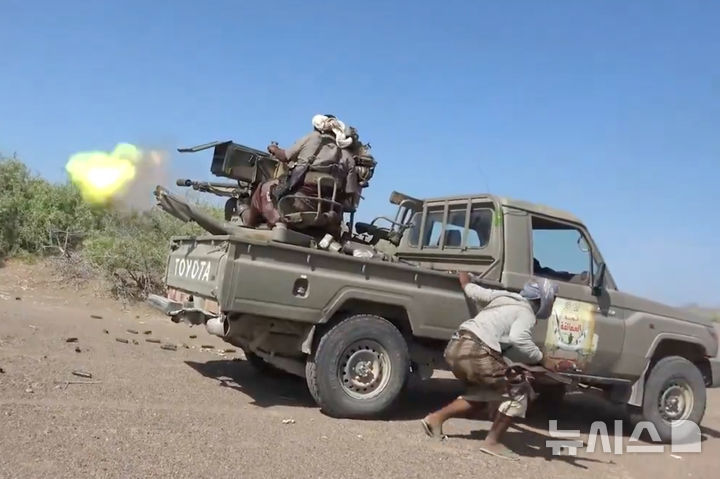
Fast forward to mid-October 2026, and the image from the UK’s Guardian tells a different story: the UAE and Saudi Arabia have agreed to reunite their military efforts against the Iran-aligned Houthi movement. The UAE will resume financial backing for the Giants Brigade, the most elite anti-Houthi force in Yemen. Saudi Arabia will provide air cover. The rift that nearly turned them against each other is being papered over by a shared fear.
Why Now
The timing is not accidental. On October 16, the Houthis bombed the port city of Aden — Yemen’s interim capital — for the second day in a row. The same day, they tightened their noose around Taiz, Yemen’s third-largest city and the last major stronghold of anti-Houthi forces. The World Health Organization reported that twelve hospitals in Taiz have only four days of fuel remaining. Oxygen and medicines are gone. Six hundred thousand people are trapped.
If Taiz falls, the Houthis would control the corridor leading directly to the Bab el-Mandeb strait — the chokepoint through which roughly 10 percent of global shipping passes. Combine that with their already disruptive attacks on the Strait of Hormuz, and the two most vulnerable oil运输 routes in the world are under simultaneous pressure.
Both Riyadh and Abu Dhabi depend on the Red Sea and the Gulf for their economies. The UAE’s ports — Jebel Ali in Dubai, Khalifa Port in Abu Dhabi — handle some of the world’s busiest container traffic. Saudi Arabia’s NEOM project and its east-west energy corridor both route through the Red Sea. An extended closure would hit both economies hard. That shared vulnerability has overridden five years of rivalry.
The Bigger Coalition Takes Shape
What makes this development strategically significant is how quickly it is pulling in outside powers. On October 17, Egyptian President Abdel Fattah el-Sisi announced an emergency meeting for October 18, declaring that Egypt would not tolerate actions threatening Saudi security. Egypt signed a Mutual Defense Agreement with Saudi Arabia in 2018 and participated in the Saudi-led coalition against the Houthis starting in 2015. Sisi’s government is careful to frame its involvement as defensive, not offensive — a distinction that matters given Egypt’s own economic fragility and its desire to avoid another costly foreign entanglement.
But Egypt’s calculus is clearly transactional. Cairo has limited domestic oil and gas production and remains economically dependent on Gulf financial support. Military cooperation buys leverage for economic aid. This dynamic is well documented in regional politics and was on full display during Sisi’s visit to Riyadh the previous month.
Pakistan and Turkey have also signaled their willingness to support Saudi Arabia. Both nations already have defense agreements with Riyadh — Pakistan signed a Mutual Defense Pact in 2023, and Turkey has deepened its military cooperation with the kingdom through joint exercises and arms deals. Neither country’s involvement is trivial. Pakistan brings one of the largest standing armies in the Muslim world; Turkey has demonstrated increasingly assertive military capabilities in recent years, from Syria to Libya to the Caucasus.
What This Means for the Region
The immediate effect is a reconstructed anti-Houthi front that mirrors — and in some ways exceeds — the coalition that operated between 2015 and 2022. Back then, the Saudi-UAE alliance was strained but functional. Now it is being rebuilt under more urgent conditions, with a broader set of contributors and a clearer recognition that the Houthi threat extends beyond Yemen’s borders into global trade routes.
The longer-term implication is a regional security architecture that is less dependent on the United States than it was a decade ago. The Trump administration’s unpredictable posture — alternating between maximalist pressure campaigns and sudden withdrawals of diplomatic attention — has pushed Gulf states to diversify their security partnerships. China and Russia have commercial ties with Iran that complicate any unified Western response. The Gulf states are filling the vacuum themselves.
For Iran, the consolidation of a Saudi-UAE-Egypt-Pakistan-Turkey front is a strategic setback. The Iranian regime has spent over a decade building the Houthi movement as its most effective proxy, a force multiplier that allows Tehran to project power far from its borders without committing its own troops. If the Houthis are pushed back from Taiz and the Red Sea corridors stabilize, Iran loses one of its most valuable asymmetric tools.
The Human Cost
None of this geopolitical maneuvering changes the reality on the ground in Taiz. The WHO’s assessment — four days of fuel for hospitals, no oxygen, no medicines — describes a population caught between a besieging army and abandoning allies. The Giants Brigade, which the UAE is now resupplying, fights on difficult terrain against an enemy that has dug in for years. The Houthis have proven repeatedly that they can absorb significant military pressure and continue fighting.
The humanitarian dimension is often stripped from these analyses, but it matters. A coalition that collapses back into infighting — as it did between 2019 and 2022, when the UAE and Saudi Arabia’s respective Yemeni allies clashed in Aden — leaves civilians as the primary casualties. The current agreement to reunite military efforts is a signal, not a strategy. Signals can be retracted.
What Comes Next
The next few weeks will test whether this coalition can translate rhetoric into coordinated action. Key questions include: Will the UAE’s resumption of funding for the Giants Brigade survive internal political pressures in Abu Dhabi? Can Egypt’s defensive framing hold if Houthi missiles cross into Saudi or Emirati territory? Will Pakistan and Turkey commit troops or restrict themselves to logistics and intelligence?
And perhaps most importantly: what happens if Taiz holds? A successful defense would demonstrate that a multilateral Gulf coalition can counter Iran-aligned forces without American leadership. A collapse would likely deepen the fractures that the current agreement is meant to paper over — and leave the Red Sea’s shipping lanes in even greater jeopardy.