North Korea Drops Reunification — What It Means
North Korea's revised constitution formally designates South Korea as a separate state and removes reunification goals, marking the end of decades of ideological ambiguity. Here is why the change matters for regional security.
A 75-Year Ideological Shift Made Official
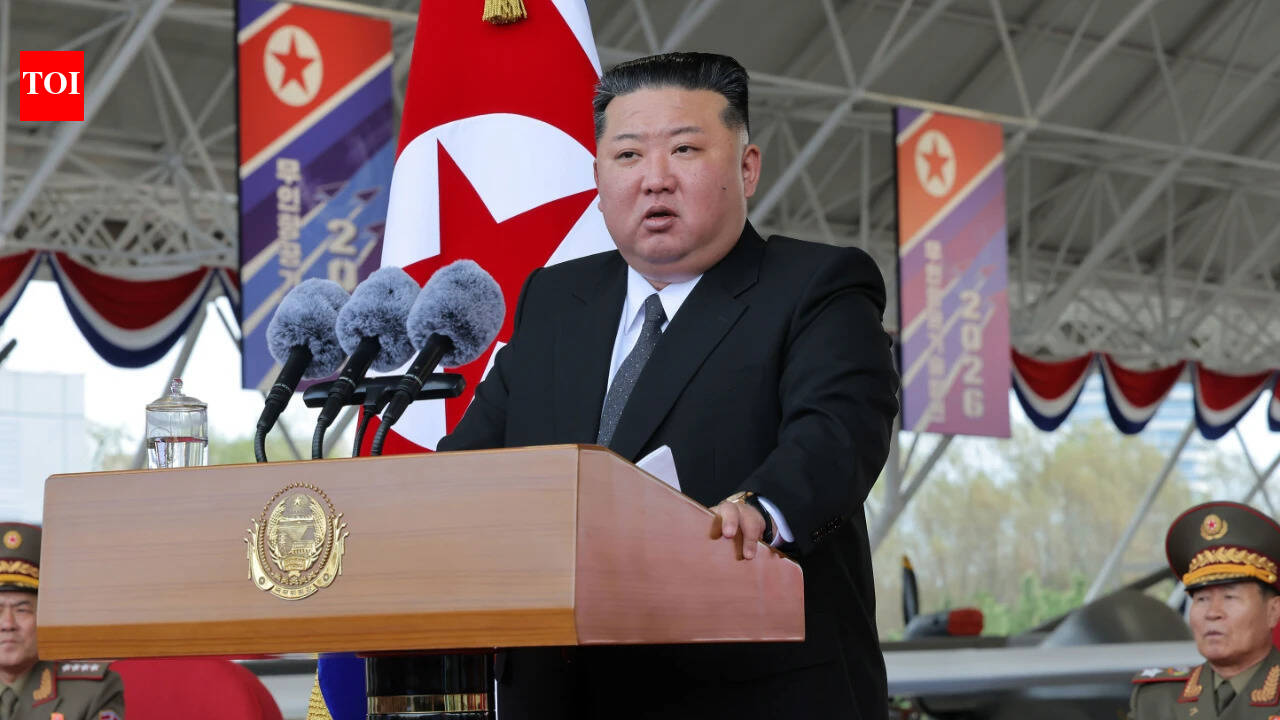
North Korea has formally rewritten its foundational social contract — and with it, the conceptual framework that governed inter-Korean relations since the Korean War ended in stalemate rather than peace. The revised constitution, published on the state propaganda portal Naenara, designates South Korea as a separate neighboring country and strips out every reference to reunification. It was amended at the first session of the 15th Supreme People’s Assembly on March 23.
What makes this moment notable goes well beyond procedural mechanics. No North Korean leader since the 1948 division of the peninsula has ever enshrined the notion of two distinct states into the country’s supreme legal document. Every constitution since then, regardless of how hostile Pyongyang became toward the South, maintained at least the fiction of a single Korean nation awaiting restoration. That fiction is now gone.
Article 2 of the revised text defines North Korea’s territory as “the land bordering China and Russia to the north and the Republic of Korea to the south.” It names South Korea explicitly as a sovereign entity sharing a land border with the North — without, notably, specifying where that border actually lies. The omission is telling. Drawing a precise boundary would require negotiating something Pyongyang has spent seven decades refusing to acknowledge: that the三八线 is not a provisional line between co-belligerents of one divided homeland, but the accepted frontier between two separate countries.
Why Now? Timing Is Not Accident
The publication comes after more than two and a half years during which the constitutional text was simply inaccessible online — a silence that itself functioned as a statement. Pyongyang had been moving toward this position for some time, most visibly when Kim Jong Un himself declared in 2023 that the two Koreas were no longer destined for reunification but were instead rival states. This constitutional amendment gives that rhetorical shift the weight of law.
The document largely mirrors a revised version obtained by South Korea’s Ministry of Unification and released publicly in May 2024. That earlier leak established that the substance of the changes was already known to allies and adversaries alike. Publishing the full text now appears designed to cement the change irreversibly — to make it a public act of record rather than a behind-closed-doors adjustment.
Some passages appear deliberately absent. The published version omits provisions concerning the Cabinet’s authority to adopt resolutions at plenary meetings and the election of lay judges to special courts. Whether these sections were removed during the actual revision process or excised for publication remains unclear. The choice not to publish them matters less than the choice to publish everything else: North Korea is signaling that the core ideological overhaul is complete and non-negotiable.
Nuclear Command Formalized
Perhaps the most consequential structural change has nothing directly to do with the South. Article revisions place the country’s nuclear forces squarely under the command of the chairman of the State Affairs Commission — Kim Jong Un — and explicitly allow him to delegate the authority to use nuclear weapons to the state nuclear command organization.
This is a significant tightening of legal doctrine around nuclear command and control. Previous constitutional texts referenced nuclear forces but left their operational command architecture ambiguous. The new language removes that ambiguity. Kim now holds explicit, constitutionally guaranteed authority over deployment decisions, with the option to transfer that authority downward to a dedicated command structure he controls.
For intelligence analysts and military planners, this matters because it transforms North Korea’s nuclear posture from one managed informally through party chains into one codified at the highest legal level. It also raises questions about escalation dynamics: if the chain of command is clearer, it is also potentially more brittle. Delegation of nuclear launch authority increases the risk of miscalculation or unauthorized use in moments of crisis — a factor that Seoul, Washington, and Tokyo must now factor into their defensive planning.
The End of Engagement’s Logical Foundation
The deeper implication of this constitutional revision reaches beyond nuclear doctrine. For decades, the possibility of reunification — however distant or hypothetical — served as the conceptual anchor for diplomacy involving North Korea. Talks about economic cooperation, humanitarian aid, family reunions, and even limited denuclearization incentives all rested on a shared assumption: that the two Koreas were ultimately one people temporarily separated by foreign powers and civil conflict.
That assumption is now officially dead from Pyongyang’s side. Designating South Korea as a separate state removes the moral and legal basis for engagement frameworks built on kinship and eventual unity. It also forecloses any future North Korean leadership from easily reversing course — repealing a constitutional provision requires the same formal process that created it, and doing so would signal weakness or capitulation.
Seoul faces the sharpest consequence. The Ministry of Unification, established specifically to manage affairs related to reunification, now operates in a world its mandate was designed to prevent. Its budget, staffing, and institutional logic will face immediate pressure. South Korea’s next administration — whether conservative or progressive — will need to answer a question that has haunted every Seoul government since 1948: if the North no longer considers you part of the same nation, what is your relationship with them?
Regional Reckoning
Japan and China will read this development through different lenses. Tokyo has long viewed North Korea’s rhetoric on the South as performative while still caring deeply about the abduction issue and the ongoing threat to its own territory. This constitutional change validates Japan’s cautious approach: North Korea has effectively declared itself a normal hostile state rather than a wayward branch of a single nation. That makes negotiation harder but also makes deterrence simpler to justify to the Japanese public.
Beijing has historically tolerated North Korea’s anti-reunification rhetoric because it kept the regime ideologically rigid and dependent on Chinese support. But outright rejection of Korean unity removes a lever that China could theoretically pull — the promise of reintegration — in any future negotiations about denuclearization or regime behavior. Beijing loses a subtle tool of influence; Washington gains a clearer picture of the strategic landscape it has been preparing for.
The United States and South Korea will likely respond by reinforcing their extended deterrence architecture. If North Korea treats the South as a separate adversary rather than a future partner, the case for permanent American military presence on the peninsula strengthens. The trilateral security cooperation between Washington, Seoul, and Tokyo that has been developing slowly since 2022 gains additional urgency. North Korea’s constitutional revision gives those alliances a concrete ideological adversary to organize against — one that no longer pretends to share a destiny with its southern neighbor.
What Comes Next
The revision does not necessarily mean North Korea will act more aggressively tomorrow. Constitutional text and battlefield intent are not identical. But it does mean that every future diplomatic initiative from Pyongyang will start from a lower baseline. Offers of dialogue about reunification-specific issues — family separations, cross-border infrastructure, economic zones — lose their framing. Any engagement must now be built on the premise that these are relations between two separate states, not complications within a single nation.
That is a colder, harder foundation for diplomacy. It is also a more honest one. After 75 years of pretending otherwise, North Korea has finally stopped lying to itself.