North Korea's Luxury Boom Funds a War Economy
Chanel bags and Omega watches have appeared in Pyongyang department stores — a visible sign that Russian war spending is flowing into North Korea's elite. But the luxury surge masks deeper economic contradictions.
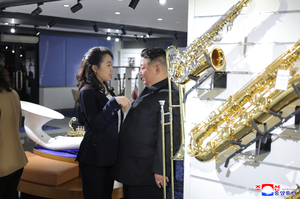
The Department Store as a Geopolitical Signal
A Chanel handbag on a shelf in Pyongyang. An Omega watch in a glass case. To Western observers accustomed to images of North Korean scarcity, these artifacts are almost surreal — but they are real, and they tell a story that no press conference will.
According to the Financial Times, major department stores in North Korea’s capital are now stocking foreign luxury goods, routed through China, alongside IKEA products and smartphones costing roughly $500. Munhwa Ilbo and other regional outlets have confirmed sightings of European luxury brands in specialized sections of state-run stores, often placed near the entrances to maximize visibility to the cadre class who shop there. The Times attributes the shift to a broader trend: Pyongyang is transforming into a more consumption-oriented city, and the driving force behind that transformation is not domestic industry but the cash flowing in from Moscow.
Who Is Spending, and Why It Matters
The FT cites Rachel Minyoung Lee of the Stimson Center, who noted that luxury consumption in North Korea has always existed among the elite — but the pace of change over the past two years is striking. This is not a diffuse middle-class boom. It is a targeted enrichment of the regime’s inner circles, and it has a direct funding source: the Russian military.
North Korea has been sending troops and munitions to Russia for its war in Ukraine since at least mid-2022. In return, Moscow is believed to have provided Pyongyang with somewhere between $7.7 billion and $14.4 billion — a figure estimated by South Korea’s Institute for National Security Strategy (INSS) for the period from August 2023 through the end of 2025. That range is enormous for an economy that the World Bank estimates at roughly $30 billion in annual GDP. Even the lower bound represents a material injection of hard currency, enough to account for nearly a quarter of the nation’s total economic output over the measurement window.
This is the first time in decades that North Korea has had access to such a reliable stream of external funds. The Chinese trade boost — exports to China rose 68 percent in the January-to-May window — matters too, but Beijing has always been Pyongyang’s lifeline. Moscow is new, and it is coming with strings attached: bullets, shells, and soldiers in exchange for rubles and dollars. The transactional nature of the relationship is changing how the North Korean elite perceives its own economic options.
The Hidden Mechanics of the Trade
None of this appears in official North Korean statistics. The luxury goods are not imported legally. They pass through China via parallel imports — a familiar loophole in sanctioned trade that Beijing has shown increasing willingness to tolerate as Moscow’s demand for ammunition has grown. Shippers re-route branded goods through third-country consolidation hubs, relabel them, and then send them onward to North Korean buyers in Dandong and across the border. The supply chain is deliberately opaque, which makes precise tracking nearly impossible.
The virtual-currency angle is equally significant. Blockchain analytics firm TRM Labs estimates that North Korean-linked hackers stole approximately $643 million in cryptocurrency in the first half of this year alone. That is not a rounding error. It is another revenue stream operating entirely outside the formal economy, inaccessible to Western regulators but increasingly important to a regime under sustained sanctions pressure. The funds are siphoned through mixers and privacy protocols before being converted into tradable assets, often ending up in accounts tied to state-front corporations that then purchase goods on the open market.
Taken together, these three channels — Russian military payments, Chinese trade growth, and cyber theft — form a triangular funding architecture that has emerged largely outside public view. The luxury goods in Pyongyang store windows are the most visible symptom of that architecture.
What the Boom Does Not Mean
The most important thing about these observations is what they do not mean. North Korea’s economy is not undergoing structural reform. Consumer goods are not becoming widely available. The state continues to tightly control private economic activity, and analysts note that market autonomy remains constrained. The luxury visible in the capital’s boutiques is a signal of concentrated wealth, not broad prosperity.
Even if the Russian ruble injections continue at the upper end of the INSS estimate, there is no evidence they are being channeled into industrial productivity or civilian infrastructure. They are going into weapons, into elite enrichment, and into the kind of visible consumption that reinforces regime legitimacy without creating broad-based prosperity. This is a classic pattern in sanctioned economies: external cash arrives, but it is captured by the political elite and routed toward military and patronage objectives rather than long-term development. The result is a city-center spectacle of wealth that coexists with persistent scarcity in the provinces, where food insecurity remains chronic.
Second-Order Effects
The economic consequences extend beyond Pyongyang’s store shelves. The influx of Russian funds has altered price dynamics in the capital, making it harder for ordinary citizens without connections to afford even modest consumer goods. Inflation in non-food items has risen, and local merchants report that competition from ruble-backed buyers has pushed margins down. The regime gains political capital from the spectacle, but it also erodes the purchasing power of the very population it claims to serve.
Regionally, the trade pattern is straining Sino-Russian coordination on sanctions enforcement. Beijing has publicly reiterated its commitment to the UN framework while quietly allowing parallel imports to continue — a hedging strategy that reflects its own interest in keeping North Korea stable without fully alienating Moscow. South Korea has responded by tightening surveillance of shipping routes through its ports and pressuring third-country financial institutions to scrutinize transactions linked to North Korean front companies, though enforcement remains uneven.
The Next Phase
Several questions remain open. How long will the current flow of Russian payments persist? If the Ukraine war enters a prolonged stalemate or a negotiated settlement, Moscow’s demand for North Korean troops and munitions could drop sharply — and with it, the luxury shelves in Pyongyang. How much of the $7.7 billion to $14.4 billion estimate is actually in hard currency versus barter or ruble transfers? Rubles are difficult to spend internationally, which would limit their usefulness for buying luxury goods unless they are laundered through third-party converters.
And perhaps most critically: how much of this spending is sustainable without further escalation of sanctions enforcement? The Chinese parallel-import route is already under scrutiny. If Beijing faces pressure to close it, Pyongyang’s access to the exact goods on display in those department stores could dry up overnight. The regime has built expectations of continued luxury access among its core supporters; a sudden cutoff could produce an embarrassing contradiction.
Why the West Is Slow to Connect the Dots
Western media coverage of North Korea tends to focus on missile tests, defector testimonies, or nuclear diplomacy. The luxury-good angle is an underreported entry point into the same subject — and one that reveals something the headlines do not: that the regime’s survival strategy is working, even if its economy is not.
The presence of Chanel and Omega in Pyongyang is not proof of prosperity. It is proof of a transaction. And that transaction — bullets for banknotes, soldiers for luxury goods — is the real story. It is a reminder that sanctions, however comprehensive, do not create a vacuum. They create markets for evasion, and North Korea has built one of the most durable ones in the world. The department store window is the tip of that architecture, gleaming for those who know how to look.