The Backchannel Is Talking Again — And It Changes Everything
South Korea's intelligence agency has publicly signaled that a DPRK-US summit is possible at any time, while the White House quietly prepares contingency plans. What does this thaw reveal about where diplomacy stands — and who benefits?
The NIS Just Said Something Unusual
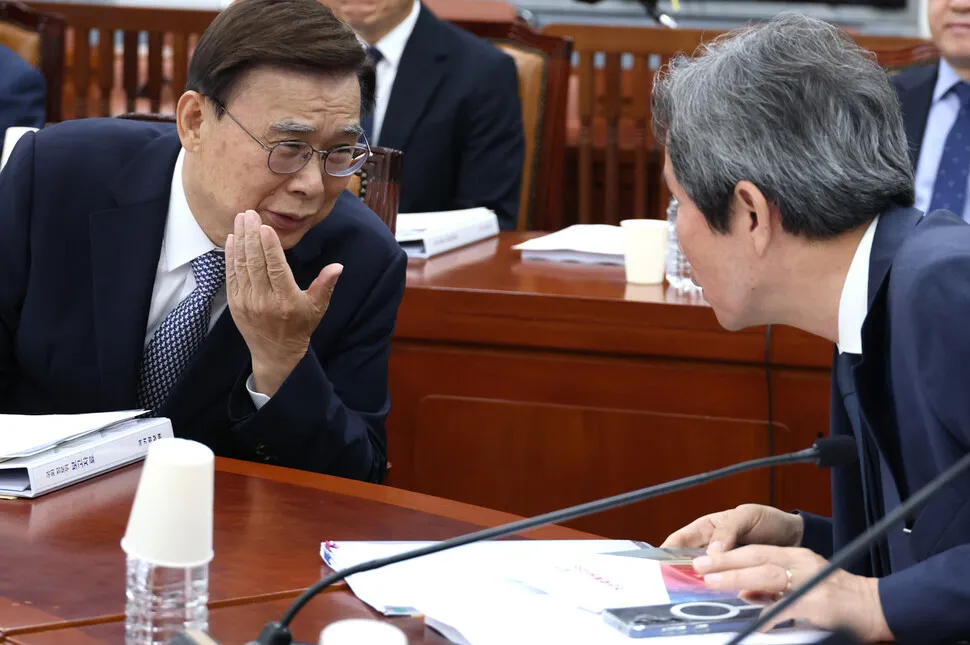
South Korea’s National Intelligence Service didn’t mince words in a closed-door National Assembly briefing Tuesday. Director Lee Jong-seok told lawmakers that a North Korean–American summit was “possible at any time,” and that while no concrete contacts had been confirmed, “signs of dialogue” were visible.
That phrasing matters. The NIS has historically been cautious about publicly speculating on Pyongyang-Washington tracks. Leaks about backchannel discussions have, in the past, triggered diplomatic friction rather than progress — Seoul learned that lesson after premature disclosures before the 2018 Singapore summit complicated advance coordination. This time, the agency chose transparency over caution, which suggests the intelligence community believes the window is narrow and that public signaling is now strategically useful.
The disclosure came against a backdrop that reads almost too neatly to ignore. On March 16, Donald Trump instructed the military to dramatically scale back the ongoing Korea-US joint exercises — a move widely interpreted as a signal to Kim Jong-un. Trump then said he had received a response from Kim regarding a dialogue request and called the situation “very positive.”
The White House, meanwhile, appears to be moving in the background with unusual operational speed. Kelly Mearns, director of the Defense Prisoner of Affairs Accounting Agency, told a congressional hearing that the White House had asked what steps could be taken “if an agreement between President Trump and Chairman Kim is reached.” Mearns specifically floated the return of Korean War remains and the resumption of joint field searches — last conducted in 2005 — as confidence-building measures that could pave the way.
This is not how leaks happen by accident. The timing of Mearns’ congressional testimony, released just days before the NIS briefing, suggests a deliberate sequencing strategy: plant the operational groundwork first, let the diplomatic signals follow, and create a narrative of momentum that becomes self-reinforcing.
The 2018 Parallel Is Hard to Miss
Mearns explicitly compared the current posture to the period before the June 2018 Singapore summit — the first-ever meeting between a sitting US president and a North Korean leader. That summit produced a vague but historic joint statement. Its follow-ups in Hanoi (February 2019) and Panmunjom (June 2019) collapsed.
What history hasn’t repeated yet, of course, is the outcome. Singapore produced photo ops; it produced nothing durable. The question now is whether the same choreography is being rehearsed — and whether this time the substance might actually follow.
There are meaningful differences from 2018. North Korea now possesses a mature nuclear arsenal with ICBM capability that can reach the continental United States — a bargaining chip far more consequential than the program Pyongyang was still developing in 2018. Additionally, the geopolitical context is inverted: in 2018, Trump was navigating an already-cool relationship with Moscow; today, his administration is actively courting the Kremlin, which complicates any deal that involves North Korean troops fighting alongside Russian forces.
The Ukraine Variable
One of the more interesting signals from the NIS briefing concerned North Korea’s possible troop deployment to support Russia’s war in Ukraine. The agency assessed that additional dispatch was “significantly low” during a Trump dialogue period, but “flexible depending on situation changes.”
That hedging is notable. Pyongyang has already sent thousands of troops to Russia, a move that has rattled Seoul, Tokyo, and Washington. Satellite imagery and open-source intelligence have confirmed North Korean soldier deployments in Russia’s Kursk region, and Western estimates place the number between 12,000 and 25,000 troops. If the Trump-Kim channel gains momentum, it gives Pyongyang leverage: reduce pressure on the US-DPRK track, and Kim gets something. Escalate it, and those troops could start moving again.
It’s a balancing act for Trump that pits his desire for a diplomatic win against the very real risk of empowering a Kremlin ally. Here’s the second-order effect that isn’t being discussed enough: every day of US-North Korea dialogue that doesn’t address the Ukraine dimension implicitly validates Russia’s strategy. Putin has long sought to fracture the Western alliance, and a US president negotiating with Kim while Russian troops fight in Ukraine creates exactly the kind of perception Trump’s advisers may be willing to tolerate.
But there’s also a potential upside. If Trump offers sanctions relief or security guarantees to Pyongyang in exchange for reducing its military cooperation with Moscow, he could achieve a double win — advancing his diplomatic brand while subtly constraining Russia’s most capable conventional force abroad. Whether Kim would accept such a trade-off remains entirely unclear.
What This Means for the Region
For Japan, the signs are ambiguous at best. Tokyo has long insisted on the return of abducted Japanese citizens as a precondition for meaningful engagement with Pyongyang. Any US-North Korea deal that sidesteps that issue will frustrate Prime Minister Sanae Takaichi’s government — regardless of how warm the Trump-Kim relationship becomes.
Japan’s anxiety is compounded by its own security calculus. A US-North Korea détente could lead to reduced American military posture on the peninsula, potentially weakening the extended deterrence umbrella that Tokyo relies on. Japanese defense planners are already studying scenarios in which Washington prioritizes bilateral engagement with Pyongyang over trilateral coordination with Seoul and Tokyo.
China, meanwhile, will watch closely. A direct US-North Korea arrangement without Beijing’s involvement mirrors the pattern Beijing fears most: Washington striking bilateral deals with Pyongyang that marginalize Chinese influence. The NIS acknowledgment that dialogue is reopened doesn’t change that calculus for Xi Jinping’s court, but it does raise the stakes for any future negotiation table.
Beijing’s position is increasingly uncomfortable. China has been North Korea’s economic lifeline for decades, and any US-North Korea deal that reduces Pyongyang’s dependence on Beijing — even indirectly — represents a strategic loss. Yet China also fears a destabilized peninsula more than it fears an engaged one, which means Beijing may find itself quietly supporting the dialogue even as it resents being excluded from it.
For South Korea, the foreign ministry’s statement reaffirming tight coordination with Washington on North Korea policy sounds reassuring on the surface. But the fact that the NIS felt compelled to brief the legislature — and that the White House was apparently fielding questions about post-agreement contingencies before Seoul had full visibility — suggests the conversation is moving faster than institutional comfort allows.
Seoul’s dilemma is structural. President Yoon Suk-yeol’s administration has staked its foreign policy credibility on a hardline posture toward Pyongyang, including a commitment to expand the Nuclear Consultative Group’s mandate and deepen missile defense cooperation with the United States. A rapid thaw undermines that positioning without providing Seoul a role in shaping the new direction.
Who Wins, Who Loses
Trump wins if he can claim a summit without extracting concessions beyond remains repatriation — a low-cost, high-visibility move. The visual of him shaking hands with Kim Jong-un would dominate global news cycles and reinforce his narrative as the only world leader who can do business with difficult actors. He loses nothing material and gains enormous political capital.
Kim wins if the mere act of shaking hands with a US president breaks years of diplomatic isolation, regardless of sanctions relief. For a regime that has faced increasing international pressure and economic strain, a face-saving encounter with Washington is worth more than incremental concessions. He also gains time — delays in sanctions enforcement and military pressure that buy Pyongyang breathing room.
Both men have an incentive to stage this. But the losers could be ordinary North Koreans, who have seen summits deliver photographs and promises but little material change. They could also be allies on the receiving end of diplomatic surprises — particularly Japan and South Korea, whose security calculations depend on predictable American commitments that a summit-driven thaw might obscure.
What Happens Next
The NIS assessment that a summit is “possible at any time” doesn’t mean one is imminent. But it does mean the freeze of recent years has thawed at least enough for the parties to test each other again.
The coming weeks will reveal whether this is genuine forward motion or theatrical positioning. Watch for three things: whether the US and North Korea establish a formal communication channel beyond backchannels, whether Trump announces another military exercise cancellation, and whether Pyongyang makes any provocative moves that could derail the mood.
There is a fourth indicator that deserves attention: the pace and tone of rhetoric coming from Chinese state media. If Beijing begins framing US-North Korea engagement as beneficial to regional stability rather than as a threat to its influence, that would signal a significant shift in the diplomatic landscape — and suggest that Moscow and Beijing are coordinating their positions on Pyongyang.
The 2018 trajectory is instructive. That year, optimism ran high from January to June, peaked at Singapore, and collapsed within months. The question isn’t whether this cycle will repeat. It’s whether this time, someone learned something from the last one. And given the speed with which events are unfolding, the answer may come sooner than anyone expects.