North Korean Soldiers Who Defected Via Ukraine Reveal Regime Fractures
Two North Korean POWs captured in Russia's Kursk region have returned to South Korea via commercial flight, sparking diplomatic friction with Kyiv and exposing cracks in Pyongyang's coercive apparatus.
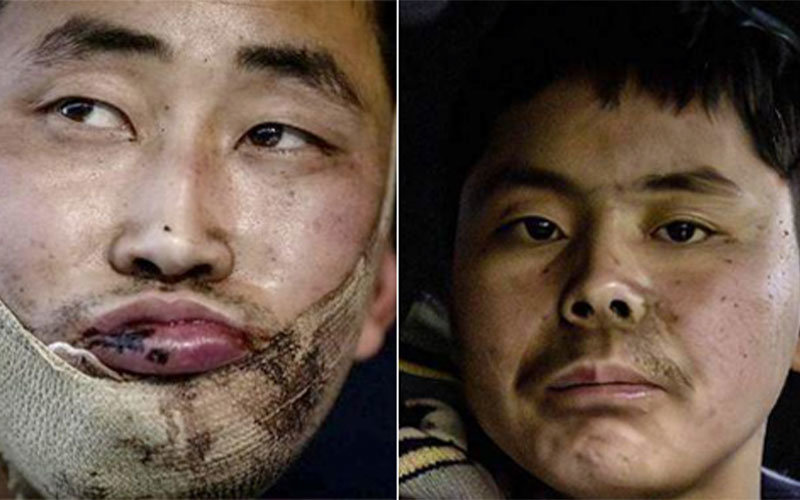
The Defectors Who Shouldn’t Have Been Able to Defect
Two North Korean soldiers, captured by Ukrainian forces in Russia’s Kursk region last January, have returned to South Korea – not in a military aircraft, but on a commercial flight, blended into ordinary cargo among regular passengers. The move was deliberate: intelligence officials judged that a military extraction would have been far more conspicuous, drawing attention to a defection that Pyongyang might seek to reverse.
The fact that these are military personnel, not civilians, changes what this episode reveals about North Korea. Civilian defectors are a known quantity – hundreds have crossed into South Korea over decades, fleeing poverty and political repression. But North Korean soldiers who defect? That is genuinely unusual. It suggests something has broken inside the regime’s coercive machinery, and the two men may carry information far more valuable than most civilian defectors could provide.
Who These Men Were and Why They Mattered
The soldiers were part of the North Korean contingent deployed to Russia in late 2024, sent to support Moscow’s war effort in Ukraine. Their presence in Kursk – captured alive by Ukrainian forces rather than killed in combat – marked them as identifiable and accessible. Once captured, they reportedly expressed a desire to return to South Korea through contacts with North Korean defector groups operating in Ukraine.
This sequence is significant. Defection among North Korean troops in foreign theaters is not impossible, but it is extraordinarily difficult under normal circumstances. The Workers’ Party maintains tight control over soldiers through political commissars, family hostage arrangements, and surveillance networks. A soldier defecting while stationed abroad has to overcome not just personal risk but the near-certain knowledge that his family back home will be punished. That two individuals chose to do so – and that their defection actually succeeded – points to either a fracture in the regime’s leverage or a shift in the soldiers’ calculus that deserves close scrutiny.
The Coercive Architecture Behind the Scenes
North Korea’s control over its military abroad operates on several layers. At the tactical level, political officers accompany deployment units and monitor loyalty. At the strategic level, families of deployed soldiers are tracked and, in cases of disloyalty, subjected to collective punishment – including relocation to labor camps. The regime has used these mechanisms ruthlessly to prevent defection and enforce obedience.
The fact that these two soldiers found a path to South Korea suggests either that the surveillance apparatus has blind spots in wartime transit corridors, or that some soldiers have grown sufficiently disillusioned to accept catastrophic personal risk. Neither scenario is comforting for Pyongyang. The first reveals vulnerability in operational security; the second reveals a population of soldiers willing to gamble everything – and who may carry intelligence about unit deployments, chain-of-command structures, and operational procedures that could prove damaging.
The Diplomatic Tangle With Kyiv
South Korea and Ukraine conducted dozens of negotiations over many months to arrange the soldiers’ return. The initial discussions began immediately after their capture in January, but the process was neither swift nor straightforward. An October meeting between Ukrainian Foreign Minister Andrii Syvih and South Korean Foreign Minister Cho Hyun addressed the issue, but no final agreement was reached at that point. Details continued to be worked out behind the scenes well into the summer of 2026.
Then came the public unraveling. Ukrainian President Volodymyr Zelensky announced the transfer during his address to the United Nations General Assembly – a move that breached what Seoul understood to be a confidential arrangement. Former South Korean presidential candidate Lee Jae-myung took to X, writing that while he did not know what circumstances drove Ukraine’s decision, he found it deeply disappointing that a private agreement had been publicly disclosed.
The incident has exposed a painful rift within Ukraine’s own government. Oleksandra Torop, a media advisor to presidential hopeful Valerii Zaluzhnyi, confirmed that private negotiations had taken place. Dmitry Litvin, a spokesperson for Zelensky’s administration, denied the existence of any such agreement, calling the claim false and arguing that hiding where specific prisoners are going is wrong.
This public disagreement between Ukrainian officials is unusual and revealing. It suggests that even among Kyiv’s allies, there is no unified position on how to handle North Korean defectors – or, more broadly, on the optics of transferring prisoners of war to third countries during an active conflict.
What This Means for the Region
The defection of military personnel is qualitatively different from civilian defection. These individuals have undergone military training, may hold clearance for sensitive operations, and can testify about the structure and deployment of North Korean forces abroad. Their knowledge could reshape how Seoul and its allies assess the scope and capabilities of North Korea’s overseas military commitments.
For Pyongyang, the loss of even two soldiers to defection carries symbolic weight beyond their individual intelligence value. It undermines the regime’s narrative of unwavering military loyalty and demonstrates that its coercive controls have limits – especially in the chaotic environment of a foreign war zone.
For Ukraine, the episode complicates its diplomatic positioning. Kyiv has positioned itself as a champion of international law and human rights, yet its handling of the North Korean prisoners has drawn criticism from multiple directions. The public breach of a confidential arrangement damages trust with Seoul, a critical NATO partner. Meanwhile, Ukraine’s internal disagreement over whether to keep such negotiations secret – or to make them public – reflects a broader tension between transparency and diplomatic pragmatism that will likely recur in future cases.
The Broader Picture
The two soldiers’ return via commercial flight is a small event with outsized implications. It reveals that North Korea’s control over its military deployments is not absolute, that defection paths still exist even in the most heavily monitored contexts, and that the regime’s authority is more brittle than its public image suggests.
It also reveals that South Korea’s intelligence community remains capable of executing delicate extractions – and that Kyiv, despite its wartime struggles, retains enough institutional capacity to negotiate and deliver on complex prisoner transfers. The friction between the two capitals over how the announcement was handled is a diplomatic footnote, but one that may shape future cooperation on sensitive issues.
What happens next will depend on what these two soldiers know. Their debriefings could yield information about North Korean troop movements, command structures, and the extent of Pyongyang’s military involvement in Ukraine. If those details prove substantial, the defection will be remembered as more than an anomaly – it will be remembered as the moment the regime’s coercive facade showed its first real crack.