Norway's Sailing King Is Dead. What Happens to Europe's Cleanest Monarchy?
King Harald V's death at 89 closes a defining era for Norway's modern monarchy. With his son Haakon VIII taking the throne, the question is whether Norway's carefully managed celebrity royal house can weather scandals that have already tested it.
A sailor king returns to port
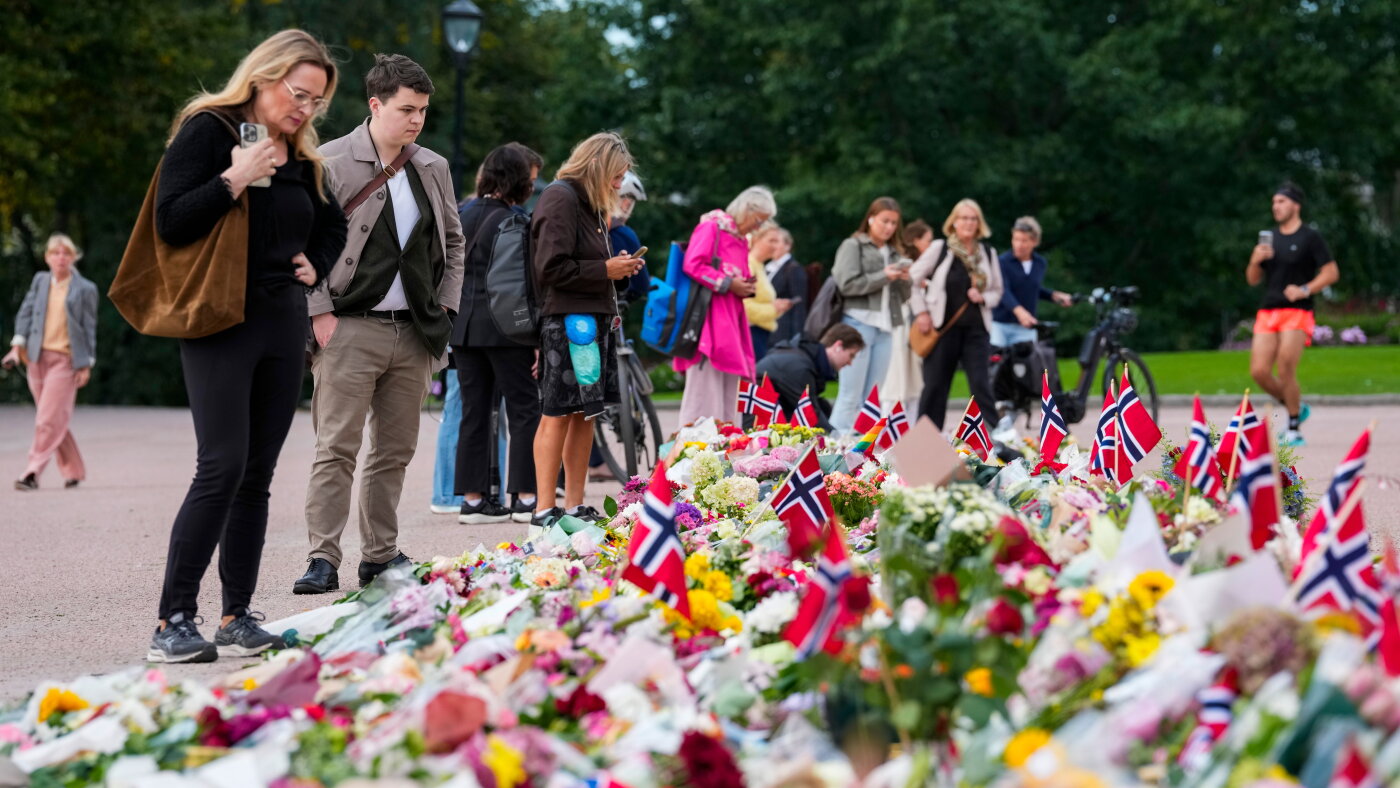
King Harald V of Norway died Friday morning at the National Hospital in Oslo at 6:35 a.m., aged 89. He was Europe’s oldest reigning monarch. His son Haakon immediately became King Haakon VIII under Norway’s automatic succession rules. No ceremony was needed. The constitutional switch is as clean as the country’s monarchy likes to present itself.
But the cleanliness is partly a performance. And performances require an audience willing to keep watching.
Harald’s reign spanned the transformation of Norway from a quietly proud nation into a confident, oil-rich, socially progressive Nordic state. He was king during the economic boom driven by North Sea oil and gas, through the brutal 2011 terrorist attacks by Anders Behring Breivik, and through decades of evolving debates over immigration, LGBTQ+ rights, and the role of tradition in a society that prides itself on egalitarianism.
He will be remembered, appropriately, as a sailor. Like his father, King Olav V — the Olympic gold medalist in the 1936 Tornado class — Harald loved the sea. He competed in the Olympics himself and won the World Championships in 1987. The romance is not accidental: Norway’s monarchy has always been strongest when it looks like a normal family doing normal, strenuous things. Sailing is just the Norwegian version of a royal talent show.
The marriage that saved the monarchy
Perhaps the most consequential decision Harald made was not political but personal. Born in 1937, he was the first Norwegian prince born in Norway since 1370. His grandfather, Haakon VII, had been elected king in 1905 after Norway dissolved its union with Sweden. The monarchy was young and insecure. When Harald grew up, court advisors and diplomats urged him to marry a princess — preferably British, preferably Protestant, preferably useful.
He refused. For nine years, he turned down a succession of European noblewomen and insisted on marrying Sonja Haraldsen, the daughter of a wealthy businessman, his high school sweetheart. King Olav feared the match would damage the crown. Norwegians thought it was exactly right.
The 1968 wedding drew jubilation across the country. Sonja, once criticized for being too ordinary, became one of the most popular figures in Norway. Their union made the monarchy feel like something that belonged to Norwegians rather than something imposed on them from Copenhagen or Stockholm or London.
It also set a template that Haakon VIII will inherit: a monarchy whose legitimacy rests on cultural credibility more than constitutional power. Norway’s king has almost no real authority. The 5.5 million-strong democracy runs through an elected Storting. What the monarch has is influence by example — and that requires a family that looks disciplined, committed, and slightly above the fray.
How clean was clean?
For most of Harald’s reign, the Norwegian royal house held a near-mythic reputation for good behavior. There were no scandals comparable to the British royal family’s divorce dramas, the Swedish crown princess’s legal troubles, or the Danish family’s tax disputes. That reputation mattered. In a region where the monarchy has mostly survived by becoming decorative, Norway’s royals survived by becoming admired.
Then came 2024 and 2025.
In early 2026, Crown Princess Mette-Marit faced renewed scrutiny over her social connections to Jeffrey Epstein, the convicted sex offender. She is not accused of any wrongdoing. But the attention raised questions about judgment and proximity — the kind of questions royal houses in Europe spend fortunes trying to suppress before they go public. Mette-Marit apologized, including for people she had “disappointed,” a phrase that carries specific weight in a culture where disappointment is a social failing worse than almost anything else.
Around the same time, her eldest son, Marius Borg Høiby — Haakon’s stepson, with no royal title and no official duties — was convicted of rape in a high-profile trial and sentenced to four years in prison. The case did not touch the constitutional line of succession. But it touched the image. And in a monarchy where image is the only currency, that matters.
There was also the earlier episode involving Crown Princess Mette-Marit’s daughter, Märtha Louise, who gave up her royal duties after drawing ridicule for claims that she could communicate with angels and for her engagement to an American man who identifies as a shaman. Norway tolerated it. The family absorbed it. But the episode revealed a fault line: the monarchy’s insistence on modernity clashes with family members who do not always fit neatly into its curated narrative.
What the new king inherits
King Haakon VIII takes the throne at 57, young enough to serve a long reign but old enough that Norway will be watching for signs of physical decline. Harald was hospitalized twice on foreign trips after Denmark’s Queen Margrethe abdicated in January 2024 — fitted with a pacemaker during a vacation in Malaysia and treated for a skin infection in Tenerife in February 2026. Harald refused to abdicate, reaffirming his oath: “It lasts for life.” He will go down as the Norwegian monarch who chose duty over convenience, which is either the most admirable or the most costly choice a reigning king can make in the 21st century.
Haakon’s challenge will be to continue a modernization project that Harald began in 1991 without appearing to copy him. The Norwegian monarchy’s brand depends on authenticity — on the sense that these people are simply themselves, unfiltered. The problem with branding is that it cracks under scrutiny.
Norway’s monarchy also sits in an unusual diplomatic position. It is small, unthreatening, and associated with environmental causes, Arctic policy, and humanitarian work. Harald was a credible voice on climate issues precisely because he spent his life on the water. A king who skips around the North Sea in a modest yacht carries different energy than one who arrives in a motorcade with armored vehicles.
European royals are watching Norway closely. The Danish queen’s abdication opened a conversation about aging monarchs that no one wanted to have. Harald’s refusal to entertain it made him a counter-example — or a cautionary one, depending on your view. His death returns the question to the table: when does a long reign become a liability?
The deeper story
What makes Harald’s death significant beyond Norway’s borders is what his reign proves about modern monarchy. The institution survives not by holding onto power but by surrendering it completely and becoming something else entirely — a national symbol, a charity ambassador, a celebrity with a constitutionally constrained mandate. Norway did this deliberately. It reshaped its succession laws in 1990 to allow absolute primogeniture, opened the monarchy to public view, and let a businessman’s daughter become queen consort.
The test now is whether Haakon VIII can sustain that openness while navigating a world where every royal family member’s past is searchable, every relationship is subject to public audit, and the gap between curated image and private reality keeps widening.
Harald’s motto, adopted from his father and grandfather, was “All for Norway.” It is a simple promise. Keeping it, it turns out, is harder than it sounds.