Inside the $4 Billion Nvidia Loophole Selling Chips to China
The Commerce Department approved nearly 900,000 Nvidia and AMD chips for Chinese firms with military ties — even as Washington claims it is cracking down. What lies beneath the contradiction.
The loophole that isn’t a loophole
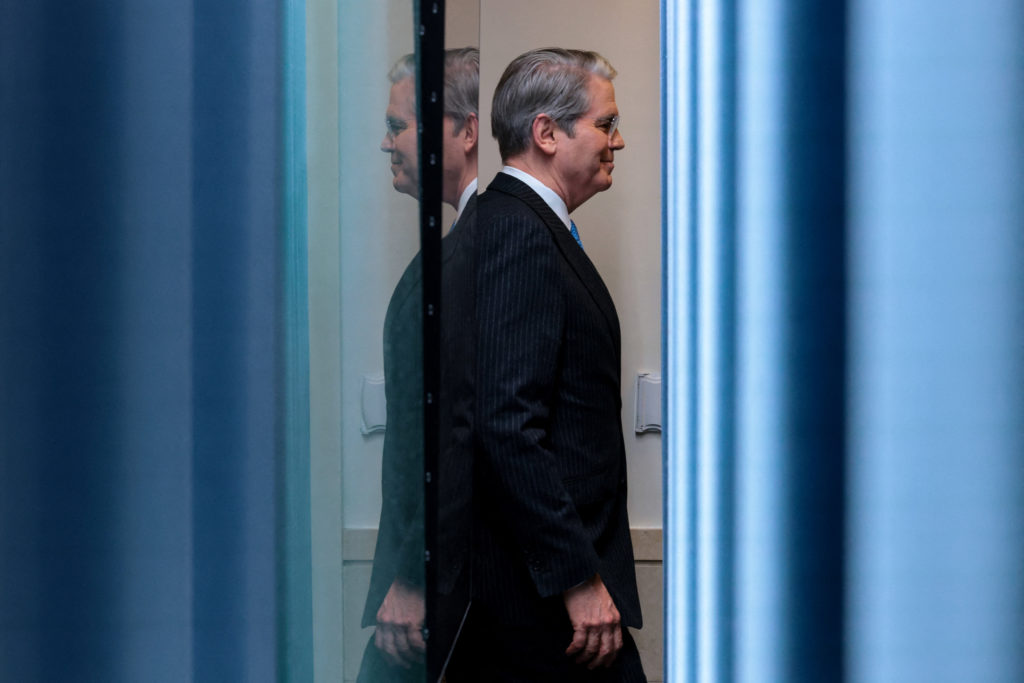
Scott Bessent said Friday that the proper chip restrictions are in place and no further limits are needed on Nvidia chips going to China. He then walked into a story that showed nearly the opposite.
In the same week, the Commerce Department disclosed that its Bureau of Industry and Security had approved 879,868 high-end chips — 75,000 for Alibaba, 150,000 for Tencent, 43,000 for Baidu, and 4,000 for BYD — all to Chinese-tied firms that the Pentagon itself has flagged with military links. Nvidia and AMD had asked to sell more than 3.4 million chips combined across 21 license applications. The government did not deny most of them.
Bessent called the situation handled. The data suggest otherwise.
Who actually wins here
China’s AI sector was counting on this exact pipeline. The H200 chip, while not Nvidia’s absolute top-tier offering after the most restricted models were pulled from sale, remains one of the most powerful commercially available accelerators for large-language-model training and inference. Nearly 900,000 units flowing through a formalized, case-by-case licensing regime gives Chinese cloud providers and model builders a predictable runway they can plan infrastructure investments around.
Alibaba alone received approval for 75,000 units. Tencent took the biggest slice. Those are the two platforms most likely to lease compute capacity to Chinese startups building foundation models — the very ecosystem Washington fears will close the gap with American frontier labs.
The second-order winners are less obvious but could be just as consequential. Global container shipping rates ticked up modestly when the licensing disclosures circulated, reflecting market anxiety rather than immediate physical disruption. But the signal mattered: investors now see a regulatory path that is narrower, not absent.
The Cabinet squabble nobody is taking seriously
Perhaps the most revealing dimension of this story is the public rift inside the Trump cabinet. Bessent accused Commerce Secretary Howard Lutnick of failing to act quickly enough to restrict exports through Megaspeed, a Singapore-based firm where former Nvidia CEO Jensen Huang had an alleged affair with an executive. U.S. intelligence reportedly suspected that executive of being a Chinese spy.
The Megaspeed detail matters because it shows the leakage channel Washington was trying to plug. Remote access to cutting-edge chips through third-country entities became the preferred workaround once direct sales faced tighter constraints. Bessent’s frustration was pointed — he said his department wanted controls placed sooner but lacked authority under Commerce’s jurisdiction. Trump publicly defended Lutnick anyway, calling him a different kind of guy with natural business instinct.
That defense reveals the calculus. The administration wants to appear tough on China without triggering a full rupture in commercial relations or alienating Wall Street. A Cabinet fight that ends in loyalty to Lutnick is a cheaper political outcome than admitting the rules had holes large enough for almost a million chips to walk through.
Why the numbers deserve skepticism
The Commerce Department’s spokesperson framed the licensing activity as transparent and rigorous — a long track record of transparency, she called it, with both approvals and rejections visible to Congress. The caveat is important: approved licenses are not shipped products. Approval does not equal delivery, and delivery does not equal deployment.
Nvidia itself told reporters this week that it has stopped shipping H200 chips to China despite the prior approvals. An unspecified spokesperson said shipments had ended. If true, the physical reality behind those 879,868 approved units may look very different from the headline number. Inventory could be sitting idle. Contracts may have been cancelled. Or the company could be using its leverage over pending orders as a bargaining chip with regulators.
AMD declined to provide specifics, offering only a boilerplate statement about compliance.
What is verifiable is the timeline. These licenses were granted through May 2026 under a rule published in January that created a case-by-case consideration framework instead of a presumption of denial. The threshold for approval is high, but not insurmountable — and the volume that cleared it is significant enough to matter regardless of whether every unit reached its destination.
What the policy architecture actually looks like
The current regime operates on three layers. First, the most advanced Nvidia GPUs remain off-limits to China outright. Second, mid-tier chips like the H200 require individual licenses with heightened national-security conditions. Third, any arrangement that funnels access through remote cloud instances or third countries faces additional scrutiny — though Megaspeed suggests enforcement remains patchy.
Bessent’s declaration that no further restrictions are needed means the second layer is considered sufficient by whoever defines sufficient. It does not mean the loophole is closed. It means the administration has decided the economic and diplomatic costs of closing it further exceed the benefits — at least for now.
What happens next
Congress is likely to press for answers. The House Foreign Affairs Committee already released the licensing breakdown, which signals legislative interest even if immediate action is uncertain. Any future scandal involving diverted chips through a Singapore entity or another third country could force the issue back onto the agenda with urgency.
Chinese AI companies are probably hedging their bets. Some inventory may still be on order even as Nvidia halts new shipments. Others are likely exploring alternative architectures and domestic substitutes, though those alternatives lag significantly in performance. The gap is narrowing slowly, not collapsing overnight.
Wall Street should price in continued volatility around export-control announcements. Every new disclosure will produce swings in semiconductor stocks and China-exposed technology names until the regulatory pathway becomes fully transparent — which it probably will not.
The real question underneath the noise
Washington wants to deny China access to the best chips while preserving revenue for American semiconductor companies. The two objectives pull in opposite directions. The nearly 900,000 approved H200-class units represent the first attempt at reconciling them on paper. Whether that reconciliation survives contact with actual supply chains — and whether it slows Chinese AI progress meaningfully — remains the open question no Cabinet statement can answer.