Taiwan's Short-Sale Ban Exposes Asia's Shared Fragility
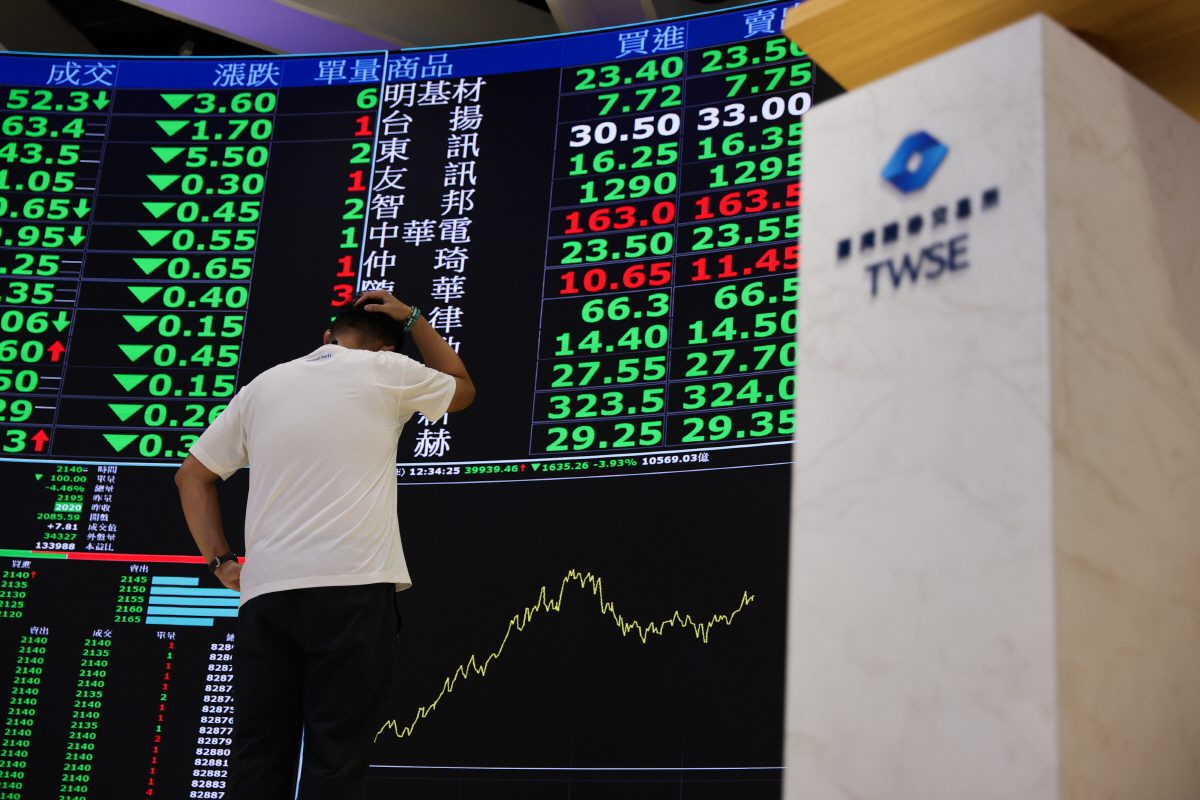
Taiwan deployed its harshest short-selling restrictions since 2015 after the market plummeted nearly 17% in a week. The move is not just a local panic response — it signals how tightly Asia's tech-led rallies are fused, and how quickly confidence can unravel.
A Full-Blown Circuit Breaker, Not a Cosmetic Adjustment
Taiwan’s financial authorities didn’t just tighten their gloves this week. They went for the throat.
On Friday, the Financial Supervisory Commission announced that short selling any stock below the previous trading day’s close is now prohibited across all sectors. It is the first blanket measure of its kind in eleven years — since 2015. Simultaneously, the margin requirement for short positions was raised from 130 percent to 150 percent, effectively forcing traders to post significantly more collateral. New put-warrant issuances were frozen. Financial institutions were told to halt fresh stock lending and recall existing loans. All of it takes effect Monday.
The trigger was brutally simple. The Taiwan Weighted Index fell 4.40 percent on Wednesday and 6.23 percent on Thursday, erasing roughly a fifth of its value over ten trading days. Investors described the scene locally as “Black Monday again.” The question no one is asking loudly enough is why a market built on the backbone of the world’s most important semiconductor foundry can collapse so fast — and what that means for everyone else who has been riding the same wave.
The Policy Is Extreme Because the Situation Is Unusual
Let’s be precise about what happened here. This wasn’t a slow bleed. The TWII lost roughly 17 percent in calendar-time weeks. That velocity forces regulators into corners. In normal circumstances, short-sale bans are surgical — applied to specific volatile names or triggered only after dramatic intraday drops. Taiwan went horizontal. Every stock, every short seller, every derivative issuer caught in the net.
Prime Minister Cho Jung-tai convened an emergency meeting with the FSC and economic ministries on Friday morning and ordered immediate stabilization steps. That he moved within hours of the second leg down suggests the government viewed the trajectory as existential rather than cyclical. When the head of government personally orchestrates a regulatory sweep this sweeping, you’re not dealing with a knee-jerk reaction. You’re dealing with a system that sensed it had crossed a threshold.
This was already the third round of interventions since early November. On the sixth, the government approved the National Financial Stability Fund’s tenth-ever market purchase and announced five stabilization measures. On the nineteenth, additional short-sale constraints appeared. By the twenty-first, everything was expanded to total coverage. The escalation pattern matters. Regulators are not confident they have room for a fourth round.
Why Semiconductor Exposure Turns Into Contagion Risk
The reason Taiwan matters to this story goes far beyond geography. TSMC alone accounts for an outsized share of the TWII and generates more revenue than many small nations’ GDPs. When Taiwan sneezes, the global chip supply chain catches a cold. But the reverse is equally true: when global tech valuations recalibrate, Taiwan amplifies every move.
The AI boom that propelled Taiwan’s markets higher has also made them more brittle. The index is concentrated. A handful of semiconductor names swing the entire calculation. And those names are exposed to two shocks simultaneously — domestic demand from China-related supply chains and pricing pressure from American buyers renegotiating contract terms after Nvidia and other chipmakers face U.S. export curbs.
What makes this period particularly sharp is that the AI investment thesis hasn’t fractured fundamentally. The demand for advanced chips remains real. But Wall Street’s willingness to pay premium multiples for that demand has softened. The combination creates a dangerous gap between corporate fundamentals and equity valuations. Shorts amplified the fall. Regulations are trying to cap the acceleration. Neither addresses the underlying squeeze.
The Korean Connection Is Already Real
You don’t need to look far to see why this isn’t contained. The KOSPI dropped more than 5 percent on the same Thursday that Taiwan plunged, sliding to 4,800 — the lowest level in nine months. The KOSDAQ fell nearly 6 percent. Both indices triggered program-trading circuit breakers within ten trading days of each other. South Korea’s own manufacturing outlook for December came in below the baseline, dragged down by steel and handset sectors despite resilience in semiconductors and autos.
The correlation isn’t coincidental. Korean exporters depend heavily on Taiwanese components. SK Hynix and Samsung Electronics both feed the same AI memory-demand pipeline that drives TSMC’s fabrication lines. When investors flee Taiwan, they don’t stop at the Strait. They move through Seoul and Osaka on the same algorithmic trigger wires. The regional trade networks that powered the Asian economic miracle are now the very channels that transmit panic.
What This Signals About Confidence in Tech-Led Growth
There’s a deeper point hiding inside these regulatory headlines. Asia, and particularly Taiwan and South Korea, bet heavily that artificial intelligence would justify another decade of asset price expansion. The premise seemed sound — data centers need chips, chips need Taiwan, Taiwan benefits. But three things have converged to test that faith this month:
First, the valuation gap between American tech giants and Asian manufacturers has become difficult to ignore. The upside accrues to the designers; the downside risk falls on the fabricators. Second, geopolitical uncertainty around Taiwan itself has never been lower, even if direct conflict remains unlikely. Third, global interest-rate expectations continue to punish growth-dependent sectors.
Short sellers aren’t wrong because the fundamentals are weak. They’re profitable because the fundamentals don’t yet justify the prices. Taiwan’s blunt regulatory response reveals a government that understands this gap exists but believes market mechanisms alone cannot close it gracefully. The alternative — letting the downward momentum play out — risks triggering feedback loops that could damage the very industrial base Taiwan claims to protect.
Who Wins, Who Loses, and Where It Goes Next
Short sellers lose immediately. Anyone relying on borrowed shares to bet against the TWII now faces a 150 percent collateral wall and a hard prohibition on selling below the prior close. The strategy that worked this week simply cannot operate under these rules.
Domestic retail investors gain a temporary shield. The government is explicitly encouraging share buybacks and has paused put-warrant issuance, both designed to reduce selling pressure and provide institutional support. Foreign portfolio managers will watch carefully to see whether the Fund actually deploys capital this time.
Global chip buyers face a different calculus. Any prolonged instability in Taiwan disrupts the supply schedule that数据中心 operators worldwide are counting on for AI deployment timelines. The cost of delay is measured in missed revenue windows. That pressure may push some customers toward alternative sourcing arrangements — a slow-motion threat to Taiwan’s monopoly position.
The policy window closes quickly. These measures carry expiration dates and political costs. If the index stabilizes, the restrictions ease. If it doesn’t, the government runs out of options before it runs out of urgency.
What comes next depends on whether the fundamental reassessment of AI valuations is structural or episodic. Taiwan’s emergency tools can dampen panic. They cannot rewrite earnings expectations or change the geometry of global chip demand. The market learned this week that confidence travels fast. The longer lesson — one that regulators, investors, and entire economies will need to internalize — is that fragile confidence shatters equally quickly.