Nvidia Earnings and Anthropic IPO Mark a Turning Point for AI
Jensen Huang's abrupt departure converges with Anthropic's public debut to test whether AI infrastructure demand holds up under regulatory pressure — and how Korean chip buyers will read the signals.
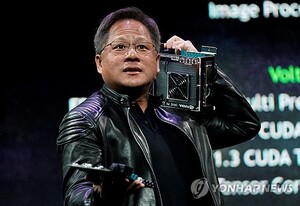
The week Nvidia and Anthropic will redefine the AI valuation game
Next week brings two events that no one expected to land so close together: Nvidia posting its third-quarter results without its founder at the helm, and Anthropic going public at a price that quietly admits the AI froth of early 2025 has deflated. Taken separately, each would be noteworthy. Together, they form a stress test for the entire AI investment thesis.
The backdrop matters. The Democratic Party swept the recent US midterm elections, clearing the path for stricter AI regulation — precisely the kind of environment that makes infrastructure builders like CoreWeave most vulnerable. Yet CoreWeave reported strong earnings last week, sparking a brief relief rally. Now Jensen Huang’s sudden resignation as CEO has reignited uncertainty about whether Nvidia’s strategic direction can hold without the man who built it.
Nvidia’s earnings will be fine. The question is what comes after Huang
Wall Street consensus, according to LSEG data, calls for Q3 revenue of approximately $109.2 billion — up 91 percent year over year — and adjusted earnings per share of $2.48, a 30 percent increase. Those numbers, by now, are barely surprising. Nvidia’s quarterly trajectory has become predictable in the way a falling object’s acceleration is predictable: impressive, but mechanically assured.
What investors actually need to hear is how the company plans to operate without Huang. Colette Kress, the CFO, will take the earnings call as interim CEO. Her job is not to dazzle with growth narratives — it is to project continuity. Markets do not punish leadership transitions automatically; they punish ambiguity.
Reports suggest Nvidia has already been in contact with Arm’s CEO Rene Haas regarding potential leadership or partnership discussions. Ian Buck, who runs the company’s hyperscale and high-performance computing division, is also being mentioned as a successor candidate. Neither name confirms anything, but their emergence tells you where the institutional memory sits: inside the product org, not outside it.
Perhaps most important is what happens to the capital allocation strategy. Huang was never just a CEO; he was the de facto central bank of the AI ecosystem, deploying Nvidia’s balance sheet to fund startups, acquire enabling technologies, and lock in supply-chain commitments that competitors could not match. Whether Kress or a permanent replacement will sustain that posture — or recalibrate it toward margin protection — is the single biggest unresolved question for the stock right now.
Jeff Kilburg of KKM Financial put it bluntly: the company has visibility into $1 trillion worth of demand through its Blackwell and Rubinstein architectures extending to 2028, and that demand, he argued, will not disappear regardless of leadership turbulence. Mark Hackett at Nationwide Investment Management said the stock’s roughly 30 percent decline over the past six weeks already prices in substantial anxiety. The real test is whether next week’s conference call convinces skeptics that the anxiety was premature — or validates it.
Anthropic’s IPO pricing reveals where the market stands on AI economics
Anthropic files its IPO price range between $70 and $78 per share, with a listing date set for November 19 on the Nasdaq. At the top of that band, the company would be valued at roughly $1.02 trillion. Factoring in outstanding stock options pushes the number closer to $1.4 trillion. Either figure represents a dramatic step down from the speculations of October, when some Wall Street voices were floating valuations near $2 trillion.
Two forces drove the compression. The first is regulatory: Democratic victories have revived fears that stricter AI oversight will slow Anthropic’s product rollout and limit the commercial applications of its models. The second is simply time. The AI euphoria that inflated every pretrained-model startup’s valuation through mid-year has cooled as investors demand proof that generative-AI spending translates into durable revenue streams — not just capability demos.
Benjamin Black, CIO at PowerRoop Capital, called the lower valuation range a “smart choice” for Anthropic, noting that if the company achieves its stated goal of reaching $100 billion in annual recurring revenue by late 2026, the IPO price implies roughly a 12-times ARR multiple — modest by late-cycle AI standards and leaving meaningful upside for public-market buyers.
That framing is revealing. It signals that the market now views Anthropic less as a moonshot venture and more as a growth business that needs to justify its price tag through execution. The gap between a $2 trillion private valuation and a $1-trillion public one is where risk gets repriced — and it is exactly that gap that determines whether the broader AI sector can maintain its risk appetite going forward.
Why Korean buyers matter more than anyone in Silicon Valley realizes
South Korea occupies a structurally pivotal position in the chain that connects Nvidia’s output to Anthropic’s customers. Korean hyperscalers — Samsung Electronics, LG Energy Solution’s semiconductor push, and SK Hynix’s memory business — are among the largest purchasers of Nvidia’s data-center GPUs. Their capital expenditure cycles are intimately tied to the same demand signal that Kang drives Nvidia’s revenue projections.
When Nvidia guides conservatively, Korean memory makers feel it first through order-cycle adjustments. When Anthropic or any major AI application developer secures favorable public-market terms, it validates the downstream demand story that justified those GPU purchases in the first place. In effect, Korean chip buyers are listening to next week’s Nvidia call and Anthropic pricing action as leading indicators for their own FY2026 budget decisions.
SK Hynix, which supplies HBM memory for Nvidia’s flagship accelerators, faces a particularly sharp inflection point. If Nvidia’s Blackwell ramp continues uninterrupted despite the CEO transition, HBM demand remains robust. If the transition introduces delays — and supply-chain momentum stalls — Korean memory orders face immediate downward pressure. The market does not yet know which scenario prevails.
The geopolitical shadow above it all
The Trump–Xi meeting scheduled for November 18–19 in China during APEC adds a separate, quieter dimension. Trade issues will dominate the talks. Reports indicate that the Huang-China espionage allegations will not enter the official agenda. But markets do not always follow official scripts. Any hint that US-China tech decoupling intensifies — whether through export-curve tightening or retaliatory measures affecting Korean fabs — would reverberate through Nvidia’s guidance and, by extension, through every AI buyer on the planet.
What happens next
Watch three things. First, whether Kress projects sufficient clarity on succession and capital-allocation strategy to stabilize Nvidia’s shares. Second, whether Anthropic prices at the upper end of its band and trades up on day one — a sign that public markets still believe in the current generation of foundation-model businesses. Third, whether Korean memory and packaging stocks move in sympathy with Nvidia’s tone, confirming that the demand signal from data centers to fabs remains intact.
If all three align positively, the AI infrastructure complex absorbs the leadership shock and resets higher. If they diverge, the selloff that began when Huang left may not be over — it may just be entering its second act.