Nvidia Drops The RTX 5090 — Its AI Bet Just Killed The Gaming Flagship
Nvidia's reported decision to discontinue the RTX 5090 and redirect GB202 dies to AI workstation cards marks a decisive pivot away from consumer gaming. We break down what this means for the GPU market.
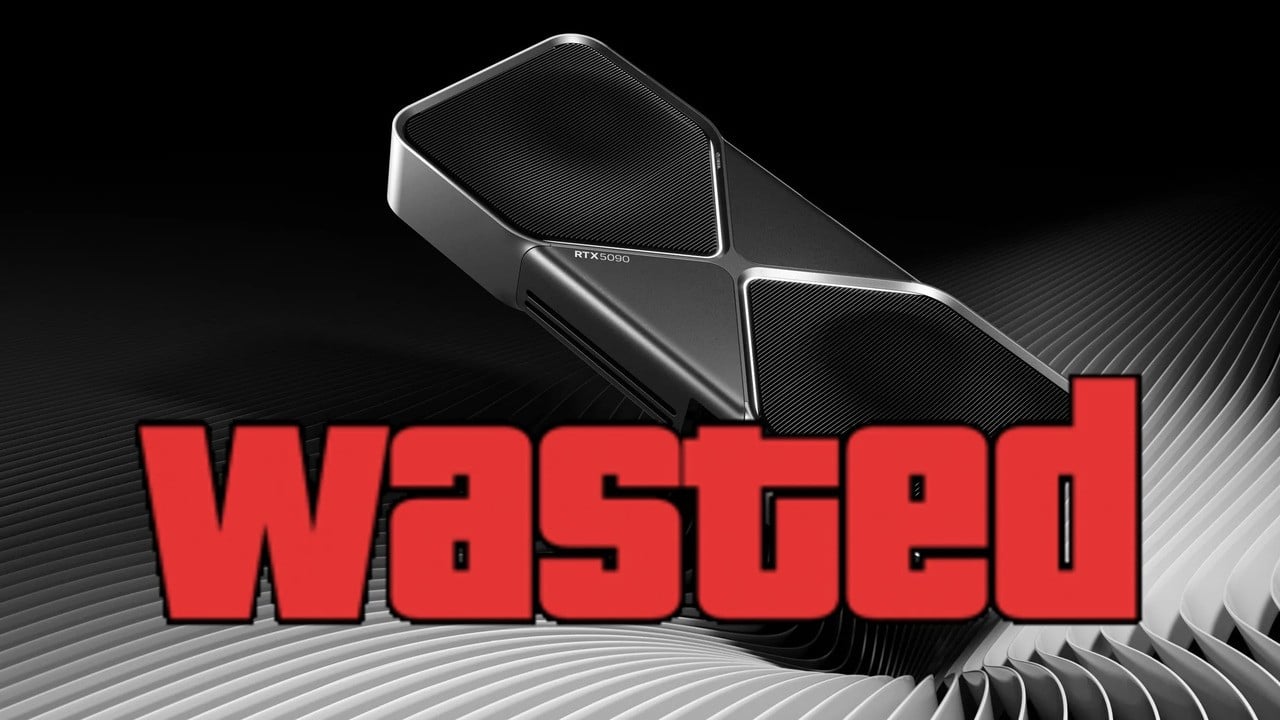
Nvidia Is Choosing Data Centres Over Gamers
Nvidia has long occupied a curious dual position: it is simultaneously the most compelling choice for someone building a high-end gaming rig and the indispensable vendor for anyone training large language models. That duality is now ending at the top of the consumer stack. According to reports from leaker MEGAsizeGPU — whose track record on next-generation GPU rumours has been solid — Nvidia is preparing to discontinue the RTX 5090 and reallocate the GB202 GPU dies that would have powered it toward RTX Pro workstation cards aimed squarely at AI and professional workloads.
The news has not been confirmed by Nvidia itself, which is standard practice ahead of an official product cycle. But the underlying shift it describes is neither subtle nor surprising. The RTX 5090, released with an 8GB GDDR7 configuration that made it a competent gaming card but also endowed it with enough raw compute throughput to attract AI researchers, has become genuinely difficult to purchase anywhere near its launch price. Secondary markets are pricing it as a professional tool, not a consumer GPU. Nvidia appears to be formalising what the market already decided on its behalf.
What The GB202 Move Actually Signals
The GB202 is a substantial GPU die. It carries enough memory bandwidth and tensor core capacity to serve dual purposes: high-resolution rasterisation for gaming and the matrix multiplication workloads that underpin generative AI inference and training. By allocating these dies to RTX Pro workstation cards rather than GeForce consumer products, Nvidia is making a strategic choice about where its margin and its future growth reside.
The RTX Pro line serves a different customer than the GeForce brand. These buyers are not concerned with frame rates in Cyberpunk 2077. They care about tokens per second, VRAM allocation for 70B parameter models, and whether their workstation can run Stable Diffusion at reasonable speed while also handling CAD workloads. The RTX Pro segment commands higher margins, longer product lifecycles, and deeper relationships with enterprise procurement teams. It is where the money is now.
This is not the first time Nvidia has drifted toward professional workloads. The A100 and H100 data centre GPUs were never intended for gaming. But those products occupied a separate market entirely, selling at prices that made them inaccessible to consumers. The RTX 5090 disruption is different: it represents the company choosing between two customers that once shared the same silicon. It is now picking the one that pays more.
Who Loses When The 5090 Dies
Gamers lose immediately. The RTX 5080 16GB would become the new flagship GeForce card, a meaningful step down from the 5090 in both compute throughput and VRAM capacity. Creators lose next. Someone building a local AI pipeline using the 5090 as both a gaming card and an inference workstation would find that purpose gone. The card that was simultaneously excellent for both roles no longer exists at the top end.
Nvidia loses something else: goodwill from its core gaming community. The RTX 5090 launch was already marred by supply constraints and price surges that made it impossible to purchase anywhere near MSRP. Secondary markets were pricing it as a professional tool. Now the company is simply accepting what the market already decided. It is a consistent pattern.
There is a separate rumour from leaker hongxing2020 suggesting the RTX 5080 will receive a 24GB variant using 3GB GDDR7 chips, perhaps along similar lines to the rumoured RTX 50-Series Super lineup, which is looking less likely at this stage. If such a variant materialises, it would represent a compromise: a mid-range card with professional-grade VRAM, serving creators who cannot afford RTX Pro but need more memory than the 16GB baseline provides.
Second-Order Effects Ripple Through The Ecosystem
The implications of this shift extend well beyond Nvidia’s product table. AMD and Intel, both of which still compete in the consumer GPU space, now face a market where the top of the stack has been vacated. Traditionally, the RTX 5090 served as a halo product that pulled up the perceived value of every card below it. Its absence removes that benchmark, compressing the competitive landscape and making it harder for rival offerings to justify premium pricing. AMD’s upcoming RDNA 5 lineup, expected no sooner than 2027, will inherit a market with no clear performance leader to chase.
The motherboard and power supply industry feels the pressure too. The RTX 5090 was known for its power draw, which pushed system builders toward higher-wattage PSUs and reinforced the case for newer power delivery standards. With the flagship gone, the incentive to upgrade entire systems weakens. Individual gamers who were hoping to pair a 5090 with a new platform may instead stick with their current rigs or drop to the 5080, reducing the overall upgrade cycle velocity.
Even data centre procurement patterns could shift. If Nvidia’s RTX Pro cards begin cannibalising demand for lower-tier data centre products, internal competition within Nvidia’s own portfolio may intensify. Engineers who once viewed RTX Pro as a stepping stone toward full data centre GPUs might find the gap closing, potentially blurring the boundary between workstation and infrastructure segments.
The Bigger Picture: AI Fuelled Everything
The continuing AI-fuelled price surge in flash memory components has already caused significant disruption to everyone’s plans across the GPU industry. GDDR7 costs are rising, and NAND prices are following similar trajectories. This looks set to continue for the foreseeable future, affecting not just Nvidia but Intel, AMD, and Samsung as well.
We do not expect proper next-generation GPUs from Nvidia (Rubin), Intel (Druid), or AMD (RDNA 5) until 2027 or even 2028. That window is similar to next-gen console cycles from Sony and Microsoft. But the AI boom has accelerated demand for high-bandwidth memory, and that demand is not receding. It is concentrating in data centres, not gaming rigs.
What Comes Next
The RTX 5090 exit is a symptom, not the disease. The disease is a company that has found its highest-margin growth in AI infrastructure and is now willing to sacrifice its consumer flagship to feed that engine. Whether that is wise strategy or short-term thinking depends on whether you are buying from Nvidia today or investing in its future.
For consumers, the message is clear: the era of the dual-purpose flagship is over. Nvidia has drawn a line between gaming and professional AI work, and that line now runs through its own silicon. If you are a gamer, the RTX 5080 16GB is your ceiling — and it is a lower ceiling than you might expect. If you are a creator or AI developer, the RTX Pro line is where Nvidia’s attention now lives, and you should expect it to improve accordingly.
For now, the RTX 5080 16GB will sit at the top of the GeForce stack, a meaningful step down. The GB202 dies that would have powered it go elsewhere. The gaming flagship is discontinued. What replaces it remains uncertain, but one thing is already clear: Nvidia has stopped building for everyone at the top.