Nvidia, Samsung, and SK: The Real Story Behind Jensen Huang's NYC Gathering
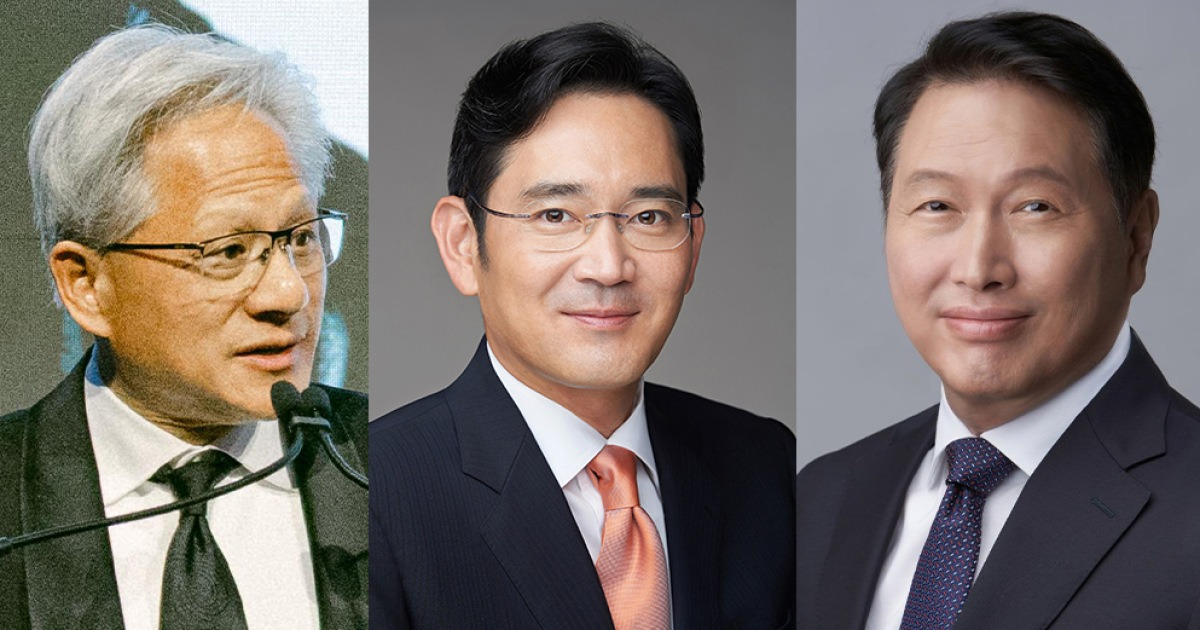
Jensen Huang's receipt of the Van Fleet Award in New York, flanked by Samsung's Lee Jae-yong and SK's Choi Tae-won, signals a pivotal shift in how South Korea positions itself in the AI infrastructure race — and what it means for the global semiconductor supply chain.
The Theater of Friendship, the Reality of Leverage
On September 28, at the Casa Cipriani in Manhattan, Jensen Huang stood at a podium to accept the Van Fleet Award from the Korea Society — an honor named for the World War II general who helped establish the US-Korea alliance. But the real story wasn’t in the citation. It was in the two men seated beside him: Lee Jae-yong of Samsung Electronics and Choi Tae-won of SK Group.
This was not a random convergence. It was a carefully staged demonstration of leverage — and a quiet signal about where the next chapter of the global semiconductor supply chain will be written.
What the Van Fleet Award Really Means
The Korea Society’s Van Fleet Award, established in 1992, has historically recognized contributions to the US-Korea alliance. Lee’s father, the late Lee Kun-hee, received it in 2006. Choi’s father, the late Choi Jong-hyun, in 1998. And Choi himself was a recipient in 2017.
Huang’s award is the first given to a technology executive. That shift is deliberate. The Korea Society — a lobbying group founded to strengthen US-Korea relations — is now equating AI chip leadership with military alliance-building.
Choi Tae-won captured the framing directly: “Seventy years ago, General Van Fleet built our alliance on the battlefield. Now, seventy years later, Jensen stands at the forefront of a new battlefield. That battlefield has shifted to data centers — and the commander wears a leather jacket instead of a uniform.”
It’s poetic. It’s also a textbook example of how tech companies now narrate their own geopolitical importance.
The ‘Chanbu Hoe-dong’ (깐부 회동) — Korea’s Insider Term for High-Stakes Business Meetings
The Korean press described this gathering as a “깐부 회동” — an informal but consequential business meeting among Korea’s most powerful executives. The term carries cultural weight: it implies relationships built on trust, familiarity, and long-term commitment rather than transactional deals.
Lee Jae-yong went further in his remarks, emphasizing three personal connections with Huang — both have daughters named Madison (Huang’s daughter recently married, Lee’s daughter is Madison Lee), both are all-in on AI, and he personally uses a Galaxy Z Fold8. He even sent a congratulatory message to Huang about his daughter’s wedding two days prior.
This isn’t just warmth. It’s relationship infrastructure. In Korean business culture — and in the relationships between Korean chaebols and American tech firms — personal ties often determine access, allocation, and priority. The fact that Lee publicly enumerated these shared personal details was a signal to every investor and competitor: Samsung has a direct line to the person controlling the most critical input in the AI industry.
Samsung’s $700 Million Times Square Ad Campaign
The most visible artifact from this event was Samsung’s advertisement campaign in Times Square, which displayed a photo of Huang alongside the message “Together, we’ll build what’s next.”
This is significant on multiple levels. First, it’s a timing play — Samsung is positioning itself as Nvidia’s primary hardware partner just as the US-China chip war intensifies and export controls create uncertainty about who will supply AI infrastructure in allied nations.
Second, it’s a supply chain signal. Samsung’s memory chip division is the closest competitor to Micron in high-bandwidth memory (HBM), the specialized DRAM that Nvidia’s GPUs require. By publicly aligning with Huang, Samsung is strengthening its negotiating position both with Nvidia and with its own rival, SK Hynix — which already supplies HBM to Nvidia and is the current frontrunner in the next-generation HBM market.
SK Group’s Parallel Play
SK’s presence alongside Samsung should not be read as unity — it’s competition with a shared external partner. SK Hynix is currently Nvidia’s primary HBM supplier and has been more aggressively integrated into Nvidia’s supply chain than Samsung.
Choi Tae-won’s remarks were notably more geopolitical than Lee’s, explicitly connecting the Van Fleet legacy to the current AI infrastructure race. This framing serves SK’s strategic interests: by casting AI chips as the new battleground of the US-Korea alliance, SK positions itself not as a component supplier but as a strategic pillar of democratic technology infrastructure.
Huang’s AI Safety Remarks — and What He Left Unsaid
During the Q&A session, Huang addressed the growing AI safety concerns head-on, dismissing the idea that AI systems are gaining autonomous capabilities: “When AI moves around and finds answers, it hasn’t escaped control. We’re unnecessarily anthropomorphizing AI — and that’s why people are scared.”
He argued for keeping AI in controlled environments while maintaining oversight, and suggested that safety and progress are not opposing forces: “If you feel we’ve lost your trust, you can slow us down.”
But here’s what’s notable: Huang did not mention export controls, China restrictions, or the geopolitical dimensions of AI chip allocation. That silence is itself a message. He’s reinforcing the narrative that AI infrastructure is a commercial and safety question — not a national security one — even as his presence at an event organized by a pro-alliance lobbying group suggests the opposite.
The Trump Lunch: What Comes Next
Reuters reported that Huang will attend a technology CEO luncheon with President Donald Trump on September 29, alongside Meta’s Mark Zuckerberg, Anthropic’s Dario Amodei, OpenAI’s Greg Brockman, and House Speaker Mike Johnson.
This convergence of Nvidia’s CEO with both Korean business leaders and Washington’s political establishment underscores the central thesis: AI chip access is now a geopolitical asset. The companies that control the supply chain — and the alliances that secure it — will shape the economics of AI for a decade.
Korea’s Narrow Window
Korea faces a structural challenge that no ceremony can resolve. Its population is declining. Its domestic market is small. Its semiconductor industry is concentrated in memory chips — a commoditized category where margins are thin and competition is fierce.
Huang acknowledged this directly, calling Korea “a unique country that can both consume and export AI” and suggesting that AI and automation could help Korea overcome its demographic constraints.
That framing is both an opportunity and a warning. Opportunity: if Korea can position itself as the testing ground and manufacturing hub for AI automation, it could carve out a role beyond memory chip production. Warning: without diversification into AI infrastructure, advanced packaging, and next-generation semiconductors, Korea risks becoming a supplier of components while the value capture shifts to designers and integrators in the US and China.
The Bottom Line
The Van Fleet Award ceremony was theater — but theater with teeth. Huang, Lee, and Choi used it to signal alignment at a moment when the global AI infrastructure build-out is accelerating and the supply chain is still being locked in.
Samsung is trying to close the gap with SK Hynix in Nvidia’s supply chain. Huang is reinforcing the US-Korea technology alliance as a strategic framework. And both are positioning themselves ahead of whatever policy outcomes emerge from the upcoming Trump administration conversations with tech CEOs.
The leather jacket has replaced the uniform. But the alliance — and the competition within it — is very much alive.