NVIDIA's $386B Memory Bet Signals the Next AI Bottleneck
NVIDIA booked its largest-ever quarter, but the real story is a 2.3x jump in supply chain commitments. The company is betting the farm on memory access—and financing entire datacenters to secure it.
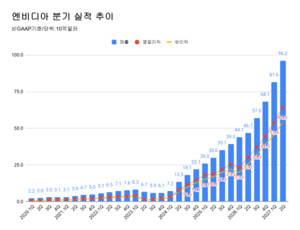
The Memory Squeeze Behind the Record Quarter
NVIDIA reported its largest-ever quarter, but the headline number—$96.2 billion in revenue—is only half the story. What deserves more attention is a line item buried deep in the earnings materials: $279 billion in supply chain commitments made during a single quarter, more than doubling from the prior period.
The breakdown is telling. The vast majority flows toward high-bandwidth memory, the scarce commodity that sits between NVIDIA’s GPU designs and the servers that ship them. Without HBM, the Blackwell Ultra and Vera Rubin platforms are expensive paperweights. Memory is the chokepoint, and NVIDIA is treating it like one.
This is not a routine procurement cycle. The $279 billion covers multi-year agreements for memory and production capacity, a strategic escalation that reflects how tightly the industry is bound to a handful of suppliers. Samsung and SK Hynix dominate HBM fabrication; TSMC handles the advanced packaging that stitches memory stacks to NVIDIA’s silicon. These companies now hold disproportionate leverage over who builds AI infrastructure and at what cost.
What’s often missed is the second-order consequence of this concentration. When three fabs control the majority of HBM output, any yield disruption—whether from a fire at a Samsung facility, a geopolitical shock, or a material shortage like the high-density underfill resin that briefly constrained SK Hynix production—ripple becomes a supply shock for the entire AI industry. NVIDIA’s massive prepayments are as much insurance as they are procurement. By locking in capacity years in advance, the company is effectively buying priority access in a market where having your name on the allocation list can mean the difference between shipping a new architecture on time or facing a year-long delay.
How the Money Is Actually Moving
The numbers are staggering even by tech-scale standards. Datacenter revenue hit $89 billion, up 117 percent year-over-year. Hyperscaler sales alone more than doubled to $48.7 billion from $24.2 billion. Enterprise and cloud customers contributed $40.3 billion, nearly tripling from $16.9 billion. Gross margin expanded to 75 percent from 72.4 percent, defying the typical compression that comes with explosive demand growth.
Adjusted earnings per share came in at $2.22, beating the consensus range of $2.09 to $2.10. Free cash flow jumped 59 percent to $21.3 billion. NVIDIA returned $26 billion to shareholders through buybacks and dividends.
But the gross margin expansion deserves scrutiny. It likely reflects favorable mix—Blackwell Ultra products carry higher per-unit economics than earlier generations—and favorable supply terms locked in during the prior cycle. Both advantages are time-limited. As memory costs rise and supply agreements lock in at current prices, the next few quarters will reveal whether the 75 percent margin level is sustainable or a peak. If HBM pricing escalates faster than GPU ASPs, margin compression could accelerate quickly, especially if NVIDIA’s competitors begin capturing enterprise share with lower-cost alternatives.
NVIDIA Is Now Financing the Buildout
Perhaps the most consequential development was disclosed quietly: NVIDIA signed a $105 billion guarantee to back OpenAI’s datacenter in Ohio, covering land, power infrastructure, and construction. The facility will draw 4.25 gigawatts of capacity—enough to power roughly 4 million homes—and NVIDIA expects to deploy approximately 1.5 million GPUs there over its lifetime, generating $150 billion to $200 billion in revenue.
This is a fundamental shift in how NVIDIA captures value. The company is no longer simply a chip vendor. It is becoming an infrastructure financier, taking on balance sheet risk to ensure that the facilities running its hardware actually get built. The model mirrors how semiconductor fabs lease capacity to guarantee utilization, but at a far larger scale and with direct customer commitments.
The Ohio deal reveals something important about the current state of AI infrastructure: power and grid access have become the true bottleneck, more so than silicon itself. A 4.25-gigawatt facility requires not just land and construction capital but a complete reimagining of local grid capacity, natural gas tie-ins, and water rights for cooling. No single tenant can typically secure that on their own. NVIDIA stepping in as financial guarantor de-risks the entire project for utilities, local governments, and construction lenders—which means the deal goes faster, and NVIDIA gets its chips deployed sooner.
NVIDIA is not alone in this trend. AMD and Intel have pursued similar strategies, and Google is expanding its custom AI accelerator program. But NVIDIA’s financing move is the most capital-intensive to date, and it signals that the company sees infrastructure access—not just chip performance—as the binding constraint on AI growth. The implication is that future NVIDIA competitors may need not just better silicon but equivalent balance sheet capacity to compete for datacenter space, which raises the barrier to entry in ways that pure architectural advantage cannot easily overcome.
Competitive Pressures and Margin Dynamics
The competitive landscape is shifting in ways that merit attention beyond the quarterly beat. AMD’s MI350 series has begun securing design wins at smaller hyperscalers and sovereign AI projects, offering a credible alternative for workloads that do not require NVIDIA’s full software stack. Google’s TPUv5p continues expanding within Alphabet’s own infrastructure and now appears in select third-party partnerships. These are not yet existential threats to NVIDIA’s market share, but they represent the first credible pressure on pricing power in three years.
More concerning from a margin perspective is the memory cost trajectory. HBM pricing has been rising at an annual rate exceeding 30 percent since 2023, driven by a supply base that has struggled to keep pace with demand. NVIDIA’s multi-year lock-in agreements shield near-term margins, but those contracts have expiry dates. As newer agreements come up for renewal, NVIDIA will face steeper unit costs at a time when hyperscalers are increasingly demanding price concessions in exchange for long-term volume commitments.
The company’s guidance suggests management is aware of these dynamics. The projected 74 percent gross margin for Q3 represents a slight deceleration from Q2’s 75 percent, and the explicit exclusion of China revenue—removed following tightened U.S. export controls—removes a segment that previously contributed meaningful incremental revenue at favorable margins.
What Comes Next
NVIDIA guided Q3 revenue to $108 billion, well above the analyst consensus of roughly $104 billion. The company reaffirmed a full-year adjusted tax rate of 16 to 18 percent and projected adjusted gross margin around 74 percent for the quarter. It explicitly excluded China revenue, a clear acknowledgment that U.S. export controls have fractured its largest secondary market.
Despite the blowout results, the stock fell in after-hours trading. The market’s logic is straightforward: three years of compound growth have priced in perfection, and the concerns are real. Memory procurement costs are rising faster than GPU pricing power. AMD and Google are chipping away at market share with alternative accelerators. And the financing guarantees create contingent liability that Wall Street has not yet learned to discount.
The $386 billion in total supply commitments—approximately $279 billion in new obligations made in a single quarter—proves that demand is not slowing. It also proves that securing the supply chain is now the primary competitive struggle. NVIDIA won the quarter. The next quarter will test whether it can win the supply war, and whether its transition from chipmaker to infrastructure financier strengthens or strains the balance sheet over the coming cycle.