Nvidia's DLSS 5 Leak Exposes the Cracks in Its AI Rendering Promise
Leaked DLSS 5 Neural Rendering files turned up in NBA 2K27's early access build and spread to other titles, producing jarring visual results. The controversy reveals how much Nvidia's upselling vision depends on developer cooperation—and why the community's experiments matter more than you'd think.
The leak that isn’t what it seems
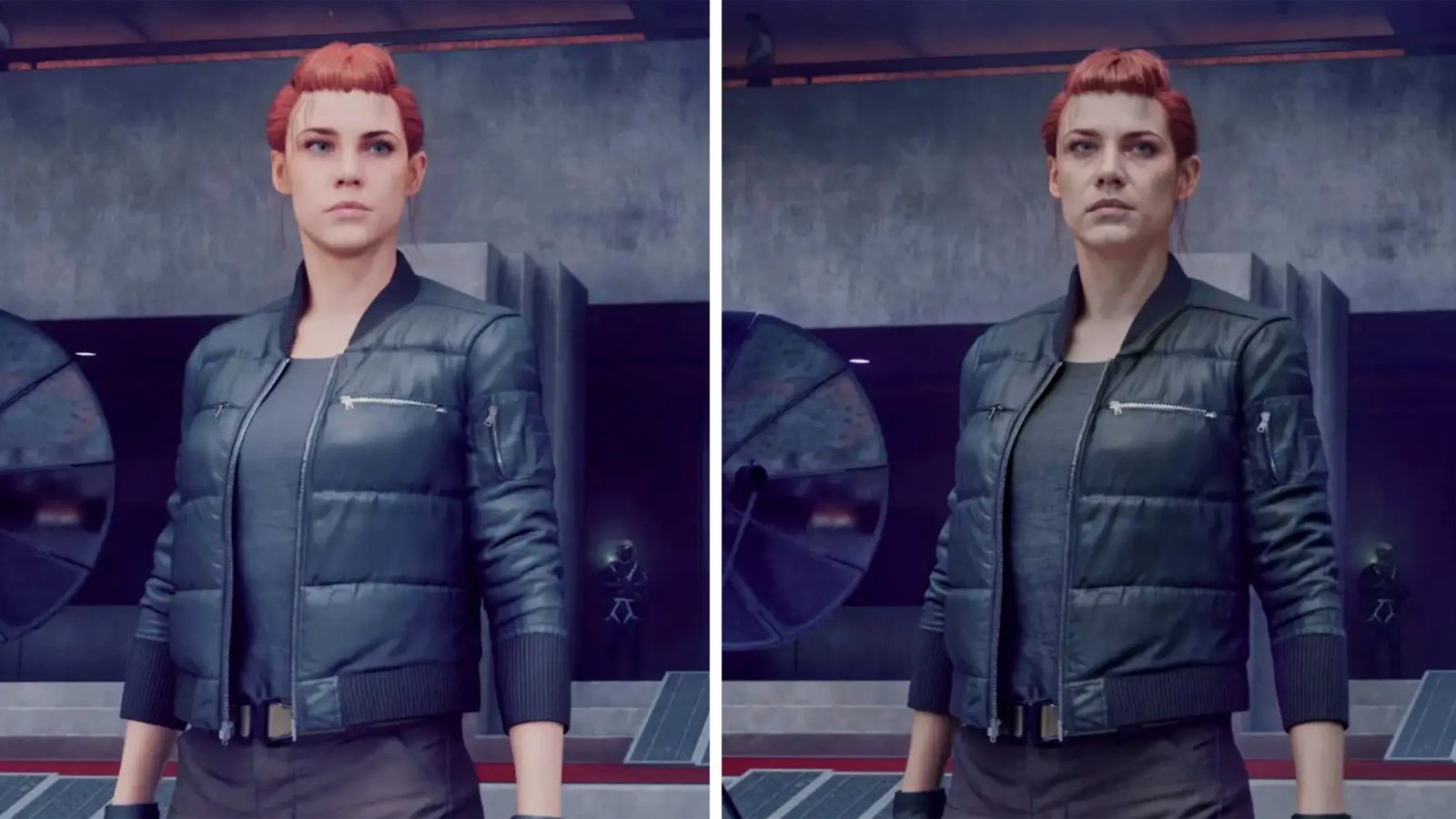
What the modding community has been playing with for the past week isn’t a finished product. It’s a prototype, likely far from Nvidia’s final calibration, shoved into games never designed to carry it. But the images circulating on ResetEra already tell you something important: when AI-driven rendering meets a game world not built for it, the result is visually unstable at best, deeply unsettling at worst.
The origin is straightforward. Early-access builds of NBA 2K27 contained DLSS 5 Neural Rendering files. From there they jumped to games like Control and Final Fantasy 7 Rebirth through standard modding pipelines. The process shouldn’t be surprising. Nvidia has dropped unreleased graphics tech into PC games before, and the community has always found a way to test it against content it was never meant to touch.
The difference this time is the nature of the technology. DLSS 5 isn’t just sharpening pixels or reconstructing frames. It’s inserting an AI layer between the game’s renderer and the screen, making decisions about lighting, reflections, materials, and texture fidelity after the engine has already done its work. That’s a fundamentally different category of intervention than anything DLSS has done before, and it means the visual consequences are harder to predict and harder to control.
Who gets hurt by this leak
Not Nvidia directly—yet. The company still has months to deliver a proper implementation, and the leaked build was never intended for this kind of use. But the public narrative is shaping up now, and early impressions stick. ResetEra users described the results in words like “objectively horrendous” and “uncanny crap.” One called it one of the most unsettling things they’d ever seen in gaming. Another noted that foliage in particular handled well, and that racing and sports titles might be more forgiving hosts for the technology.
That last point matters. Different genres respond differently to AI rendering layers. A racing game has fewer close-up faces, simpler materials, and consistent lighting setups. A narrative-driven RPG with detailed character models, subsurface scattering, and complex emotional expression is far more vulnerable to visual distortion. Games like Control and Final Fantasy 7 Rebirth are exactly the wrong environment for an unrefined Neural Rendering pass, which is precisely why the results look so broken.
The developers of those titles aren’t the ones who chose this context. The modders aren’t either. What’s happening is an accidental stress test, and the pressure points are visible immediately. Characters that should be rendered with hand-tuned detail instead look processed through an AI filter that doesn’t understand the intent behind each surface. Cloud Strife in Final Fantasy 7 Rebirth, of all things, became the poster child for this effect.
What Nvidia gets away with
Nvidia’s story about DLSS 5 has always been about photorealism without traditional rendering cost. The pitch is clean: the AI adds a final pass of visual intelligence, enhancing lighting, reflections, and materials without requiring developers to rebuild everything from scratch. That framing sells hardware. It also conveniently sidesteps the question of who actually has to integrate the technology properly.
The leak exposes the gap between that framing and the reality of implementation. DLSS 5 won’t work well in most games unless developers spend months tuning how the neural rendering layer interacts with their specific engines, asset pipelines, and art direction. Nvidia can deliver the technology, but the quality of the end result depends on a level of developer cooperation that many studios may resist or simply be unable to accommodate within their production schedules.
This is the credibility wall. Nvidia has been the face of AI upscaling for years, and each new promise raises expectations. But the more the technology intrudes on the final image, the more visible any failure becomes. DLSS 3’s frame generation was controversial enough. DLSS 5, which actively rewrites parts of the rendered frame rather than just interpolating between them, pushes much further into territory where the average player will notice if something looks wrong.
Who wins and who loses
Nvidia wins if the technology delivers when properly integrated. The hardware sales argument is solid, and the company has the distribution channels to make sure the integrated versions look impressive. But the leak has already seeded doubt, and doubt is expensive to undo.
Developers who choose to support DLSS 5 properly will produce visually stronger games, assuming they have the time and expertise to do the tuning work. Those who don’t will inherit a technology that may look worse than the traditional rendering pipeline it was supposed to augment.
The modding community wins in the short term with insider access and the cultural capital of being first. They also lose something less tangible: the chance to experience a finished technology on its own terms. Every leaked build becomes part of the public record, and the public record is currently dominated by unrepresentative, poorly integrated test results.
Players lose the ability to trust Nvidia’s visual promises. When the unoptimized, off-label version of a technology already looks broken, the marketing sheen on the official release has to overcome a much higher bar.
What happens next
Nvidia needs to release a properly integrated demonstration soon. Something clean, something undeniable. The longer the gap between this leak and an official showing, the more the negative impressions harden. The company also needs to be honest about what DLSS 5 requires from developers, because the integration burden is real and not every studio can carry it.
The broader lesson is already visible in the community response. AI-enhanced rendering is moving from a performance tool to a visual one, and that shift changes the stakes. Players have spent decades learning to read traditional game graphics—the way light behaves on metal, the texture of skin, the consistency of a rendered world. An AI layer that can improve or degrade any of those elements introduces a new kind of uncertainty into the visual contract between game and player.
The NBA 2K27 build may be the least interesting version of DLSS 5. But it’s the one the world is seeing first, and first impressions travel faster than calibrated demonstrations.