Japan's Okinawa indictment tests U.S.-Japan alliance all over again
A Japanese indictment of a U.S. Marine in Okinawa is more than a legal proceeding—it's a flare-up that exposes the raw nerve at the heart of the U.S.-Japan alliance and the island's simmering resentment.
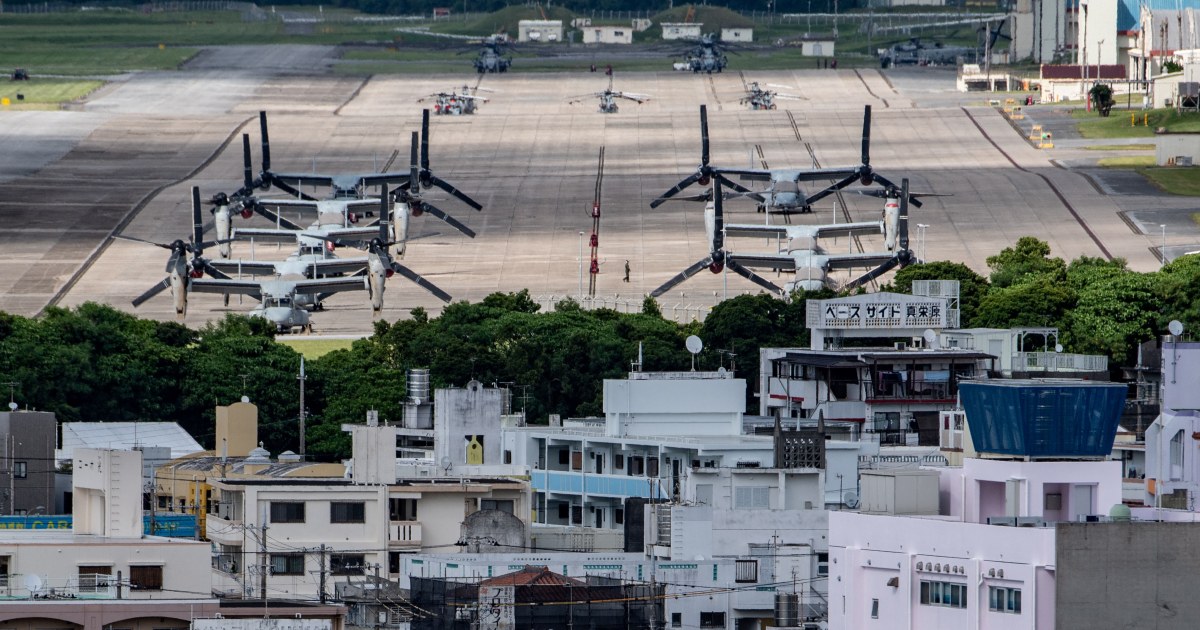
The headline is simple. The politics are not.
Japanese prosecutors have indicted Lance Cpl. Devin Jacob Ballard, a Marine stationed at Marine Corps Air Station Futenma, on charges of robbery and murder in connection with the death of Anna Yagi, 39, in a Naha hotel earlier this month. Ballard denies the allegations.
Read that in isolation and it sounds like any cross-border criminal case—sad, ugly, routine. But Okinawa is not anywhere near routine. This is the latest detonation in a powder keg that has been smoldering for decades, and the speed with which it escalated reveals how thin the veneer of diplomatic management really is.
Within days of the arrest, protests erupted across the prefecture and in Tokyo. Governor Takeshi Onaga’s successor has faced similar fury before. The Japanese government responded by imposing a curfew and alcohol ban on U.S. personnel stationed in Okinawa—a measure that is as much symbolic theatre as practical control, since the bases operate under the complex Status of Forces Agreement (SOFA) that grants American forces significant autonomy.
The III Marine Expeditionary Force issued a carefully worded statement: it was aware of the indictment and would cooperate fully with Japanese authorities. Cooperation. That word does a lot of work here. It signals good faith while acknowledging that the legal process will unfold under Japanese jurisdiction—which is itself a notable shift worth tracking.
Who wins, who loses, and what changes
The immediate loser is the already frayed credibility of the U.S. military presence in Okinawa. Roughly 70 percent of all U.S. facilities in Japan sit on this single island chain of just 1.5 million people—an arrangement that has never stopped feeling, to most Okinawans, like an occupation disguised as an alliance.
Ballard’s case matters because it arrives at a moment when the strategic calculus around Okinawa is shifting. Beijing’s growing military pressure on Taiwan makes the island chain more valuable to Washington by the year. That makes the friction over basing ever more costly for Japan, and ever more resented by Okinawans who feel they are bearing a disproportionate share of the alliance’s burden while receiving little in return.
Tokyo’s political class has long preferred to manage these incidents quietly. The curfew and alcohol ban represent a break from that pattern—an admission that the old containment strategy is failing. But it is also an admission of weakness: the Japanese government cannot simply order the Americans to behave differently. Under SOFA, Japan retains investigative authority but the U.S. maintains primary custody until formal charges are filed—and even then, extradition and prosecution involve messy negotiations that can drag on for years.
The question now is whether this case becomes another footnote or a turning point. Past incidents—the 1995 rape of a 12-year-old Okinawan girl by three U.S. servicemen, the 2016 death of a woman whose apartment building was struck by a falling V-22 Osprey wing—followed similar trajectories of outrage, brief policy adjustments, and eventual fading into the background. What makes this moment different is the intensifying regional stakes. Every new incident erodes the domestic consensus that justifies the base footprint to a Japanese public that was never enthusiastic to begin with.
The unspoken geometry
What English-language coverage tends to flatten is the racial and gendered dimension of this case. Yagi was a Japanese woman killed by a foreign soldier in circumstances that replay a script Okinawans have lived through repeatedly. The anger is not abstract. It is personal, generational, and deeply embedded in the island’s political identity.
Ballard’s denial of the allegations means the case will proceed through Japan’s prosecutorial system, which is known for its high conviction rate—roughly 99 percent of cases that reach trial result in guilty verdicts. That statistic cuts both ways: it could mean a swift conviction if the evidence holds, but it also raises the stakes for anyone claiming wrongful accusation.
The Naha District Public Prosecutors’ Office reportedly says Ballard allegedly strangled Yagi with a telephone cord and stole a backpack containing a wallet. NHK reported the details Sunday. Whether that evidence withstands defense scrutiny remains to be seen, but the mere fact of an indictment by Japanese authorities—not a hand-off to a U.S. military court—is itself significant. It signals that Japanese prosecutors are treating this with the seriousness the case demands, rather than folding it into the usual diplomatic dampening protocol.
What happens next
The U.S. military’s cooperation pledge is standard language, but the real test will come in the coming months. If Ballard is convicted in Japanese court, it will reinforce the argument among Okinawa’s base critics that the current arrangement is unsustainable. If the case collapses or is transferred to U.S. jurisdiction under some procedural maneuver, it will inflame tensions further.
Either outcome feeds the same underlying contradiction: the U.S. needs Okinawa’s geography for its China-Taiwan posture, and Japan needs the U.S. guarantee for its own security. But the people who live closest to the bases need something else entirely—dignity, safety, and a say in what happens on their shores.
This case will not resolve that contradiction. But it will make it harder to ignore.
For English-language readers accustomed to seeing U.S.-Japan relations summarized as a sturdy partnership, the Okinawa indictment is a reminder that the alliance has a fault line running straight through its weakest link. The question is whether the tremors are about to get stronger.