One Router Broke America's Skies — A Warning for the World
A single L3Harris router failed, grounding every US flight. The episode exposes why the FAA's deep dependency on one defense supplier's hardware is a threat aviation regulators worldwide should take seriously.
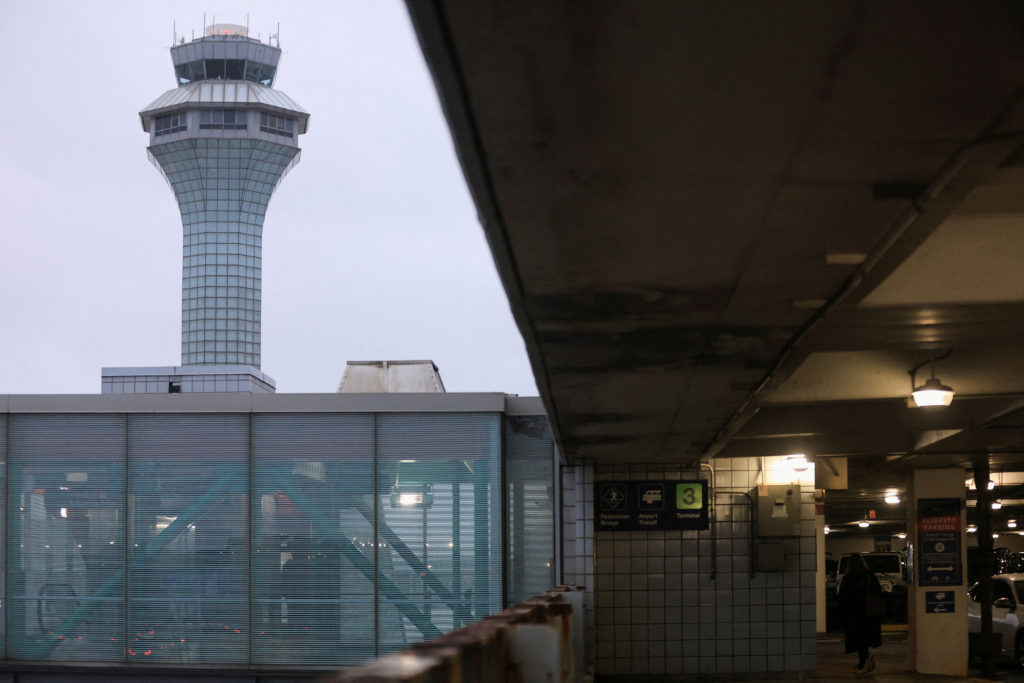
One router broke everything
On Friday morning, a networking device manufactured by L3Harris Technologies — a $10,000 router intended to bridge communication between aircraft and ground controllers — simply stopped working. Within hours, the Federal Aviation Administration declared extraordinary circumstances. Hundreds of flights already in the air were diverted or ordered back to gate. Planes sitting on runways around the country were told to stay put. The FAA issued a nationwide ground stop.
It was only the third such order in recent decades. The last time the FAA invoked one, in January 2023, the trigger was catastrophic: an emergency locator transmitter failure that sent thousands of pilots scrambling to switch frequencies and nearly lost aircraft from radar at 35,000 feet. That incident forced a reckoning over the fragility of U.S. airspace communication. The FAA promised fixes. It delivered a partial fix and moved on.
Then Friday happened again. But this time the cause traced not to software confusion among flight crews but to a single physical piece of hardware — and a single company that sold it.
The contractor trap
L3Harris is a $17 billion defense contractor. Its equipment powers radio systems in military aircraft, command centers, and yes, civilian air traffic facilities. When the FAA contracted its routers for this particular segment of the aeronautical information distribution network, it locked itself into one manufacturer’s design.
That is the definition of a single point of failure. No competing router sits in standby. No alternate supplier can swap in overnight because the wiring, firmware, and certification were built exclusively around L3Harris gear. When that router failed, the system had no second layer.
Homeland Security Secretary Markwayne Mullin rushed to reassure the public. He stressed there was no indication of a hostile act, no cyberattack, nothing resembling 9/11. The disruption, he said, was a telecommunication outage. He was right — and his distinction mattered less than he may have realized. Outages caused by single-vendor dependency behave just like attacks when they shut down a nation’s skies. The effect is identical: planes stopped moving, people stranded, $2.5 billion in daily aviation economic activity frozen.
What English-language readers miss
American aviation outlets covered the grounding. International ones largely did not. Yet the lesson extends far beyond U.S. borders.
The United States operates 22 en route radar centers that communicate with each other across state lines — linked by fiber-optic trunks and legacy telephone circuits, some dating back to the 1960s. When the L3Harris router in one of those relay nodes failed, the impact rippled through the entire architecture. European nations rely on Eurocontrol hubs. Canada’s Nav Canada runs a comparable grid. Australia’s Airservices model is similar. Any of them could face the same scenario: one contractor’s hardware goes dark, and the whole system shudders.
The difference is that Europe already learned this lesson partially. After a Series 4 satellite failure in 2018 knocked out aircraft data links, Eurocontrol pushed harder on diversity of equipment suppliers. The FAA did not push nearly hard enough after January 2023. Instead, it continued contracting through channels that favored incumbents with entrenched certifications — which means the same companies that won those contracts the first time win them again.
Defense contractors in particular hold a structural advantage. Their equipment carries existing Department of Defense certifications that transfer seamlessly into FAA procurement. New entrants cannot match that paperwork speed. The result is a market where competition narrows with every cycle, and dependency deepens.
Redundancy that isn’t redundant
Aviation is the most regulated industry on Earth precisely because single failures must never cascade. Every plane has multiple engines, multiple hydraulic systems, multiple flight computers. Airports have redundant power grids. The expectation embedded in every design manual is that one failure triggers another path automatically.
Friday proved that expectation does not apply uniformly to the ground network. The FAA’s own systems — the very infrastructure meant to connect those redundant layers — run on hardware that lacks its own redundancy. That gap between airborne design philosophy and ground-level procurement reality is where the danger lives.
Congress has discussed this gap for years. The NextGen modernization program launched nearly two decades ago promised to replace the analog backbone with satellite-connected, IP-based infrastructure. Progress has been fitful. Budget pressures, procurement delays, and political whiplash between administrations have turned NextGen into a twenty-year construction project. Meanwhile, air travel has reached record levels — over 900 million passengers annually in the United States — straining an older system beyond its original capacity.
What happens next
The FAA will release a report. It will characterize the router failure accurately and cautiously. Congress will hold hearings. Lawmakers will ask tough questions and then file them away until the next disruption.
What will actually change depends on whether regulators treat this as an isolated hardware defect or as a symptom of a procurement architecture that allows one company’s router to become a choke point for an entire national airspace system.
Those two framings lead to very different outcomes. The first produces a replacement router from the same vendor and a press release about improved monitoring. The second triggers a requirement for diversified supplier contracts, mandatory hot-swap capability, and competitive rebidding that could reshape who supplies critical air traffic infrastructure for the next decade.
The 2023 emergency beacon incident created a brief window for the second path. The door closed quietly. Friday’s events reopen it — but only if officials recognize that a $10,000 router and a $17 billion contractor together represent a systemic risk no aviation regulator should tolerate anymore.