Onimusha Returns With 40K Steam Players — What It Means for Action Games
A 20-year-old Capcom franchise just hit 44,000 concurrent Steam players on release. The numbers reveal a hungry audience for authentic Japanese swordplay — and a signal for what happens next.
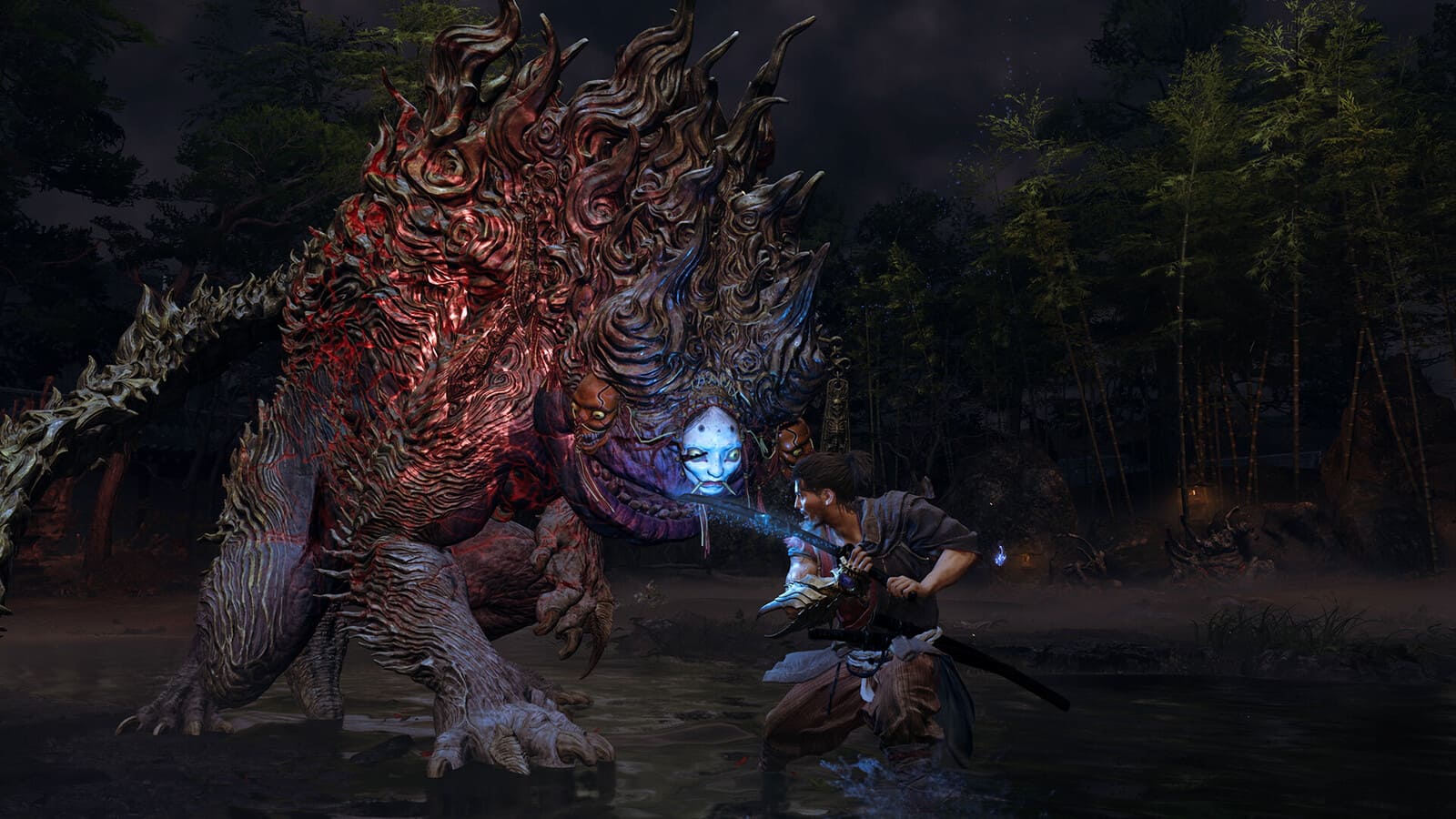
The Number That Shouldn’t Be Possible
Forty-four thousand people were playing Onimusha: Way of the Sword simultaneously on Steam at its peak on release day. This is a franchise that hasn’t seen a full home console entry since 2006. The previous game, Shin Onimusha: DAWN OF DREAMS, launched when PlayStation 3 was still a rumor and the Nintendo Switch didn’t exist. By any conventional metric — a legacy IP, a franchise dormant for two decades, a game that doesn’t lean on open-world mechanics or live-service hooks — that concurrent player count should not be this high.
It is high. And it’s a data point that Western gaming coverage has barely noticed.
The broader implication here isn’t just that Capcom made a good game. It’s that a specific corner of the action-game market — authentic, parry-heavy, Japanese swordplay with historical texture — is far more populated than the industry’s biggest launches suggest. Ghost of Tsushima proved the appetite on PC. Onimusha just confirmed it runs deeper.
What 44,000 Concurrent Actually Means
Steam concurrent player counts are an imperfect currency. They fluctuate by region, by language settings, and by how many players own a copy but aren’t logged in. A 44,000 peak doesn’t translate directly into lifetime sales. But it does measure something specific: at this exact moment, 44,000 people chose to open this game over every other option in their libraries.
That’s a release-day signal. For a franchise with no pre-launch hype cycle comparable to a new Assassin’s Creed or Elden Ring, that’s unusual. It means the nostalgic pull of the Onimusha name — combined with the RE Engine polish and the reputation of the series’ original run — carried enough weight to fill that number. It also suggests that the demo, which lets players face off against rival swordsman Sasaki Kojiro and the boss “Daidara,” is working as a conversion funnel. Players who tried the demo and liked it came back for the full build.
The Steam review score backs this up. Of 537 reviews, 81% are positive — a status the platform calls “Overwhelmingly Positive.” The PS5 version sits at 85 on Metacritic, matching Onimusha 3 from 2004 as the highest-rated entry in the series. The Switch 2 version is at 90, though with only 11 reviews at press time. These aren’t cult scores. They’re mainstream-adjacent numbers for a game that most Western players probably forgot existed until this week.
The Swordplay Market Is Bigger Than You Think
The ghost of Ghost of Tsushima hangs over this release. Sucker Punch’s 2024 PC port showed that a meticulously crafted, Japan-focused action game could find a massive audience outside Japan. It wasn’t a fluke. The market for this kind of game exists — and it’s not limited to samurai cinema fans.
What Onimusha’s launch reveals is that appetite extends beyond the single best-known entry in the genre. Players aren’t just buying one sword game. They’re buying into a whole aesthetic and mechanical tradition: the weight of a katana swing, the satisfaction of a well-timed parry, the visceral feedback of staggering an opponent into a finishing blow. The core combat loop in Way of the Sword — deflecting attacks, breaking enemy posture, executing a counter-strike called “Isshin” — is built on exactly that philosophy. It’s not an open world. It’s a wide-linear structure with districts of Kyoto and linear dungeons. The focus is narrow, and the crowd is responding to it.
Capcom built this with the RE Engine, the same technology behind Resident Evil Village, Resident Evil 4 Remake, and Monster Hunter: Wilds. The result is visually polished to a degree the original PS2-era Onimusha never approached. Temples and shrines in the Kyoto setting were recreated with on-location research and permission. The protagonist Musashi Miyamoto’s face model is based on actor Toshirô Mifune, the legendary silhouette of Japanese cinema. Every production choice signals: we took this seriously.
Who Wins, Who Loses
Capcom wins first. A legacy IP revitalized without the budget of a AAA reimagining like Final Fantasy VII Remake. The company has been quietly rebuilding its action game portfolio — Street Fighter 6 proved fighting games can still be flagship hits, and Monster Hunter holds steady. Onimusha slots into a third pillar: historical sword action that doesn’t require the production overhead of an open-world spectacle. It’s a high-margin play.
Other developers working in the same niche lose a little. Not dramatically — the market is large enough for more than one sword game — but Onimusha’s success will be read internally by publishers as evidence that this genre is sustainable. That means more competition for attention, not less demand.
Independent developers building smaller sword-action games face a different calculus. Onimusha proves the audience is there. But it also raises the bar. When a 20-year IP can arrive with this level of polish and hit these numbers, expectations shift. Players will compare your game to Onimusha’s combat feel, visual fidelity, and cultural detail.
The one group that benefits most is players who have wanted this kind of game for years and couldn’t find it. Not Ghost of Tsushima — that game is wonderful but structurally different. Not Sekiro, which is harder and more punishing. Not Nioh, which leans into RPG systems. Onimusha offers something closer to what the original games promised: a straight swordfighting experience with posture-based combat, supernatural enemies, and a story set in a meticulously rendered Edo-period Japan.
What Happens Next
Capcom will watch these numbers closely. If the lifetime sales trajectory holds, expect this to validate further investment in legacy IP — not just onimusha, but possibly other dormant franchises. The company has a deep library of classic action titles, some of which have been idle for longer than Onimusha.
There are also practical concerns on the horizon. Some players have reported crashes and pointed to English localization issues. These are solvable problems. If Capcom patches them quickly, the review score and player count will likely climb. The demo is already driving conversions; the full game needs to hold those players through the endgame.
One thing to watch: whether the Switch 2 version, scoring 90 on Metacritic with a small sample, indicates that the hardware delivers a notably better experience. If it does, that strengthens the case for multi-platform strategy on future legacy IP releases rather than exclusive or timed-launch approaches.
The Signal, Not the Noise
Forty-four thousand concurrent players on a franchise comeback is a signal. Not a revolution. Not a trend shift. But a clear message: the audience for grounded, mechanically rigorous Japanese swordplay games is real, reachable, and willing to spend money on it. The industry treats this as a niche. Onimusha just proved it isn’t.
If Ghost of Tsushima opened the door, Onimusha walked through it — and found a whole room full of people waiting.