Park Geun-hye's Political Return Signal Tests South Korea's Conservative Reckoning
The ruling party's invitation to impeached former President Park Geun-hye for its annual lawmaker training reveals deep fractures in South Korean conservatism — and forces a confrontation with what voters actually punished in 2016.
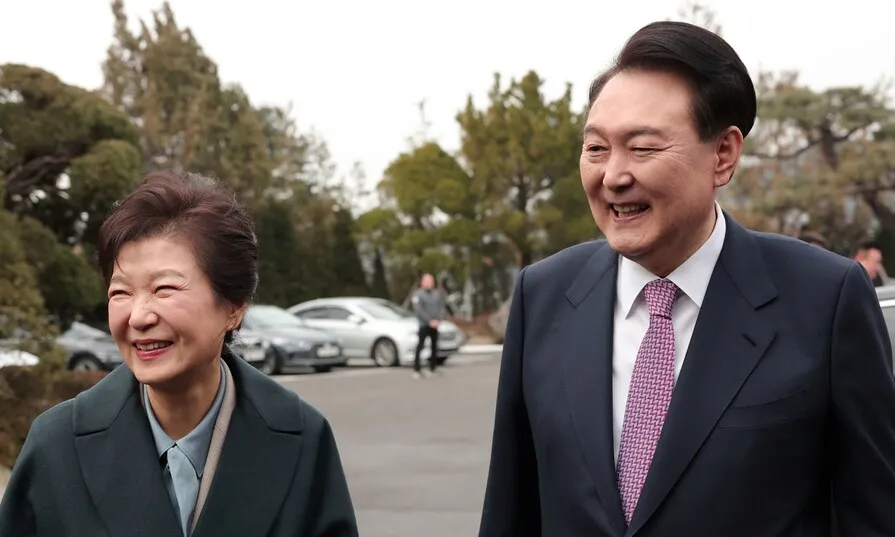
The Invitation That Refuses to Stay Quiet
When the People Power Party announced that former President Park Geun-hye would attend its December lawmaker training session in Goyang, the opposition didn’t waste time framing it as anything but a political grenade.
Lee Ju-hee, the Democratic Party’s floor spokesperson, delivered the party’s response with the precision of someone who knows this story has an audience that remembers 2016:
“Will the next one be former President Yoon Suk-yeol?”
The question wasn’t hypothetical. It was an indictment wrapped in a warning.
Who Park Geun-hye Is in This Story
For readers outside South Korea, Park Geun-hye is the woman whose impeachment in 2017 marked the first peaceful removal of an elected president in the country’s modern history. The charges were specific: abuse of power, coercion, and collusion with Choi Soon-sil, a civilian with no government position who nevertheless directed state affairs and extorted billions from conglomerates.
Park served seven years. She was pardoned in December 2021 by Yoon Suk-yeol’s predecessor, Moon Jae-in — a move that remains politically toxic for the liberal side and structurally useful for the conservative one.
The first-instance sentence was life imprisonment. Appeals are ongoing. Whatever the courts decide, Park remains the most politically polarizing figure in contemporary Korea.
Why the Training Session Matters
The annual lawmaker training — the “eye-to-eye seminar” that party officials call it — is where the People Power Party aligns its parliamentary cohort before the legislative session. It’s institutional, not ceremonial. Inviting Park Geun-hye to that space transforms it from party discipline into political theater.
What makes this specific invitation notable isn’t that conservatives are respecting their own. It’s that they’re doing so publicly, at a moment when the party’s own survival depends on distance from the Park era’s baggage.
The Democratic Party’s response confirms the calculation: this isn’t about Park. It’s about what her presence signals to voters who still remember why she fell.
The Yoon Suk-yeol Shadow
Lee Ju-hee’s question — “Will the next one be Yoon?” — lands because the parallels aren’t abstract. Yoon Suk-yeol, now a former president after his December 2024 martial law declaration and subsequent impeachment, shares the Park ecosystem in ways that matter politically even if they don’t translate legally.
Yoon pardoned Park in 2021. He came from the same prosecutorial tradition. His own political collapse followed a constitutional crisis that mirrored, in structure if not in scale, thePark crisis of 2016–2017.
The Democratic Party’s argument is straightforward: inviting Park back to the party’s inner sanctum signals that the People Power Party hasn’t learned the lesson voters delivered. It suggests the next conservative crisis isn’t behind the party — it’s being prepared.
What the Opposition Is Really Saying
Park Ji-won’s Facebook post cut deeper than formal spokesperson language. He called the party “a kaleidoscope” and noted that Park “can’t do anything without Choi Soon-sil,” then suggested the party also invite Choi to the training session.
The joke works because it’s precise. Choi Soon-sil was the civilian who orchestrated the scandal. She didn’t hold office. She held influence. And she remains, in the Democratic Party’s framing, the architectural blueprint for whatever conservative reckoning comes next.
This isn’t just mockery. It’s a narrative claim: the Party Power Party’s problem isn’t Park Geun-hye. It’s the ecosystem that made her possible — and that ecosystem includes anyone the party chooses to rehabilitate.
What This Reveals About Conservative Realignment
The People Power Party faces a structural choice that has nothing to do with Park personally and everything to do with what kind of movement it wants to be.
On one path: distance. Acknowledge that Park’s scandal cost the conservative vote three presidential terms, rebuild on a foundation that doesn’t require apologizing for her return. This path demands the party explain to voters why Park belongs in its training seminar rather than in political memory.
On the other path: embrace. Accept that Park’s faction remains the party’s core constituency, that her pardon was never controversial within conservative ranks, and that the 2016 verdict represents liberal vengeance rather than democratic correction. This path requires the party to stop pretending the Park era is past tense.
The invitation chooses the second path openly. That choice tells you everything about where the People Power Party stands — and why the Democratic Party’s response matters more than the training session itself.
The Voters Who Remember
South Korean voters delivered a verdict in 2016 and 2017. They removed a president through constitutional process. They elected a liberal government that lasted two terms. They returned to conservative rule under Yoon Suk-yeol, only to watch him fall in his second year.
The question the Democratic Party asks — “Will the next one be Yoon?” — assumes voters remember the pattern. It assumes the Park scandal wasn’t an anomaly but a symptom. And it assumes the party’s invitation signals that symptom diagnosis remains unfinished.
That assumption has electoral consequences. The 2027 presidential election is already shaping up as a reckoning for both parties. Whoever controls the conservative narrative about Park Geun-hye controls a significant portion of the conservative vote.
What Comes Next
The training session itself is secondary. What matters is the signal: the People Power Party has chosen to center Park Geun-hye rather than distance itself from her scandal. The Democratic Party has responded by framing that choice as evidence of conservative stagnation.
Both positions are internally consistent. Neither addresses the underlying question: what did Korean voters actually punish in 2016, and has the conservative movement learned from that punishment?
The invitation suggests the answer, however uncomfortably. And the opposition’s response ensures the question won’t disappear before the next election cycle.
In South Korean politics, some ghosts refuse to stay buried. The People Power Party just invited one back to the training room.