Patriot Missiles Run Dry in Europe — and the World Notices
U.S. Patriot missile stocks in Europe have dropped to "beyond critical" levels after six months of operations against Iran, exposing a strategic gap Beijing and Moscow are already exploiting. The real question is whether America First's factory-floor promises can outpace a depleted stockpile.
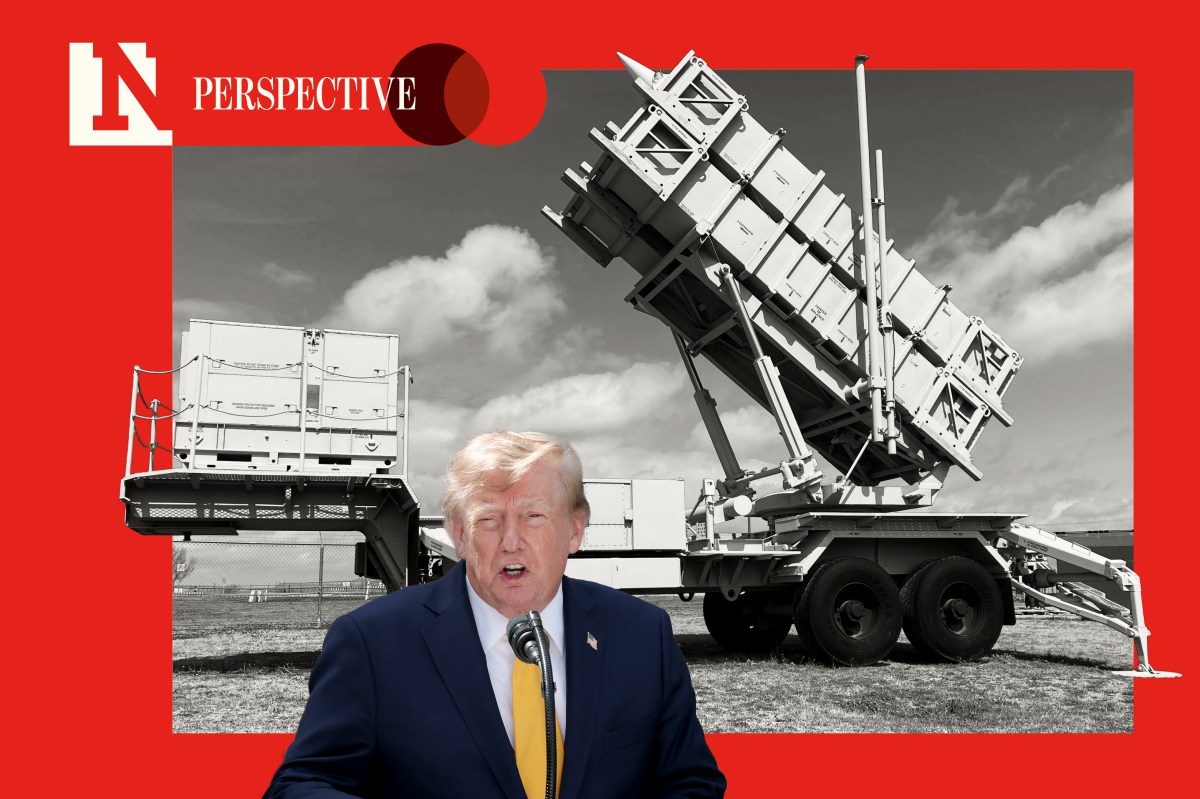
A Stockpile Stripped Bare
The United States has run out of something it assumed was limitless: its Patriot missile inventory in Europe. According to reporting, stocks have fallen to what Pentagon and NATO officials privately acknowledge as “beyond critical” levels — a phrase that should make every capital from Kyiv to Tokyo lose sleep.
Six months of combat operations against Iran have emptied the shelves. That timeline matters. Six months is not a prolonged, grinding campaign. It is a brief, intense expenditure — and even that briefly deployed force left the system near-empty.
The Trump administration frames the operations as something other than a war. The Pentagon and a senior NATO spokesman have rejected the characterization. Semantics, perhaps, but the material reality is unambiguous: missiles were fired, targets were struck, and the inventories that underpin European air defense are now measured in fractions of what they were twelve months ago.
The Deterrence Question
Here is what most observers miss: the crisis is not just about whether America can restock. It is about whether adversaries believe America can restock in time.
Deterrence is a psychological calculation as much as a material one. Beijing watches how many Patriots are in Germany. Moscow counts the batteries in Poland. When those numbers drop, the calculation changes — not because China or Russia suddenly wants war, but because the cost-benefit analysis of aggression shifts in their favor.
A depleted Patriot stockpile in Europe sends three messages simultaneously:
To NATO allies: You are on your own longer than you expected.
To China: The US military is one sustained conflict away from strategic bankruptcy.
To Russia: The American security guarantee has a visible inventory limit.
Each of those messages is amplified by the timing. The Iran conflict is not a closed chapter. It is an ongoing operation, and the supply chain questions it raises extend far beyond the Middle East theater.
The America First Paradox
The Trump administration’s “America First” industrial strategy rests on a central claim: that reshoring defense manufacturing will make the United States more self-sufficient and more capable of sustained operations. The logic is straightforward — bring production home, reduce dependency on foreign supply chains, build resilience.
The paradox is that the strategy was never stress-tested before being deployed. You do not empty your ammunition stockpile across a six-month conflict and then ask whether your factory-floor promises are credible. You test them first.
The question now is not whether American factories can produce more Patriots. Raytheon, the missile’s manufacturer, has publicly discussed expanding production lines. The question is whether expansion timelines — typically measured in years, not months — can catch up to depletion rates measured in weeks.
This is the second-order strategic signal: an adversary does not need to destroy American industry. It only needs to outlast American inventory.
Who Wins, Who Loses
China wins from the perception that US strategic depth is thinner than advertised. The PLA has been planning for a conflict where American logistics are stretched. A Patriot shortfall in Europe validates that planning. It also makes Tokyo and Seoul recalibrate their own defense postures — potentially accelerating indigenous missile programs and reducing reliance on US guarantees.
Russia wins from the same dynamic. A weakened American air defense footprint in Europe does not require Russian action. It requires only patience. Every month that passes without a visible restocking effort erodes the deterrent effect of existing Patriot batteries further east.
NATO allies lose the most directly. Poland, the Baltic states, and Romania host Patriot batteries precisely because they fear Russian aggression. When those batteries are symbols rather than substances — when they are deployed without the missiles to fire — the deterrent effect becomes theatrical.
The US defense industrial base loses credibility. If the first major conflict of the era reveals that peak production capacity cannot keep pace with operational demand, then the entire architecture of American force planning needs revision. That revision is expensive and politically painful.
What Happens Next
Several scenarios are plausible, and they unfold on different timelines:
Short-term (months): The US will attempt to redistribute existing inventory from other theaters — likely pulling Patriots from the Pacific to reinforce Europe. This creates a new vulnerability in Asia at exactly the moment China is most attentive to American force posture. It is a zero-sum game played across two oceans, and the US is likely to lose both rounds.
Medium-term (12–24 months): If Raytheon and other contractors can ramp production as projected, some restocking becomes possible. But projection timelines for defense manufacturing are notoriously optimistic. The F-35 program, the Virginia-class submarine fleet, and the Army’s next-generation combat vehicle programs all demonstrated that “when we need them most” rarely aligns with “when they are ready.”
Long-term (years): The strategic question becomes whether the United States should accept a posture of perpetual shortage — maintaining a symbolic presence in Europe while relying on allied self-reliance — or whether it should treat defense industrial capacity as a core strategic asset, the way it once treated nuclear weapons or aircraft carrier numbers.
The Signal Is the Strategy
Beijing and Moscow may not need to do anything to exploit this gap. The mere existence of a Patriot shortfall — regardless of how quickly it is resolved — alters the strategic environment. Adversaries plan for the worst-case scenario, not the best-case recovery.
The America First industrial strategy was sold as a return to strength. What the Iran operations revealed is that strength is not a slogan. It is an inventory count. And right now, that count is alarmingly low.
The next time Washington speaks of deterrence, the first question should not be about rhetoric. It should be about how many missiles are on the shelf — and how fast they can be replaced.