A Philadelphia Woman's Disappearance Unlocked a Seven-State Mystery
One Philadelphia woman's vanishing has become the keystone linking six other disappearances across seven states. Yet no one has been charged — and investigators are scrambling to understand why.
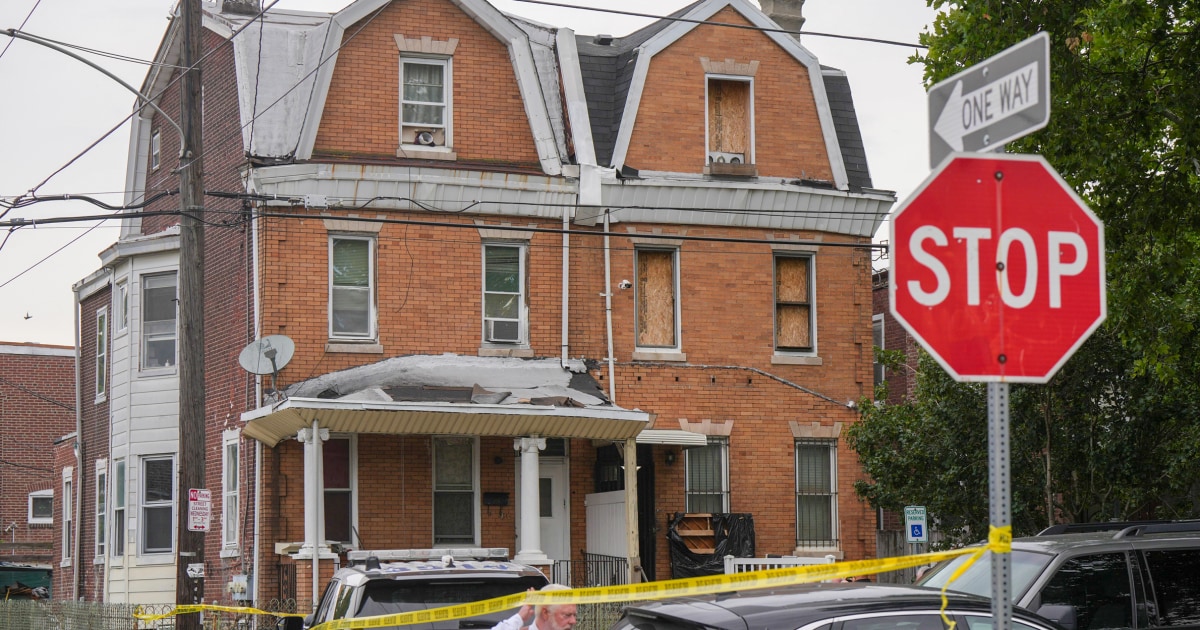
The Keystone Case
She was described as “petrified” of her ex-husband before she disappeared. That single Philadelphia woman is now the linchpin in an investigation spanning six other missing persons across seven states — and the absence of any charges has prosecutors, advocates, and families on edge.
What started as a domestic disturbance report appears to be growing into something far larger: a pattern of disappearances that investigators are only beginning to connect. The Philadelphia woman, whose name has been withheld by authorities at the request of her family, left her home in Kensington on a Tuesday morning in late March. She had filed three restraining orders against Raymond Horsch, her ex-husband of eleven years, citing escalating threats and what her attorney described as “life-threatening behavior.” Neighbors say she packed a single bag, told a coworker she was “going away for a while,” and never checked back in.
Horsch, 58, was questioned once — for approximately forty-five minutes — and released. He has cooperated fully with investigators, according to police records, but has neither confirmed nor denied knowing the fates of the other women. He has not been charged with any crime.
Why This Case Matters
The woman’s fear of her ex-husband wasn’t abstract. It was specific, documented, and urgent. And when she vanished, it triggered a chain of re-examination that pulled in cases from multiple jurisdictions — each one previously treated as isolated.
The connection wasn’t obvious at first. Missing persons cases, particularly those involving women who had left abusive relationships, are often filed and forgotten in overcrowded databases. But once one case was revisited, others followed. Six more names entered the picture. Then a seventh.
The implication is uncomfortable: this may not be six separate tragedies. It may be one continuing pattern.
The six additional cases span Pennsylvania, New Jersey, Delaware, Maryland, Virginia, and North Carolina. All involve women who disappeared between 2019 and 2023. All had prior histories of domestic violence or estrangement from male partners. Three had filed protective orders. Two had recently changed their names or cutting contact with family. One was last seen on video traveling alone on a bus — the same gray intercity line that crosses all seven states in question.
Investigators have not publicly identified a single connecting person beyond Horsch. But they have acknowledged what families and advocates have long suspected: that the system is failing women who disappear after leaving violent relationships. According to the Domestic Violence Fatality Review Network, over 1,300 women die from intimate partner violence each year in the United States. Thousands more vanish without resolution. The Philadelphia woman’s case — and the trail it uncovered — suggests that some of those disappearances may be far more connected than anyone realized.
The Problem With No Charges
Here’s what makes this investigation particularly frustrating — and alarming — for families and advocates: despite the mounting connections, no arrests have been made.
That doesn’t mean there aren’t leads. It means the evidence hasn’t yet crossed the threshold required for prosecution. And in multi-state cases, that threshold is even higher. Coordination between jurisdictions takes time. Federal involvement may be needed. Victims or witnesses may be unreachable, unwilling, or unable to speak.
For families waiting for answers, that delay isn’t procedural. It’s personal.
“Every day without a charge is a day the answer gets further away,” said Maria Lopez, whose sister disappeared in Baltimore in 2021 and who has become an unpaid advocate for the seven families involved. “We’re not asking for a parade. We’re asking for someone to look at this.
What Happens Next
Investigators are likely to pursue two tracks simultaneously: narrowing the timeline on when and where the disappearances occurred, and identifying whether the same person or group is connected to all seven cases.
If a common thread is confirmed, the case could trigger federal jurisdiction — particularly if it crosses state lines or involves kidnapping. That would bring the FBI and possibly the U.S. Attorney’s Office into the fold, dramatically expanding resources and scrutiny.
For now, the case remains in that fragile space between hypothesis and proof. One woman’s fear of her ex-husband opened the door. What lies beyond it is still being discovered.
Law enforcement sources indicate that forensic examination of Horsch’s vehicle — a 2017 Ford Transit cargo van — is underway. The van was impounded in Delaware in February after a traffic stop, though no contraband was found. Its interior was reported to have been extensively cleaned, a detail that has drawn attention from investigators who see parallels to known abduction-and-concealment patterns.
The Philadelphia woman’s family has retained independent legal counsel and has begun compiling evidence they say was not adequately pursued in the initial stages of the investigation. A federal civil rights complaint is being drafted, though it is not expected to be filed imminently.
The Bigger Picture
This case will likely draw attention to how missing persons cases are tracked — and under-tracked — across state lines. The National Missing and Unidentified Persons System (NamUs) and similar databases exist precisely to catch these connections early. But they only help if someone is looking.
Advocates say cases like this one prove why that someone needs to be looking constantly, not reactively.
The response this case has drawn is notable. The Pennsylvania Attorney General’s office has opened a dedicated task force. Three state governors’ offices have issued statements expressing concern. And the U.S. Department of Justice has confirmed it is monitoring the investigation, though it has not formally介入 at this time.
What is clear is that the disappearance of one woman who feared for her life did not merely open a case — it opened a window into a system that routinely overlooks the most vulnerable. The seven women at the center of this investigation deserve answers. Their families deserve more than a process that moves at the speed of jurisdictional bureaucracy.
For the Philadelphia woman at the center of it all, the wait for answers continues. For her family, and for the families of the other six women, the hope is that this connection becomes more than a lead — and becomes justice.