Nobel Rebuke: Pillay's Win Exposes US-ICC Clash
Navi Pillay's Nobel Peace Prize acceptance at Nuremberg directly challenges Trump's ICC sanctions, revealing a fault line between American executive power and international justice that Korea sees as a rebuke to both the US and Israel.
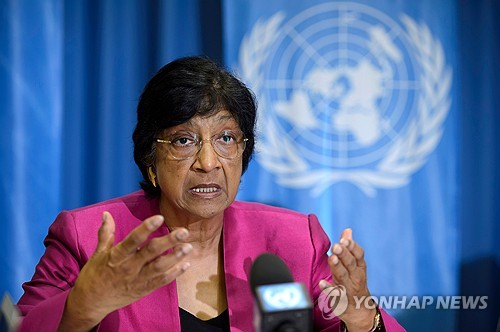
The Nuremberg Moment
Navi Pillay accepted the Nobel Peace Prize on Thursday at the very courthouse where the Nazi leadership was tried after World War II. The location was not incidental. It turned her remarks into a deliberate lineage argument: that the postwar commitment to individual accountability for atrocities remains under assault.
She dedicated the award to survivors of international crimes. Then she named the assailants.
“We are living in an era where international law and human rights are under severe political attack,” Pillay said. “This is clearly visible in the attacks on the International Criminal Court.”
The target was explicit. Days earlier, Donald Trump had called the ICC a “rogue institution” and urged all member states to withdraw. The United States had since moved against the court with sanctions, freezing assets and targeting officials who pursue cases involving Americans or Israeli allies. Pillay’s speech transformed a peace prize ceremony into a verdict on that strategy.
The Applause Jibe
Her humor carried the same edge. In a video posted by Amnesty International secretary general Agnes Kalomara, Pillay was surrounded by colleagues when the news arrived. She warned them to keep the clapping moderate.
“If you clap too hard, I may have to share the prize with Trump,” she said, according to the recording.
It was a compact barb. Trump has repeatedly claimed he deserved the Nobel himself. Pillay did not need to cite policy to make the point. The applause line linked personal vanity to institutional erosion in a single sentence.
She then broadened the frame. “When people who are not connected to the prize say you deserve it, that’s when you really want to receive it,” she told reporters. “That’s why this applause means a lot to me.”
The message was directed at a public that has grown cynical about Nobel politics. She accepted the legitimacy test straight on, rather than retreating behind diplomatic caution.
A Rebuke in the Shadows
Korean media have read the symbolism through a sharper lens. Yonhap notes that Pillay’s history of criticizing Israel complicates Trump’s posture, and frames the prize as a double rebuke: to American executive overreach and to Israeli actions that draw ICC scrutiny.
The connection is real. Pillay served as UN high commissioner for human rights and has been vocal about settlements, wartime conduct, and impunity. Trump’s sanctions list has explicitly included Israeli allies. The collision is not abstract. It is a policy fight fought through prizes and indictments.
What Korea sees that Washington often glosses over is the institutional stakes. The ICC is not a court of convenience. It is a permanent body with jurisdiction over war crimes, crimes against humanity, and genocide when states refer cases or the UN security council acts. Sanctions disrupt investigations. They also signal that the United States will punish the court for pursuing cases it disfavors, even when those cases involve partners.
Who Wins, Who Loses
Pillay wins credibility. Her speech tied personal honor to collective survival. By invoking Nuremberg, she placed herself in a tradition that predates modern institutions. The prize becomes a mirror for those who built it, not just those who receive it.
The ICC gains a spotlight. Sanctions were designed to choke the court. Instead, they summoned a winner to its defense at the site where the rule-of-law project began. Every journalist noting the venue amplifies the institution’s narrative.
Trump loses framing. The “rogue institution” label collapses when the Nobel jury rewards a judge who embodied its standards. Sanctions aimed at deterrence produced solidarity.
Israel faces a symbolic squeeze. Pillay’s record on Israeli policy is public. The Nobel platform magnifies it without requiring a legal ruling. The court’s independence looks stronger precisely because the political反击 landed on its beneficiary’s side.
Survivors win the rhetoric. Pillay’s dedication kept the focus on those the court exists to serve. That is the moral ledger the ceremony kept.
What Happens Next
The sanctions remain. The United States does not revoke them because of a speech. But the diplomatic cost has risen. Member states that complied with American pressure to distance themselves from the ICC now face a Nobel laureate calling their stance a political attack on law.
Pillay’s role as an ad hoc judge at the International Court of Justice adds weight. She sits between two pillars of international adjudication. Her presence at The Hague and in Oslo reinforces that the system is not monolithic, but it is interconnected. Pressure on one node threatens both.
Expect more targeted moves from Washington against ICC officials. Expect more public defenses from mid-sized states that rely on the court for legitimacy. The prize cycle creates a temporary equilibrium: sanctions harden positions, ceremonies soften them.
Korea’s reading will influence regional allies. Japan, Australia, and India watch how the United States handles multilateral courts. A Nobel rebuke delivered in German adds texture to their calculus. It signals that American unilateralism has a global cost beyond treaty disputes.
Pillay also said she cannot stop working. At 85, she framed continued activism as a duty, not a choice. That sets a template for the next phase: not retirement, but escalation through institutional channels.
The Line That Matters
The speech’s core was simple. Politicians have a legal obligation to protect rights and refrain from war.
That line cuts across the current news cycle. It does not ask for belief in utopia. It asks for acknowledgment that rules exist even when power wishes them away. The Nobel committee, the venue, and the survivor dedication converged on that point.
Trump’s sanctions sought to remove that constraint. Pillay’s acceptance restored it, at least for a moment.
The clash is not symbolic. It is procedural. Every future case the ICC pursues will be measured against this day. Every diplomat who hesitates to cooperate will weigh a Nobel winner’s verdict. The court may not arrest leaders, but it can name them. And naming matters when the naming comes with global attention.
Pillay knew it. She played the hand accordingly.