Putin's 300,000-Troop Draft Is a Signal — Not Just a Mobilization
Zelensky says Russia plans to draft 300,000 more troops after September elections, targeting peripheral regions to sidestep domestic unrest. The real story isn't the headcount — it's what this escalation reveals about Moscow's industrial war posture, Ukraine's funding crisis, and the weaponization of energy infrastructure on both sides.
The Election Before the Conscription
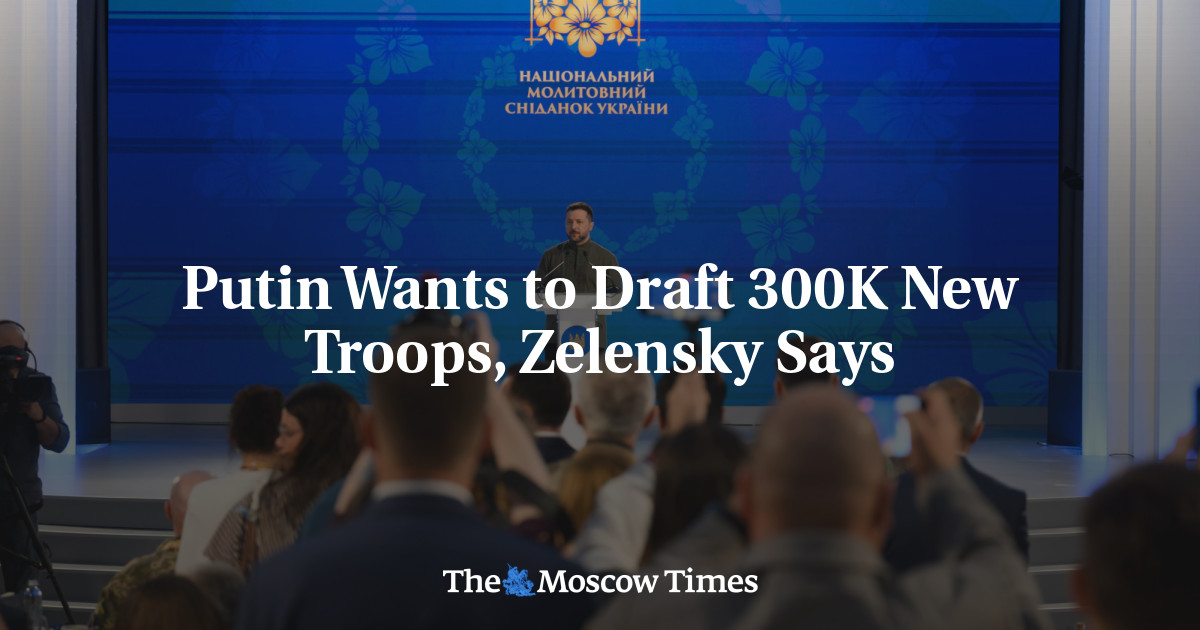
Vladimir Putin is not a man who announces military expansions on a Tuesday without a stage. Ukrainian President Volodymyr Zelensky told reporters that Russia could draft an additional 300,000 troops after its parliamentary elections on September 18–20 — a number that would bring Moscow’s active force to roughly 500,000 if the plan extends into 2027. What makes this calculation notable is not the headcount itself but the timing: Putin will likely use the election as political theater, letting a parliamentary mandate absorb the domestic blow of mobilization that no ruler wants to own directly.
Zelensky described the expected strategy as “peripheral mobilization,” meaning Russia will target its far-flung regions rather than central cities like Moscow or St. Petersburg. This is a deliberate signal. The Kremlin learned from the botched partial mobilization of September 2022, when sudden announcements from the top triggered chaos, mass exodus, and a brief but sharp devaluation of the ruble. Peripheral conscription spreads the pain geographically, minimizes visibility in the capital, and reduces the likelihood of coordinated protest.
The non-obvious implication is that this is less a reaction to battlefield losses than a pre-emptive industrial declaration. Russia is repositioning itself for a war economy that outlasts Western political cycles.
The Missile Factory Behind the Draft
Zelensky said Russia is aiming to produce up to 1,300 ballistic missiles per year. That figure, whether精确 or directional, carries the same weight: it tells us Moscow has committed its defense industry to a pace of fire that no short war assumes. One thousand three hundred missiles annually is roughly one every five hours, sustained across years. That is not improvisation. That is an industrial base operating at what amounts to wartime capacity, even if Russian defense factories were never fully laid bare during the earlier phases of this conflict.
The parallel movement on Ukraine’s side is equally telling. Kyiv received 675 U.S.-designed Patriot interceptors in 2023, 364 in 2025, and only 264 this year. Russia does not need to win outright; it needs to out-produce Ukraine’s ability to block its attacks. The trajectory of interceptor deliveries signals that NATO supply lines are either constrained by their own industrial bottlenecks or deliberately throttled to manage escalation risk. Either way, Ukraine faces a winter of energy grid strikes with fewer shields than last year’s.
Pandora’s Box Opens Both Ways
Russia’s missile surge is only half the escalation. Ukraine has opened a parallel campaign of drone strikes against Russian economic infrastructure — oil refineries and online retailers’ warehouses that fund the war machine. Putin’s response was measured but direct: Kyiv has opened “Pandora’s box,” he said, and Russia will strike back at Ukraine’s most sensitive economic sectors. This is a mutual destruction loop dressed in strategic language.
The implication for energy markets is immediate and underpriced. Russia has already demonstrated it can threaten Europe’s gas supply; Ukraine’s strikes on refineries reduce Russia’s refined-product export capacity and raise the price of diesel and jet fuel in regional markets. If Russia retaliates against Ukraine’s energy grid, Europe loses a buffer state that has absorbed millions of refugees and absorbed a disproportionate share of Western political goodwill. The market does not price in the cost of a collapsed Ukrainian state. It should.
The $27 Billion Hole at the Center of It All
The most concrete number in Zelensky’s recent comments is not the troop count or the missile output. It is $27 billion — the defense funding gap Ukraine faces this year. At least $8 billion is needed for a normal start to 2027, with another $20 billion earmarked for military salaries, payments to families of the dead, and other financing obligations. This is not a projection. It is a current shortfall that will constrain procurement, delay interceptor deliveries, and force Kyiv to make choices about which fronts to hold.
Zelensky secured agreements with France for at least one SAMP/T air-defense system this year and with Germany for roughly 600 PAC-2 and PAC-3 interceptors through 2028. Those deals are meaningful but modest against the scale of the gap. They also reveal a Europe that is committing incrementally rather than systematically — a pattern that rewards Moscow’s strategy of waiting out political patience.
What NATO Should Hear
A 300,000-troop draft expansion is not an end-state. It is a posture. Russia is telling NATO that it can absorb personnel losses at a scale the West has not yet matched in its own defense industrial base. The question for European capitals is whether they interpret this as a signal to accelerate production of artillery shells, air-defense interceptors, and long-range precision munitions — or as another reason to hedge and hope for diplomacy.
The peripheral mobilization strategy also carries a secondary signal for NATO’s eastern flank. If Russia can absorb conscription from its periphery without triggering elite unrest in Moscow, it has solved one of the political constraints that previously limited its war aims. That changes the calculus for Poland, the Baltics, and Finland, where defense budgets are already climbing.
What Happens Next
If the September elections provide cover, expect the draft orders to follow quickly. The 500,000-troop target Zelensky mentioned for 2027 suggests Russia is planning for a multi-year grind, not a negotiated settlement within months. Ukraine will respond with more drone strikes on Russian logistics and refineries, deepening the mutual infrastructure war that neither side can claim to be winning.
The binding constraint is not Russian manpower — it is whether NATO can scale interceptor and munitions production fast enough to keep Ukraine’s skies from being saturated. The $27 billion gap is the number that determines whether that scaling happens or whether Kyiv is forced to trade territory for time. Both outcomes favor Moscow’s current trajectory.
The draft expansion is a thunderclap. The real war is the industrial one happening behind it.