Putin's Kaliningrad Threat Is Reshaping NATO's Eastern Flank
Putin's declaration that all weapons including nuclear would be on the table if Kaliningrad is attacked marks a dangerous recalibration of Russian nuclear posture. The implications for NATO strategy, Baltic security, and European defense budgets are profound.
The Calculus Behind the Threat
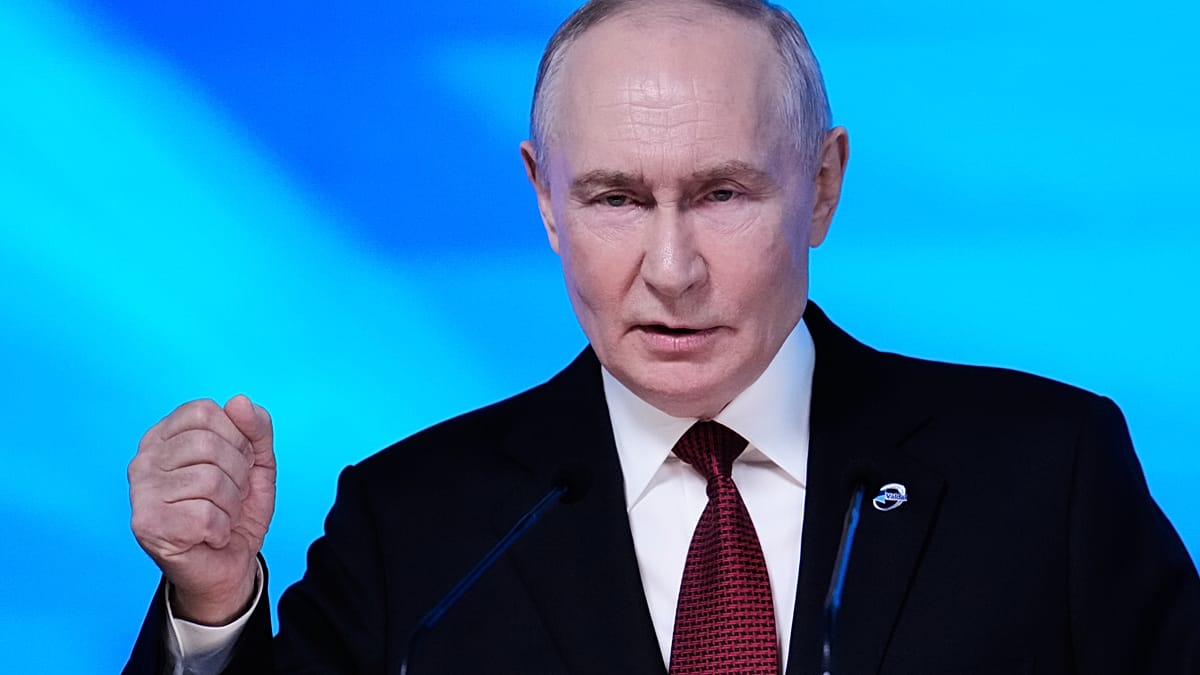
Vladimir Putin stood at the Valdai discussion club on October 2, 2026, and delivered a statement that deserves more scrutiny than it has received. If Kaliningrad were attacked, he said, the deployment of all types of weapons at Russia’s disposal would be inevitable and immediate on the agenda. The word nuclear did not need to be said — it was already in the room.
What makes this moment distinctive is not simply the rhetoric. It is the territorial logic behind it. Kaliningrad is a Russian exclave sandwiched between NATO members Poland and Lithuania, sitting on the Baltic Sea with no land connection to the rest of Russia. It is one of the most heavily militarized pieces of Russian territory outside the homeland proper, hosting Iskander missile systems, S-400 air defense batteries, and a significant naval presence. For Moscow, losing Kaliningrad in any conflict would mean ceding control of Russia’s primary warm-water foothold in the Baltic — a scenario no Russian leader can afford to contemplate lightly.
The statement also represents a subtle but important escalation in how Kremlin rhetoric has evolved since the start of the war in Ukraine. Previously, Russian threats about Kaliningrad tended to be vague — general warnings about territorial integrity or references to nuclear weapons as an abstract deterrent. This time, the threat was geographically specific, tied directly to a single piece of real estate. That specificity is what transforms political theater into a genuine strategic puzzle. It gives NATO commanders something concrete to plan for, but it also creates a narrow corridor where a single incident could cross a threshold neither side has formally defined.
Who Wins and Who Loses
The immediate winner of Putin’s escalation is not Russia. It is a recalibrated NATO eastern flank that now faces a clearer, more urgent mission set. For years, NATO planners have debated the viability of a full-scale Russian assault through the Suwalki Gap — that narrow strip of land connecting Poland to Lithuania, which would be the only overland route between two NATO members if Kaliningrad and Belarus turned hostile. Putin’s comments make the theoretical concrete. They force the alliance to treat the Suwalki corridor not as a contingency but as a planning priority.
The consequences of that shift will ripple through every element of NATO’s forward presence. Poland has already committed to hosting a permanent U.S. division, and Germany has begun deploying additional mechanized brigades eastward. But those are visible moves. Less visible but potentially more consequential is the question of how NATO restructures its command and control architecture for the Baltic approaches. Currently, the alliance’s northern command in Noorvik, Norway, stretches far more than it can effectively cover. A dedicated Baltic theater command — or at minimum a reinforced joint operations center in Warsaw or Riga — would be the logical follow-on. Neither has been announced, and both would face political friction from partners reluctant to escalate the geography further.
Europe’s defense industrial base is the other potential winner, albeit through painful means. France, Germany, Poland, and the Baltic states have been slowly increasing defense spending since 2022. Putin’s Valdai remarks will accelerate that trend. Every NATO country on the eastern flank will face pressure to justify higher budgets with tangible deployments. The question is no longer whether to spend more but how fast.
There is a second-order effect that deserves attention: the strain on European arms industries that may not be able to deliver at the pace politicians demand. Ammunition production lines, particularly for 155-millimeter shells and short-range air defense missiles, remain constrained across the continent. Poland’s ambitious defense build-up — it aims to reach 4 percent of GDP spent on defense by 2030 — depends on imports that may not materialize quickly enough. Germany’s Bundeswehr, despite the Zeitenwende pledge, still struggles with readiness metrics that fall well short of NATO targets. The mismatch between political rhetoric and industrial capacity is where strategy frays.
The losers are more diffuse. European citizens who assumed the nuclear threshold was far away now face a neighborhood where Russian leadership has openly placed tactical nuclear weapons on a decision-making timeline tied to a specific geographic point. Energy markets, already stressed by the lingering aftershocks of the Ukraine war, will absorb another round of anxiety pricing. And ordinary Russians, for whom Kaliningrad has been a symbol of continued Russian presence in Europe, may find their government’s bravado costing them something they never asked to pay for.
The Energy and Logistics Dimension
Kaliningrad’s geography does more than complicate NATO’s defensive posture. It complicates Russia’s own. The exclave is supplied largely by sea through the Baltic and by rail through Lithuania. Any conflict that threatens Kaliningrad would immediately raise questions about the vulnerability of those supply lines. NATO controls the maritime approaches. Lithuania, as an EU and NATO member, controls the rail link. This is a strategic paradox for Moscow: Kaliningrad is powerful precisely because it is vulnerable.
The Nord Stream pipelines lie underwater nearby, already damaged but not destroyed. Their remnants, and the infrastructure around them, represent another layer of economic leverage that now sits in the crosshairs of Russian nuclear rhetoric. None of this was mentioned at Valdai. That silence is telling.
A further dimension has received almost no public analysis: the role of Kaliningrad’s civilian population in any crisis scenario. The exclave is home to roughly one million residents, many of them civilians with families, schools, and businesses. Any military mobilization around the region would affect them directly. Russia has previously used civilian presence as a deterrent — the so-called “human shield” dynamic seen in other conflicts. But in a nuclear-tinged scenario around Kaliningrad, the civilian dimension cuts both ways. NATO adversaries must consider the political fallout of strikes that could kill Russian citizens. Russian planners must consider the moral and strategic cost of exposing those same citizens to escalation risk.
Diplomatic Off-Ramps Are Thin
Putin framed his comments as defensive. He said Russia has no intention of attacking anyone, not in 2029, not in 2030, not in 2050. He positioned NATO exercises as provocations. He warned European citizens to understand the consequences of aggression.
The problem is that threats which are this specific also create expectations. If Kaliningrad is the red line, then every military exercise near its borders becomes a potential crisis trigger. The alliance must now navigate a perimeter where a single misjudged maneuver could activate the very scenario Putin described. There are no obvious off-ramps built into this dynamic. De-escalation requires both sides to step back from the line, but neither Moscow nor NATO has shown willingness to reduce activity near Kaliningrad in the months leading up to Valdai.
The absence of crisis communication channels is another concern. During the Cold War, Washington and Moscow maintained multiple hotlines and diplomatic backchannels precisely to prevent miscalculation around sensitive flashpoints. Those mechanisms have eroded significantly since 2022. Military-to-military contact between NATO and Russian forces has been largely suspended. Without someone on the phone when tensions spike, the risk of accidental escalation increases even as the stated stakes become higher.
What Comes Next
The next twelve months will reveal whether Putin’s statement is posture or preparation. Watch for three indicators. First, any acceleration of Russian military infrastructure in Kaliningrad itself — new missile batteries, expanded submarine facilities, deeper stockpiling. Second, NATO’s operational response. Will the alliance conduct larger exercises closer to the exclave, or will it pull back to avoid triggering the very scenario Putin warns against? Both choices carry risk. Third, the language from Warsaw, Vilnius, and Tallinn. These capitals sit closest to the flashpoint and will determine whether the eastern flank reads Putin’s words as bluff or as doctrine.
The Baltics have spent two years bracing for exactly this kind of escalation. Their governments have been arguing for years that the Suwalki Gap is Europe’s most dangerous military chokepoint. Putin’s Valdai remarks confirm their analysis while simultaneously making their danger more immediate. The question now is whether NATO responds with the urgency their position demands, or with the deliberation its largest members prefer.
The Longer Arc
Beyond the immediate military calculus, Putin’s Kaliningrad statement carries a message for Europe’s political future. It is a reminder that Russia’s leadership views the post-Cold War security order as fundamentally illegitimate — not just in theory but in the specific arrangement of troops and treaties along its western border. By tying nuclear escalation to a single exclave, Moscow is testing whether NATO’s eastern members are willing to bet their security on deterrence that has never been tested in practice. The answer will shape Europe’s strategic culture for decades.
If NATO backs down — reducing exercises, slowing deployments, softening rhetoric — the message to Moscow is that nuclear saber-rattling pays dividends. If NATO doubles down, the risk is a spiral that no one intended and may struggle to control. The sweet spot lies somewhere in between: reinforcing the flank with visible but proportionate measures, reopening channels of communication where possible, and making clear to both allies and adversaries that escalation is not a tool to be used casually but a threshold whose crossing would be catastrophic for everyone involved.
Neither side can afford the wrong answer. But the side that misreads the other first will set off a chain of events that no amount of posturing can contain. The years ahead will test whether deterrence can survive in an environment where the lines between warning and provocation are increasingly blurred.