How an Unpaid Envoy Turned a Gaza War Into a Billion-Dollar Bet
An investigation reveals Jared Kushner's investment vehicle held a massive stake in an Israeli defense fund that profited from the Gaza war — while he negotiated the ceasefire. The unpaid-envoy loophole made it possible.
The Loophole That Made It Possible
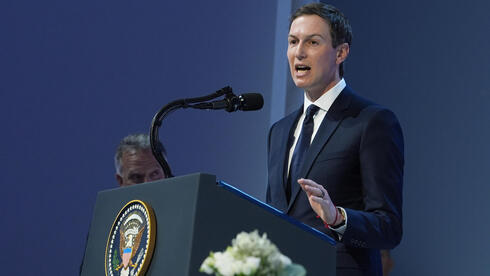
Jared Kushner was not technically a government employee when he was negotiating a Gaza ceasefire. His title was White House envoy — unpaid, unbound by the financial-disclosure requirements that apply to Senate-confirmed officials. That omission was not an accident. It was the structural feature that allowed him to simultaneously hold the largest stake in a fund profiting from Israel’s war effort.
CNN’s investigation traced that stake through Affinity Partners, Kushner’s private investment firm, into Phoenix Holdings. As of July, Affinity remained Phoenix’s biggest shareholder with a 7.4 percent stake worth more than $1 billion. In July alone, Kushner’s firm sold a quarter of its position, pulling out more than $340 million on a fivefold return.
Phoenix also owned stakes in at least nine companies supplying equipment to the Israeli military. Over the past year, every single one saw its share price rise. Many pointed to the war in Gaza as the driver. The math was straightforward: a diplomat shaping U.S. policy toward the region stood to gain personally from the very conflict he was tasked with ending.
What the Portfolio Looks Like
The largest holding, worth at least $265 million, is in Elbit Systems, Israel’s biggest defense contractor. Elbit’s revenue from the Israeli Defense Ministry topped hundreds of millions in recent contracts alone — roughly $200 million for aerial munitions, $48 million for artillery shells, another $210 million in tank upgrades. Israel became Elbit’s single largest market in 2025, accounting for 32 percent of total revenue. Its share price has climbed more than 165 percent since the war began.
Phoenix’s other defense-linked positions include roughly $68 million in NextVision, which builds cameras for military drones sold to companies including Elbit; at least $40 million in Reshef Technologies, which manufactures electronic fuses for shells and has received $165 million in Defense Ministry orders since October; a small stake in Israel Shipyards, which builds fast attack craft for the navy; and a more-than-10-percent holding in Ashot Ashkelon, supplier of tank and armored-vehicle components.
There were smaller bets in American companies as well — $4 million in Boeing, $2.5 million in Caterpillar, whose bulldozers have been used by Israeli forces in Gaza and Lebanon according to the United Nations. Neither company responded to requests for comment.
Some of these investments predated Affinity’s arrival at Phoenix. Others followed, including a company making electronic fuses for shells used in Gaza and another supplying parts for Israeli tanks — acquisitions that came after Kushner’s firm became Phoenix’s largest shareholder.
The Unprecedented Arrangement
What makes this case structurally distinct from standard revolving-door conflicts is the unpaid-envoy design. Kushner could walk into meetings with Prime Minister Benjamin Netanyahu, advise the president on war-end strategy, and unveil plans to rebuild Gaza as a tourism hub — all while his firm sat on the other side of those same battles, earning windfalls from the companies supplying the weapons.
Kushner has argued publicly that his dual role is not a conflict but a model. “When you get an Arab and Israeli together and they start talking about a business opportunity, they forget about everything else,” he told the No Priors podcast last September. “My investors from the Middle East are now looking at Israel, and they’re saying, wait a minute, maybe there’s a benefit to having these wars done.”
That logic has a surface appeal. But it collapses under scrutiny when the “business opportunity” side of the equation includes a fund whose portfolio surged precisely because the war continued. The argument that profit motives can substitute for peace incentives works only if the profiteer is a neutral observer, not the person sitting across the table from the belligerents.
The Response — And What It Avoids
The White House dismissed the concern as political theater. Spokeswoman Anna Kelly called it “a tired narrative Democrats have been pushing against President Trump, his family and his administration for a decade,” adding that Kushner’s private activities are unrelated to his diplomatic role, which he performs on a volunteer basis.
Kushner’s attorney made a narrower claim: that Kushner never participated in or directed Phoenix’s decisions, never voted on purchases or sales of the nine companies identified, and never sat on Phoenix’s board. The attorney confirmed that Kushner maintained a regular dialogue with Phoenix management — meeting with them every few weeks through last fall — but said the frequency had declined since he became more engaged in his diplomatic work.
None of that answers the structural question. The issue was never whether Kushner personally traded shares or signed purchase orders. It is that the arrangement itself — an unpaid envoy with the largest ownership stake in a fund profiting from wartime defense contracts — creates an incentive structure that cannot be separated from the policy outcomes he helps shape. The appearance of a conflict is the conflict. The architecture permits it.
What Happens Next
Democrats have called for new investigations. The pressure will intensify if they regain control of the House in the midterm elections, where committee subpoenas could compel documents the White House has so far declined to produce voluntarily. Whether any probe reaches the structural question — rather than settling for individual conduct — remains unclear.
For the moment, the numbers speak for themselves. Kushner’s firm extracted more than $340 million in July. Over $1 billion remains tied up in Phoenix. The nine defense-linked companies continue to post gains. The ceasefire that Kushner helped broker last October has not stopped Israel from striking Gaza almost daily since.
The deeper implication reaches beyond Kushner’s personal portfolio. It reaches toward whatever peace architecture the current administration builds next. If the same unpaid-envoy framework persists — diplomacy separated from accountability, private stakes untethered from public duty — the question will not be whether someone profits from conflict. It will be whether anyone with skin in the game of war ever has a seat at the table making peace.
The Kushner case does not prove that diplomacy was compromised. It proves that the rules allowing it did not exist.